
Here is my list:
Lonely Planet Canada (12th edition - 2014)
I try to read different kinds of guide books when I'm researching for this blog but I must admit, when I'm looking for practical information (bus times, how to get from A to B), it's hard to beat the Lonely Planet series. Of course, this time I was buying it for the very practical reason that I was travelling to Quebec, so I got the latest version.
The Lonely Planet series is quite good at giving you a simple overview of the history and culture of a place and I also like the fact that they very clearly signpost you towards books, movies and music that will bring your journey (whether real or virtual) to life
Canada - Culture Smart! (2008) Diane Lemieux
 |
| My Quebecois reading list |
The Culture Smart! guide to Canada really help give me a simple overview of the entire country, before I delved into the more specific culture of Quebec. Canada is a place that really interests me and I was surprised to learn about the extent of regional feeling in Canada and how complicated and unusual it is to move from one Canadian province to another. I'd also never really thought about the fact that Canada is so big and I got a glimpse into the challenges that face a united Canada where Paris is just as accessible to Montreal as Vancouver!
Sacré Blues: An unsentimental Journey through Quebec (2000) Taras Grescoe
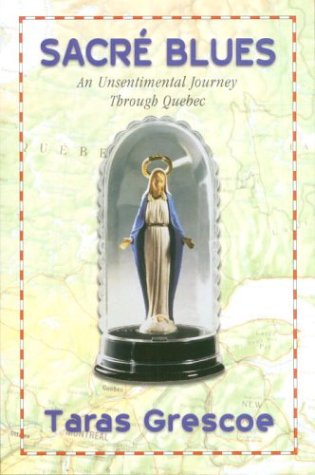
Grescoe is originally from Ontario, so looks at Quebec, as I the reader did, with an outsider's point of view. Whilst I found it hard to see any logic behind the flow of themes in his book, it's an incredibly comprehensive text and he covers everything from the Quebecois obsession with ice-hockey to the Pepsi/Cola wars, the Quiet Revolution and a culture reared on téléromans! There isn't much about Quebec culture that Grescoe doesn't cover and I feel that this amazing book must have been a real labour of love.
Barney's Version (1997) Mordechai Richler
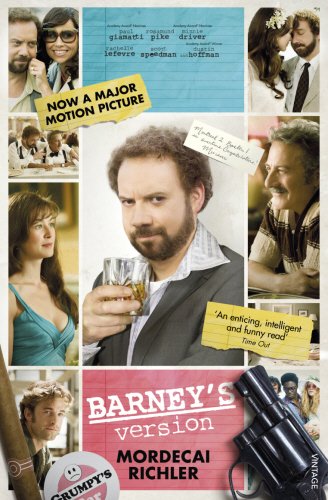
It took me a long time to read this book because I was practising something I call 'intense reading'. In the interests of reading fluency, we mostly skip over words or expressions that are unfamiliar to us and accept them in the context of whatever it is we're reading, as they don't usually impede our general understanding of the text.
For example, if I come across the phrase 'He put on his trusty Capezio's' - I have no idea what Capezio really means, but I can assume that it's something you might wear. Instead of skimming over this, as I might normally do, intense reading means doing my research, usually on Wikipedia, where I find out that Capezio was a Sicilian cobbler who emigrated to the United States in 1887 and opened a shoe repair shop near the Metropolitan Opera House, which became a meeting place for dancers and ultimately a fashionable place to buy shoes!
Barney's version was peppered with references and name-dropping - much of it Canadian/North American and therefore unfamiliar to me, so I had a great time doing my research as I was reading this book and really learning about the world!
The Middle of Everywhere (2009) Monique Polak
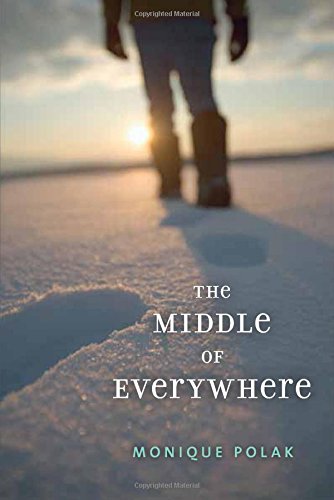
It's a lovely story, beautifully written and well-paced, which I'm sure will leave a positive impression of Inuktitut culture on any young person reading the book. There is a real shadow hanging over Quebecois history in relation to the Inuit people and Polak bravely confronts this, particularly in her re-telling of the destruction of Inuit sled dogs between 1950 and 1970, by the Canadian Mounted Police. She somehow manages to apologise for non-native actions whilst maintaining a balance in terms of who was really to blame.
L'Avalée des avalés (1966) Réjean Ducharme
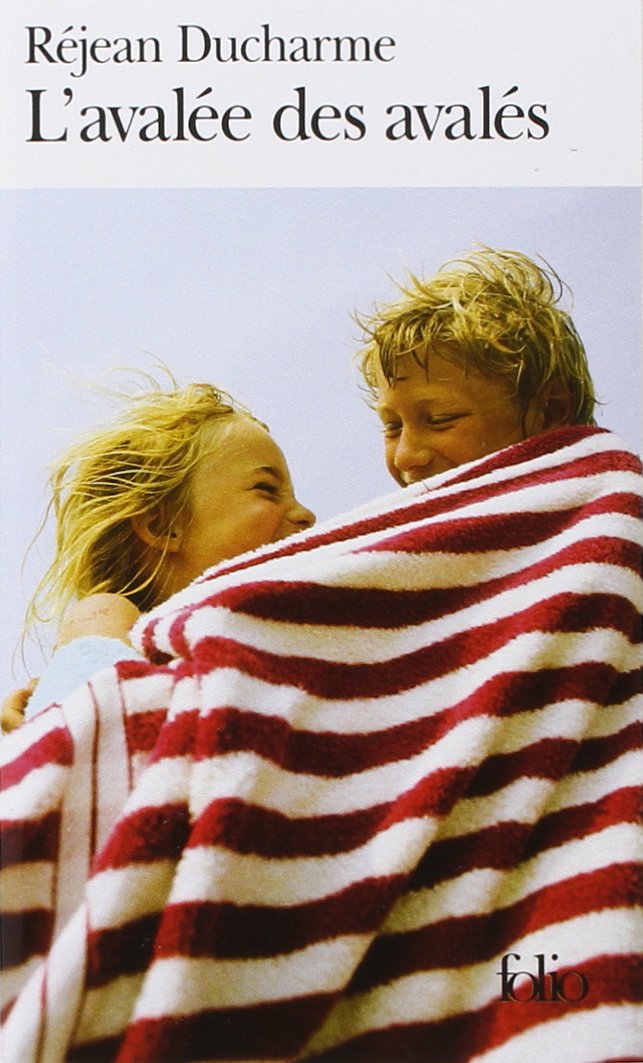
L'Avalée des avalés is a modern Gothic tale, set in an abandoned Abbey, on an island in the middle of the St Laurence River. It tells the story of a young girl, Bérénice Einberg, whose father is Jewish and whose mother is Christian. Enforced religious belief plays a big part in the early chapters of the novel and other themes include sibling love and envy, repression of girls/women and Bérénice's extraordinary 'disconnection' from the world around her.
La vie ne se passe sur la terre, mais dans ma tête. La vie est dans ma tête et ma tête est dans la vie. Je suis englobante et englobée. Je suis l'avalée de l'avalé.
Life doesn't happen on the earth, but in my head. Life is in my head and my head is in life. I am encompassing and encompassed. I am the swallowing of the swallowed.
La grosse Femme d'à côté est enceinte/The fat woman from next door is pregnant (1978) Michel Tremblay
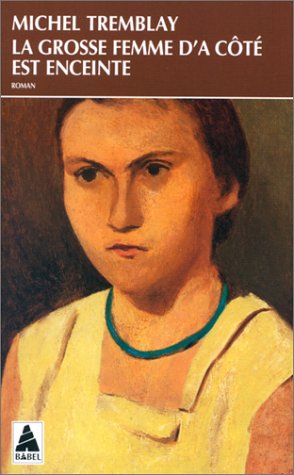 I read even less of Michel Tremblay's famous novel, La grosse Femme d'à côté est enceinte. It's partly written in joual, the dialect of Montreal and I found myself floundering with sentences like this one:
Mercedes avait sorti son rouge à lèvres de sa sacoche. Un billet de vingt dollars était tombe sur ses genoux. "Y'a ben de l'ouvrage dans c'que je fais, ces temps-citte, t'sais . . ."
Mecedes took her lipstick out of her little bag. A twenty-dollar bill fell on her knees. "It's hard work what I'm doing at the minute you know . . ."
The books I didn't read
As usual, I came across references to lots of books which I didn't have time to read - if I were to continue blogging about Quebec indefinitely, I'd put the following books on my reading list:
Self (1996) by Yann Martel (the author of Life of Pi)
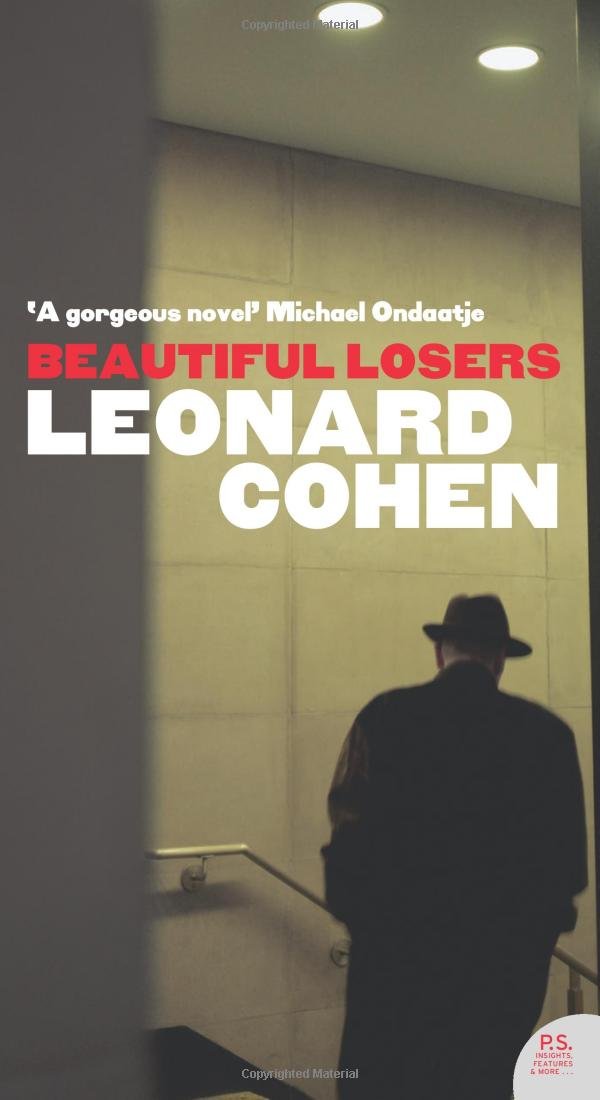 Beautiful Losers (1966) by Leonard Cohen
A Yankee in Canada, with Anti-Slavery and Reform Papers (1866) by Henry David Thoreau
Je mange donc, je maigris - I eat therefore, I stay slim (1987) by Michel Montignac
Bonheur d'Occasion/The Tin Flute (1945) by Gabrielle Roy
L’homme rapaillé/The March to Love (1970) by Gaston Miron
Two Solitudes (1945) by Hugh McLennan
Herzog (1964) by Saul Bellow
 L'ingratitude (1992) by Ying Chen
Le sexe des étoiles/The Sex of the Stars (1987) by Monique Proulx
Selling Illusions: The Cult of Multiculturalism in Canada (1994) by Neil Bissoondath
Et Dieu Crea Les Francais (1992) by Louis-Bernard Robitaille
Les Filles du Caleb/Caleb's daughters (1986) by Arlette Cousture
Le Cassé/The Broken (1964) by Jacques Renaud
The Shouting Signpainters (1972) by Malcolm Reid
Contes du pays incertain/Stories from an uncertain country (1962) by Jacques Ferron
Mercedes avait sorti son rouge à lèvres de sa sacoche. Un billet de vingt dollars était tombe sur ses genoux. "Y'a ben de l'ouvrage dans c'que je fais, ces temps-citte, t'sais . . ."
Mecedes took her lipstick out of her little bag. A twenty-dollar bill fell on her knees. "It's hard work what I'm doing at the minute you know . . ."
The books I didn't read
As usual, I came across references to lots of books which I didn't have time to read - if I were to continue blogging about Quebec indefinitely, I'd put the following books on my reading list:
Self (1996) by Yann Martel (the author of Life of Pi)
A Yankee in Canada, with Anti-Slavery and Reform Papers (1866) by Henry David Thoreau
Je mange donc, je maigris - I eat therefore, I stay slim (1987) by Michel Montignac
Bonheur d'Occasion/The Tin Flute (1945) by Gabrielle Roy
L’homme rapaillé/The March to Love (1970) by Gaston Miron
Two Solitudes (1945) by Hugh McLennan
Herzog (1964) by Saul Bellow
Le sexe des étoiles/The Sex of the Stars (1987) by Monique Proulx
Selling Illusions: The Cult of Multiculturalism in Canada (1994) by Neil Bissoondath
Et Dieu Crea Les Francais (1992) by Louis-Bernard Robitaille
Les Filles du Caleb/Caleb's daughters (1986) by Arlette Cousture
Le Cassé/The Broken (1964) by Jacques Renaud
The Shouting Signpainters (1972) by Malcolm Reid
Contes du pays incertain/Stories from an uncertain country (1962) by Jacques Ferron


