Showing posts with label Leonard Cohen. Show all posts

Saturday, 14 February 2015

Quebec - Reading List

I was spoilt for choice when it came to reading materials about Quebec and I still feel as though I only scratched the surface in terms of what I actually managed to read.

Here is my list:

Lonely Planet Canada (12th edition - 2014)

I try to read different kinds of guide books when I'm researching for this blog but I must admit, when I'm looking for practical information (bus times, how to get from A to B), it's hard to beat the Lonely Planet series. Of course, this time I was buying it for the very practical reason that I was travelling to Quebec, so I got the latest version. 

The Lonely Planet series is quite good at giving you a simple overview of the history and culture of a place and I also like the fact that they very clearly signpost you towards books, movies and music that will bring your journey (whether real or virtual) to life

Canada - Culture Smart! (2008) Diane Lemieux

My Quebecois reading list
Reading online reviews of the Culture Smart! series, I can see that some people really don't like these books and find them over-simplistic. I really enjoy them however and, as I have limited time for my research, I find these books to be a very easy way of getting an overview of a country. I also find them good to read on the road and I now not only buy this for blog research, but I also use them when I'm actually travelling, for example, on my recent trips to Morocco and Georgia. 

The Culture Smart! guide to Canada really help give me a simple overview of the entire country, before I delved into the more specific culture of Quebec. Canada is a place that really interests me and I was surprised to learn about the extent of regional feeling in Canada and how complicated and unusual it is to move from one Canadian province to another. I'd also never really thought about the fact that Canada is so big and I got a glimpse into the challenges that face a united Canada where Paris is just as accessible to Montreal as Vancouver! 

Sacré Blues: An unsentimental Journey through Quebec (2000) Taras Grescoe
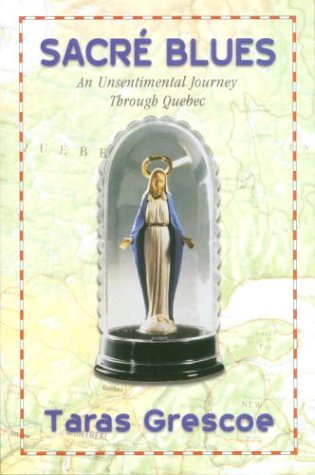
This is the book that took up most of my time and although it took me absolutely ages to read this, I'd highly recommend this book for anyone who wants to understand more about Quebec, as it's so packed full of interesting information. I could have written numerous blog posts based on this book and, indeed, it has informed much of my blogging about Quebec, but particularly the blog post I did on winter. 

Grescoe is originally from Ontario, so looks at Quebec, as I the reader did, with an outsider's point of view. Whilst I found it hard to see any logic behind the flow of themes in his book, it's an incredibly comprehensive text and he covers everything from the Quebecois obsession with ice-hockey to the Pepsi/Cola wars, the Quiet Revolution and a culture reared on téléromans! There isn't much about Quebec culture that Grescoe doesn't cover and I feel that this amazing book must have been a real labour of love. 

Barney's Version (1997) Mordechai Richler
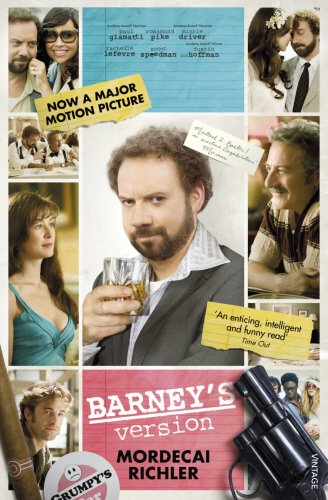
I struggled through Richler's seminal novel Barney's Version, which also took me ages to read, but not for the right reasons this time. Don't get me wrong, the book was interesting enough and the themes of loss of love and loss of memory were very engaging, but I just couldn't relate to Barney the principle character and his self-obsessed view of the world. It might sound a bit harsh but, in the end, I was more interested in hearing McIver's version or Boogie's version.

It took me a long time to read this book because I was practising something I call 'intense reading'. In the interests of reading fluency, we mostly skip over words or expressions that are unfamiliar to us and accept them in the context of whatever it is we're reading, as they don't usually impede our general understanding of the text. 

For example, if I come across the phrase 'He put on his trusty Capezio's' - I have no idea what Capezio really means, but I can assume that it's something you might wear. Instead of skimming over this, as I might normally do, intense reading means doing my research, usually on Wikipedia, where I find out that Capezio was a Sicilian cobbler who emigrated to the United States in 1887 and opened a shoe repair shop near the Metropolitan Opera House, which became a meeting place for dancers and ultimately a fashionable place to buy shoes! 

Barney's version was peppered with references and name-dropping - much of it Canadian/North American and therefore unfamiliar to me, so I had a great time doing my research as I was reading this book and really learning about the world! 

The Middle of Everywhere (2009) Monique Polak
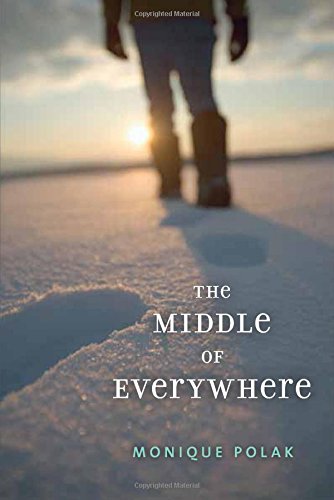
By contrast, I flew through this book in less than a week - perhaps not surprising as it was written for young adults and was very easy to read. I really enjoyed this book which tells the story of Noah Thorpe, a teenage boy from Montreal who travels to Kangiqsualujjuaq (George River) in Nunavik, the northern-most part of Quebec. 

It's a lovely story, beautifully written and well-paced, which I'm sure will leave a positive impression of Inuktitut culture on any young person reading the book. There is a real shadow hanging over Quebecois history in relation to the Inuit people and Polak bravely confronts this, particularly in her re-telling of the destruction of Inuit sled dogs between 1950 and 1970, by the Canadian Mounted Police. She somehow manages to apologise for non-native actions whilst maintaining a balance in terms of who was really to blame.  


L'Avalée des avalés (1966) Réjean Ducharme
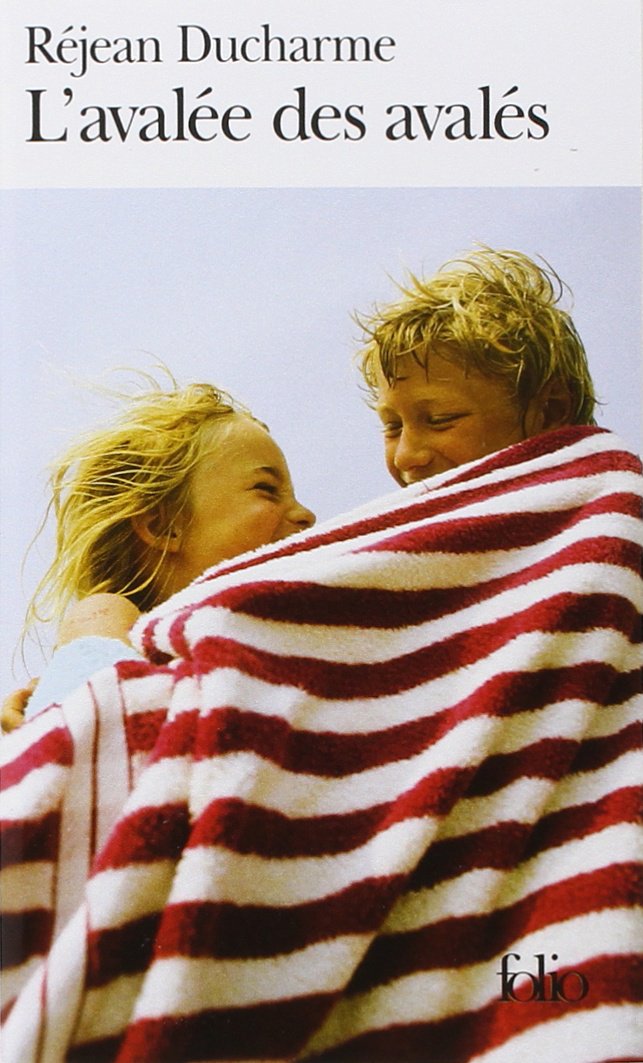
This is a fascinating novel, although I didn't have time to read all of it, plus I was reading in French, so it was taking me ages.  To be honest, I don't know how the book would read in translation, as the language is so poetic and even the title L'Avalée des avalés is hard to translate into English and becomes something like, The Swallowing of the Swallowed.

L'Avalée des avalés is a modern Gothic tale, set in an abandoned Abbey, on an island in the middle of the St Laurence River. It tells the story of a young girl, Bérénice Einberg, whose father is Jewish and whose mother is Christian.  Enforced religious belief plays a big part in the early chapters of the novel and other themes include sibling love and envy, repression of girls/women and Bérénice's extraordinary 'disconnection' from the world around her.

La vie ne se passe sur la terre, mais dans ma tête. La vie est dans ma tête et ma tête est dans la vie. Je suis englobante et englobée. Je suis l'avalée de l'avalé. 

Life doesn't happen on the earth, but in my head. Life is in my head and my head is in life. I am encompassing and encompassed.  I am the swallowing of the swallowed.

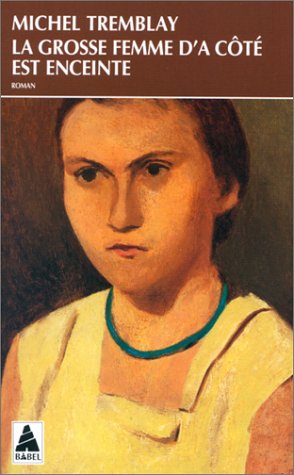
La grosse Femme d'à côté est enceinte/The fat woman from next door is pregnant (1978) Michel Tremblay

I read even less of Michel Tremblay's famous novel, La grosse Femme d'à côté est enceinte. It's partly written in joual, the dialect of Montreal and I found myself floundering with sentences like this one:

Mercedes avait sorti son rouge à lèvres de sa sacoche.  Un billet de vingt dollars était tombe sur ses genoux. "Y'a ben de l'ouvrage dans c'que je fais, ces temps-citte, t'sais . . ."

Mecedes took her lipstick out of her little bag. A twenty-dollar bill fell on her knees. "It's hard work what I'm doing at the minute you know . . ."

The books I didn't read

As usual, I came across references to lots of books which I didn't have time to read - if I were to continue blogging about Quebec indefinitely, I'd put the following books on my reading list:

Self (1996) by Yann Martel (the author of Life of Pi)

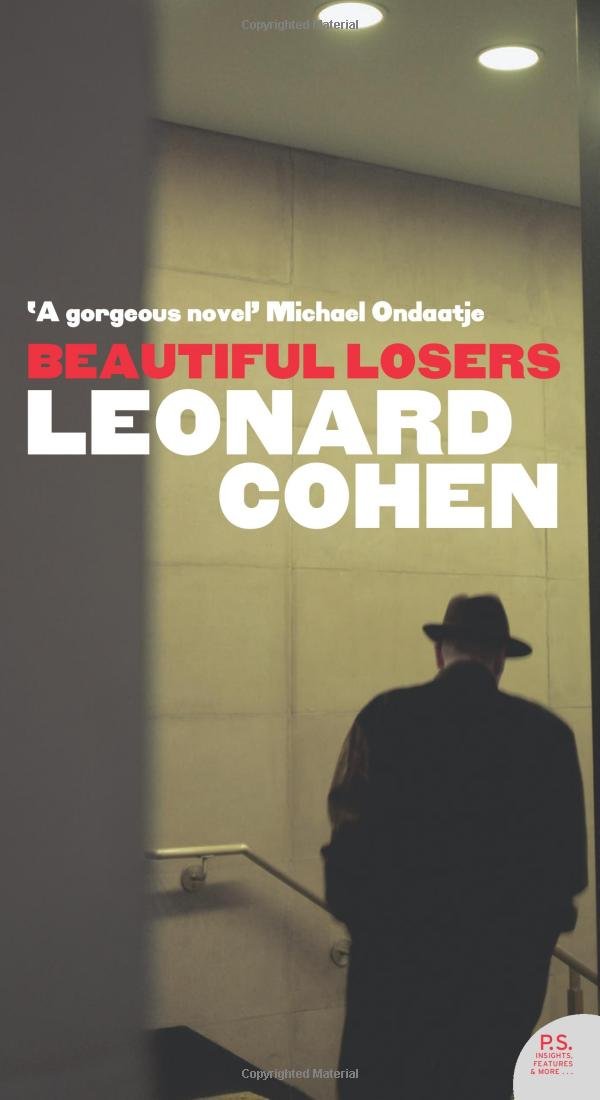
Beautiful Losers (1966) by Leonard Cohen

A Yankee in Canada, with Anti-Slavery and Reform Papers (1866) by Henry David Thoreau

Je mange donc, je maigris - I eat therefore, I stay slim (1987) by Michel Montignac

Bonheur d'Occasion/The Tin Flute (1945) by Gabrielle Roy

L’homme rapaillé/The March to Love (1970) by Gaston Miron

Two Solitudes (1945) by Hugh McLennan

Herzog (1964) by Saul Bellow

L'ingratitude (1992) by Ying Chen

Le sexe des étoiles/The Sex of the Stars (1987) by Monique Proulx

Selling Illusions: The Cult of Multiculturalism in Canada (1994) by Neil Bissoondath

Et Dieu Crea Les Francais (1992) by Louis-Bernard Robitaille

Les Filles du Caleb/Caleb's daughters (1986) by Arlette Cousture

Le Cassé/The Broken (1964) by Jacques Renaud

The Shouting Signpainters (1972) by Malcolm Reid

Contes du pays incertain/Stories from an uncertain country (1962) by Jacques Ferron

Sunday, 8 February 2015

Quebec - Playlist

I've listened to lots of great music during the time I've been researching and blogging about Quebec, so here is my Quebecois playlist.

Reflektor (2013) by Arcade Fire

I've become quite a big fan of Arcade Fire, although I'd never really heard their music before I started researching for this blog.  I discovered them just before I went to Canada, in fact, so as I was listening to this song on repeat, as I was whizzing through Montreal, past the factories and over the Jacques Cartier bridge to Longueuil.  Arcade Fire are from Montreal and are very much part of Quebec's 'Anglo' culture, although some of the lyrics of Reflektor are also in French.  I love songs that work on different levels and, for that reason, Reflektor really does it for me!  I hope you like the song and the rather disturbing video!

On ne change pas (1999) by Celine Dion

I've never been a massive fan of Celine Dion. Whilst it's undeniable that she is one of the most popular singers the world has ever known, I've found her music a little cheesy and too 'pop-machine generated'. Having said that, she does have a fantastic voice and I quite like some of her French-language songs. I've come to particularly like this song, ever since I heard it on the soundtrack of Xavier Dolan's Mommy. The characters in the movie acknowledge that Dion's music is a bit cheesy, but they love her all the same, as she's such a symbol of Quebec. 

The song itself seems to make the assertion that we never change, even if we become more sophisticated and 'on met just les costumes d'autres sur soi' (we wear the costumes/habits of others). Dion symbolises modern Quebec in many ways, as she's a Francophone in an English-dominated world. Although many of her biggest hits were in English, two of her albums - D'eux and S'il suffisait d'aimer (where this song comes from) - rank as the best selling French-language albums of all time. Actually the songs on both album were written by the Parisian musician, Jean-Jacques Goldman, an influential song-writer in his own right.

Le But (2012) by Loco Locass

I really love this song by the Quebecois hip-hop group Loco Locass. My research into Quebec has led me to the conclusion that Quebecois people are a little bit of obsessed with ice-hockey (also Canadians, in general, perhaps?) I was surprised to learn that ice-hockey originated in Montreal, as I'd always thought of it more as a Slavic or Scandinavian import, more at home in places like Alberta or Manitoba. The Montreal ice-hockey team, Les Canadiens (aka Les Habs), are one of the biggest teams in the National Hockey league and a source of pride, honour and sometimes frustration for the people of Quebec. 

I've come across references to ice-hockey again and again in the books I've read and movies I've watched relating to Quebec. This song seems to encapsulate French-Canadian pride, their love of ice-hockey and the history of Quebec. Not to mention the fact that it's extremely catchy - I find myself humming 'Allez, Allez, Montreal' all day long after listening to this. 

Au bord de la Fontaine (2003) by Le Vent du Nord

This is the first time I've been able to go and see one of the bands I'm blogging about live in concert, as part of my research. Out of all the Quebecois music I've listened to, Le Vent du Nord is the only band that I'd actually heard of before and I've been a fan of their music since their 2009 album Le Part de Feu. So when I found out they were touring the north of England in January, I couldn't resist and travelled up to Bury, just north of Manchester, to see them play.

There's nothing like live music to really help you understand the sounds involved and I loved the way Le Vent du Nord uses the hurdy-gurdy, accordions and mouth organs, but I also really love their voices - I'm a big fan of call and response singing and no-one does this better than Le Vent du Nord.

Les étoiles filantes (2004) by Les Cowboys Fringants 

This is a really catchy little tune that I couldn't help bobbing my head along to. The lyrics are in the Montreal dialect joual, so I couldn't quite understand the words until I saw them written down and translated into English. 

Les Cowboys Fringants are considered to be 'neo-folk', which is like folk re-interpreted for the modern age. They're fond of accordions and political lyrics, one of my favourite combinations and their music fits well into a long tradition of French chanson or secular, lyric-driven songs. 

I particularly loved this song from their 2004 album, La Grand-Messe. It's about growing old and all the things you lose in adult life, which would be a bit depressing if they didn't balance that with lyrics along the lines of 'just do your best'. Les étoiles filantes means 'Shooting stars' and is a good metaphor for the transitory nature of human existence. 

I've put some of the lyrics below so you can sing along with the YouTube video. 

La trentaine, la bedaine
Les morveux, l'hypothèque
Les bonheurs et les peines 
Les bon coups et les échecs

Travailler, faire d'son mieux
En arracher, s'en sortir 
Et ésperer être heureux
Un peu avant de mourir 

The thirties, the belly
The kids, the mortgage
The pleasures and the sorrows
The strokes of luck and the failures

Working, doing your best
And struggling and getting out
And hoping to be happy
A little before dying

Avalanche (1971) by Leonard Cohen

Leonard Cohen is a massive musical force and I know a few people who are a bit obsessed with him. He's a poet, as well as a songwriter and his lyrics are very poetic. I've never been a big fan of his music, although I do appreciate the uniqueness of his voice and lyrics. I've always loved Suzanne from his 1967 album, Songs of Leonard Cohen - there's something incredibly poignant and melancholic about that song but, at the same time, I really can't stand one of his other songs, Hallelujah and the popularity of Hallelujah really baffles me.

In the interests of learning more about the world, I made an effort to listen to Leonard Cohen songs that I'd never heard before and I particularly liked Avalanche from his third album, Songs of Love and Hate (1971).  Like many of his songs, Avalanche started off as a poem and the lyrics are ever-so-slightly disturbing, all hunchbacks and golden mountains, like a fairytale-turned-nightmare.  Most of all, I love the music and the way Cohen plays the classical guitar, a feature more prominent in his earlier music.  

Dites-lui (2013) by Ale Dee

In many ways, it's just a silly pop song, but I quite liked this track from Ale Dee's 2013 album, 2013. A.D.  I like the way he throws in a few English phrases in the middle of the French rap and I'm sure this song is really popular with young people in Quebec. It's urban and gritty, another side to Quebecois life and a new generation influenced by musical trends from south of the border.

Navvaatara (2010) by Elisapie Isaac

Like other people, I came across Elisapie Issac's music by watching the movie Cafe de Flore. Elisapie was born in Nunavik, Quebec's far-north region and she sings in French, English and Inuktitut, the language of the Inuit people.  Navvaatara means 'I've found it' and I love the gentleness of this song. I want to learn more about Elisapie Isaac and Inuit culture - perhaps if I end up blogging about Nunavik or Nunavut?

Of course, there were many other artists that I listened to as part of my research - Felix LeClerc, Luc Plamondon, Edith Butler, Lhasa de Sela, La Bottine Souriante - to name but a few!  I've restricted myself to just eight tracks for this play list, but feel free to continue your own research and discover even more Quebecois artists.

I'd be interested in hearing your playlist suggestions (with links, if possible) in the comments below this blog post.