Showing posts with label music. Show all posts

Saturday, 3 October 2015

Solomon Islands - Playlist

I always enjoy discovering new music, when I'm researching for this blog.  I found quite a lot of music from the Solomon Islands, compared to other art forms like literature or movies, so I've made up a playlist of some of my favourites.

Sweet Lullaby - Deep Forest

Probably the most famous of all songs to come out of the Solomon Islands is the lullaby Rorogwela from the Baegu people in Malaita, which was sampled by Deep Forest on their 1992 album, Sweet Lullaby.  

The original vocal was recorded by a Swiss-French ethnomusicologist called Hugo Zemp when he travelled to the Solomon Islands in 1970 and the singer is a woman called Afunakwa.

I was a big fan of Deep Forest when I was a student in the 1990's and I've always loved this song, although I had no idea of its connection with Malaita and the Solomon Islands.

Mato by Narasirato

Solomon Islands is probably most famous for its traditional panpipe music and Narasirato, who come from the island of Malaita, are one of the Solomon's most famous panpipe groups.  They played at festivals such as Glastonbury and Roskilde, so they're well known on the World Music stage.  I particularly liked a song called Mato from their 2012 album Warato'o, but all of their stuff is great!

I found this video on YouTube which will give you a flavour of their music.


Soso Kakoi by Wasi Ka Nanara

Also quite well-known internationally is a panpipe group called Wasi Ka Nanara and I really liked the song Soso Kakoi from their album Sounds of Paradise - Native Pan Flutes of the Solomon Islands.  There's nothing like a soft panpipe breeze from the Pacific Ocean when you're making your way to the train station on a rainy London morning!

Funeral Song

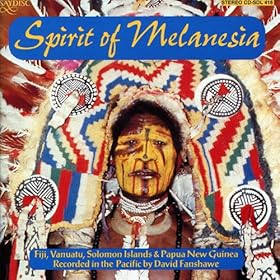
One of the most beautiful pieces of music I came across was, quite sadly, a funeral song, which appears on the 2011 album Spirit of Melanesia.  The album features a collection of songs from Melanesia collected by the British ethnomusicologist, David Fanshawe, who had died the previous year.  Fanshawe spent around 10 years travelling to the Pacific to record the music of remote islands in Melanesia, but also Polynesia and Micronesia.

If you wish to hear the song, you can get an excerpt on its page at Amazon.

Ta'Umai by Sharzy

When I was in Barbados earlier this year, I heard a lot of reggae music, as we were spinning around the island on the local shared taxis.  There's something about reggae that seems to lend itself to tropical locations and I remember when I was blogging about Fiji back in November 2012, I was surprised to find that a lot of the most popular music there these days, is essentially a Pacific version of that very Caribbean sound!

Reggae seems to be very popular in the Solomon Islands as well and I really liked the song Ta'Umai by Sharzy, a well-known artist from Simbo in the Western Province.  This song comes from his 2010 album, Iu Mi Flow and is an interesting mixture of English, Tok Pisin and Simbo! Another great song for a rainy London commute!

Murderer by Jahboy

Another popular artist of recent years is Jahboy, a.k.a. Kirwan Hatigeva, who combines reggae with a bit of hip-hop.  He's of mixed Melanesian and Polynesian heritage and I really liked the song Murderer from his 2012 album LuvNLife.  


Beautiful girl by DMP

I know it's a bit cheesy, but I developed a soft spot for the song Beautiful Girl by DMP.  I find it really interesting in cultures that are incredibly masculine, how romantic the lyrics of male singers are sometimes and I can't imagine a woman singing a song about a man which has such a note of sad desperation!

Anyway, it's kind of catchy and I'm posting a YouTube-generated video below, so you can hear for yourself.


The Lagoon - conducted by Gavin Greenaway and composed by Hans Zimmer

I wrote about the movie The Thin Red Line in a previous blog post and, whilst I was doing my research, I also listened to the soundtrack for The Thin Red Line written by Hans Zimmer, the German composer who also did The Lion King and Gladiator.

My favourite track was The Lagoon as there is something quite haunting about this piece and it captures the slow-motion horror of the war in Guadalcanal, as well as integrating some native themes from the Solomon Islands. Although it's not traditional music from the Solomon Islands, I still felt it should be represented, as the Solomons and the war in Guadalcanal were the inspiration for the movie and its soundtrack.


Sunday, 14 June 2015

Réunion - The Final Word

Proposed flag for Réunion
I've found Réunion a fascinating place to blog about - as I've been researching for this blog and learning more about the interesting mix of cultures that Réunion has inherited, I've been mentally planning a trip to the island, at some unspecified time in the future!

As it happens, I have visited a few of the places I've blogged about, having become really interested in these places as a result of my 'armchair learning' experience.  The places I've visited so far as a result of this blog are: Hong Kong, Iceland, Jersey, Quebec and Barbados and I'm hoping to visit Korea and Mongolia later this year!

Of course, there are quite a few places I've blogged about that I may never get the chance to visit (I'm thinking of places like Kiribati, Liberia and Yemen), but a visit to Réunion is a distinct possibility and, as with any of the places I've blogged about, I'd love to visit sooner, rather than later, before Réunion changes too much!

The Themes

During my time blogging about Réunion, I've learned about the history of the island and how Réunion is part of France, although it lies thousands of miles south of Paris, in the Indian Ocean. I've learned about the role that Réunion has played in the cultivation of vanilla, a notoriously expensive plant that originates in Mexico and is incredibly difficult to grow.  I also learned how to make Canard a la Vanille, a typical Réunionnais dish and this was my first time to physically handle vanilla and cook with it.

Books

I read the following books, as part of my research:

Some of the books I read as part of my research on Réunion
Insight Guides: Mauritius, Réunion and Seychelles (2009) - the second edition that Insight guides have published about the Mascarene islands - very informative, as Insight guides usually are.

Vanilla: Travels in Search of the Ice Cream Orchid (2004) by Tim Ecott - which has chapters on Réunion, but also covers Mexico, Tahiti and Madagascar.

La Grand-Mere Kalle (2006) by local writer Yves Manglou - which brings to life the mythology of Réunion.  You can read my blog post about this book for more information.

Island Born of Fire (2006) by R.B. Trombley - a scientific book about the geological make-up of the island - a little bit over my head and difficult to read, but interesting all the same.

The Age of Kali (1998) - a collection of travel essays by William Dalrymple - I'd never read Dalrymple before, but I definitely want to read more! His essays are mostly about India and Pakistan, but he does include a couple of interesting essays on Sri Lanka and an essay on Réunion called The Sorcerer's Grave.

Movies

I could only find one movie which was set on Réunion, Francois Truffaud's La sirène du Mississippi (1969), which I also blogged about.

Music

I also had a wonderful time listening to the music of Réunion and I created a play list, which includes songs by artists such as Firmin Viry, Granmoun Lélé and Faham.

Other themes

As usual, I came across other themes that were interesting, but I didn't have time to research into further - if you want to continue your own learning about Réunion, I would suggest the following 'other' topics:

Edward's Dodo by Roelant Savery (1626)
The Euro and how Réunion was the first place to adopt this new currency
The pirate La Buse and his hidden treasure, which people believe is still buried somewhere on the island
Les enfants de la Creuse - Réunion's own stolen generation of children who were removed from their parents and brought up in France
Volcanoes
The Dodo and how it became extinct
The French code noir which sought to prevent the intermarrying of races
Réunion during World War 2
The Kerveguen sugar empire

The Final Word on Métissage

One thing that came through strongly during my research on Réunion was the importance of métissage in the identity of this far-flung French outpost. Métissage is the French word for mixing and it's a good way of describing the development of culture on Réunion, which has mixed elements of Africa, Asia and Europe to produce a new culture, totally unique to the island.

Expeditus, photo by Jean Poussin
An interesting manifestation of métissage is the cult of St Expédit, the island's unofficial patron saint. According to William Dalrymple, in his book The Age of Kali, the cult of  St Expédit on Réunion started in 1931, when a mysterious package, supposedly containing relics of a Christian saint, arrived on the island from the Vatican and bore a stamp saying spedito, which is the Italian word for expedited or  'sent quickly'.

The cult of St Expédit took such a hold on the island that the Catholic Church was forced to create a 'back story' for the saint and aligned St Expédit with the Roman soldier, Expeditus who became an early Christian martyr in 4th century Armenia.  Whether it's true or not, Dalrymple's theory is an interesting one and I do love a good mystery!

In modern times, shrines to St Expédit on Réunion are usually painted blood red and people pray to the saint for all kinds of things - the cult of St Expédit lends itself to Réunion's métissage culture, mixing African ancestor worship, Hindu reincarnation's of Vishnu and Tamil interpretations of Christianity.  Statues of St Expédit are sometimes mysteriously beheaded and there is something distinctly un-Christian about the magical powers and ability to answer prayers, that St Expédit has been credited with.

The cult of Expeditus is also really popular in Chile, for some reason and I find the whole thing fascinating but also slightly bizarre!

Image credits:

Although I've been using a coat of arms to represent Réunion during my blog posts, I have since discovered a proposed flag for the island, so I wanted to represent this in my final blog post.

The image of Edward's Dodo, the 1626 painting by the Flemish painter, Roland Savery is in the public domain.

The photo of the Expeditus statue has been uploaded to Wikimedia Commons by Jean Poussin and you can see more information on this image here.  

Sunday, 24 May 2015

Réunion - Playlist

Like many other aspects of its culture, the music of La Réunion is a mixture of different influences - whether it's the traditional ballads and chansons of France, or the mesmerising maloya rhythms of Africa, or the fusion of different traditions in séga, with its hints of the Indian subcontinent.

Over the past couple of months, I've been listening to a range of musical artists from Réunion and I've put together this playlist of the songs I liked most, so you can get a flavour of what Réunion has to offer.

1. Mon île by Jacqueline Farreyrol

This is a beautiful song with lyrics that could have been written by the Réunionnais tourist board!  It's very much a traditional ballad, in French style and was first performed by Farreyrol on local television in the 1970's.  It describes the beauty of Réunion and celebrates the positive unity of the people who live on the island - a really good anthem, which I'm sure has been sung at many a party!

I found this video on YouTube, which also has the lyrics, so you can hear for yourself.


Here are some of the lyrics, which I found interesting, as they also mention Réunion's relationship with France:

Mon île 
Tu as réunis dan ton coeur
des gens de toutes les couleurs 
Comme un défi au monde entier
pour le pire et pour le meilleur 
Tu as choisis comme âme soeur 
le pays de la liberté

My island
You have reunited in your heart
people of all colours
Like a challenge to the entire world
for better or worse
You have chosen as your soul mate
the country of liberty

2. Koundy by Firmin Viry

At the other end of the cultural scale from French chanson is maloya the music of the former slaves - very much rooted in African traditions and similar to the music of Madagascar.  Maloya uses percussion instruments like the caïambe and string instruments like the bobre, a kind of musical bow which is very similar to other instruments found throughout the south of Africa.

Maloya is the music of the sugar cane fields and through its rhythm you can picture the workers busy cutting and stacking the sugar cane, calling out to each other in repetitive phrases, as they while away the working day.

The French authorities were so threatened by the power of maloya that they banned it in the late 1950's, at a time when African independence movements were in full swing.  It wasn't until much later, in the 1970's, that singers like Firmin Viry championed this musical tradition, now recognised by UNESCO as part of the list of Intangible cultural heritage.

I've embedded this video from YouTube, so you can hear maloya with your own ears.


3. Soleye by Granmoun Lélé

Another great maloya singer is Granmoun Lélé who was born in Réunion in 1930 but, sadly, passed away in 2004.  I like this video because you can see the music, singers and dancing.  As well as being the music of work and protest, maloya has its roots in a spiritual tradition and I think this really comes across in the songs of Granmoun Lélé.

Like other maloya artists, Granmoun Lélé sings in Kreol - unfortunately, I haven't yet been able to find any translations of the lyrics of these songs, although with a knowledge of French you'll get the gist of the odd sentence here and there!


4. Batarsité by Danyèl Waro

No blog post about the music of Réunion would be complete without reference to Danyèl Waro, a native of the island with a great passion for Kreol language and maloya.  Danyèl Waro is probably more well-known in France and outside Réunion than any other maloya artist and he seems to do quite well on the world music scene.

Waro's music sounds quite bluesy and reminds me of the music of the southern United States.  I think this is a deliberate technique of linking African traditions with the music of African-Americans.

This video from YouTube shows Waro playing the caïambe at a concert in France.


5. Bato Fou by Ziskakan

I really love the music of Ziskakan, who mix maloya with European-style instruments and a distinctive Indian beat.  They've been around since the late 1970's and have played all over the world - Paris, New Delhi, London and the United States.


6. Flèr Malèr by Ousa Nousava

More easy-listening than frenetic African drums, I nevertheless enjoyed listening to the group Ousa Nousava - their name is Kreol for where are we going (in French, Où allons-nous).


7. Alon dansé by Baster

I'm not sure if I fully understand the difference between maloya and séga - although maloya seems to be specific to Réunion, whereas séga is more widespread across the Indian ocean islands.  Séga also seems to be a lot more 'chilled' and I really liked this song, by Baster which I think means Let's dance.

Baster's music reminds me a lot of the music of Caribbean countries like Barbados and I'm sure there is a musical connection between Réunion and French Caribbean territories like Martinique and Guadeloupe.

This video from YouTube is a live performance and, although the sound quality isn't perfect, it's great to see everyone dancing and having a good time!


8. Zalouzie by Lindigo

Lindigo is a more modern maloya group and I really liked this song from their recent (2012) album Maloya Power.  It's interesting to note the presence of the accordion in this track - definitely a French influence, as traditional French music has some great examples of accordion-playing!


9. Mi Ème a Ou by Faham

I was actually a fan of Faham long before I started blogging about Réunion - I came across their music through a fantastic world-music magazine called Songlines.  Faham has four members, three from Réunion and one from Mauritius.

They all grew up in La Creuse, in the French region of Limousin and there is a very well-known scandal around children from Réunion who were brought up in Limousin, a kind of 'stolen generation' like the case of the Aboriginal children in Australia who were forcibly removed from their parents.

I think Mi Ème a Ou means 'where are you taking me' and I assume it's a reference to this stolen generation, who were brought up in France, far from the island of their birth. Faham is a type of orchid found on Réunion and I see a reference there to an exotic flower which is transported far away from its origins.


10. Ti Fleur Fanée by Georges Fourcade

I thought it would be appropriate to finish with Ti Fleur Fanée, the unofficial anthem of La Réunion. It's been sung many times by many different people down the years, but I found this wonderful video on YouTube which features the original singer Georges Fourcade and shows some really old footage of the island.

The song dates from the 1930's and the title means Petite Fleur Fanée or 'Little wilted flower'.  I guess it captures a lot of French colonial nostalgia for the colder climate of Europe, as opposed to the heat of Réunion, where the little flowers wilt?


I hope you've enjoyed this playlist - if you have any other favourite songs from Réunion, please post links to the videos in the comments below.


Sunday, 8 February 2015

Quebec - Playlist

I've listened to lots of great music during the time I've been researching and blogging about Quebec, so here is my Quebecois playlist.

Reflektor (2013) by Arcade Fire

I've become quite a big fan of Arcade Fire, although I'd never really heard their music before I started researching for this blog.  I discovered them just before I went to Canada, in fact, so as I was listening to this song on repeat, as I was whizzing through Montreal, past the factories and over the Jacques Cartier bridge to Longueuil.  Arcade Fire are from Montreal and are very much part of Quebec's 'Anglo' culture, although some of the lyrics of Reflektor are also in French.  I love songs that work on different levels and, for that reason, Reflektor really does it for me!  I hope you like the song and the rather disturbing video!

On ne change pas (1999) by Celine Dion

I've never been a massive fan of Celine Dion. Whilst it's undeniable that she is one of the most popular singers the world has ever known, I've found her music a little cheesy and too 'pop-machine generated'. Having said that, she does have a fantastic voice and I quite like some of her French-language songs. I've come to particularly like this song, ever since I heard it on the soundtrack of Xavier Dolan's Mommy. The characters in the movie acknowledge that Dion's music is a bit cheesy, but they love her all the same, as she's such a symbol of Quebec. 

The song itself seems to make the assertion that we never change, even if we become more sophisticated and 'on met just les costumes d'autres sur soi' (we wear the costumes/habits of others). Dion symbolises modern Quebec in many ways, as she's a Francophone in an English-dominated world. Although many of her biggest hits were in English, two of her albums - D'eux and S'il suffisait d'aimer (where this song comes from) - rank as the best selling French-language albums of all time. Actually the songs on both album were written by the Parisian musician, Jean-Jacques Goldman, an influential song-writer in his own right.

Le But (2012) by Loco Locass

I really love this song by the Quebecois hip-hop group Loco Locass. My research into Quebec has led me to the conclusion that Quebecois people are a little bit of obsessed with ice-hockey (also Canadians, in general, perhaps?) I was surprised to learn that ice-hockey originated in Montreal, as I'd always thought of it more as a Slavic or Scandinavian import, more at home in places like Alberta or Manitoba. The Montreal ice-hockey team, Les Canadiens (aka Les Habs), are one of the biggest teams in the National Hockey league and a source of pride, honour and sometimes frustration for the people of Quebec. 

I've come across references to ice-hockey again and again in the books I've read and movies I've watched relating to Quebec. This song seems to encapsulate French-Canadian pride, their love of ice-hockey and the history of Quebec. Not to mention the fact that it's extremely catchy - I find myself humming 'Allez, Allez, Montreal' all day long after listening to this. 

Au bord de la Fontaine (2003) by Le Vent du Nord

This is the first time I've been able to go and see one of the bands I'm blogging about live in concert, as part of my research. Out of all the Quebecois music I've listened to, Le Vent du Nord is the only band that I'd actually heard of before and I've been a fan of their music since their 2009 album Le Part de Feu. So when I found out they were touring the north of England in January, I couldn't resist and travelled up to Bury, just north of Manchester, to see them play.

There's nothing like live music to really help you understand the sounds involved and I loved the way Le Vent du Nord uses the hurdy-gurdy, accordions and mouth organs, but I also really love their voices - I'm a big fan of call and response singing and no-one does this better than Le Vent du Nord.

Les étoiles filantes (2004) by Les Cowboys Fringants 

This is a really catchy little tune that I couldn't help bobbing my head along to. The lyrics are in the Montreal dialect joual, so I couldn't quite understand the words until I saw them written down and translated into English. 

Les Cowboys Fringants are considered to be 'neo-folk', which is like folk re-interpreted for the modern age. They're fond of accordions and political lyrics, one of my favourite combinations and their music fits well into a long tradition of French chanson or secular, lyric-driven songs. 

I particularly loved this song from their 2004 album, La Grand-Messe. It's about growing old and all the things you lose in adult life, which would be a bit depressing if they didn't balance that with lyrics along the lines of 'just do your best'. Les étoiles filantes means 'Shooting stars' and is a good metaphor for the transitory nature of human existence. 

I've put some of the lyrics below so you can sing along with the YouTube video. 

La trentaine, la bedaine
Les morveux, l'hypothèque
Les bonheurs et les peines 
Les bon coups et les échecs

Travailler, faire d'son mieux
En arracher, s'en sortir 
Et ésperer être heureux
Un peu avant de mourir 

The thirties, the belly
The kids, the mortgage
The pleasures and the sorrows
The strokes of luck and the failures

Working, doing your best
And struggling and getting out
And hoping to be happy
A little before dying

Avalanche (1971) by Leonard Cohen

Leonard Cohen is a massive musical force and I know a few people who are a bit obsessed with him. He's a poet, as well as a songwriter and his lyrics are very poetic. I've never been a big fan of his music, although I do appreciate the uniqueness of his voice and lyrics. I've always loved Suzanne from his 1967 album, Songs of Leonard Cohen - there's something incredibly poignant and melancholic about that song but, at the same time, I really can't stand one of his other songs, Hallelujah and the popularity of Hallelujah really baffles me.

In the interests of learning more about the world, I made an effort to listen to Leonard Cohen songs that I'd never heard before and I particularly liked Avalanche from his third album, Songs of Love and Hate (1971).  Like many of his songs, Avalanche started off as a poem and the lyrics are ever-so-slightly disturbing, all hunchbacks and golden mountains, like a fairytale-turned-nightmare.  Most of all, I love the music and the way Cohen plays the classical guitar, a feature more prominent in his earlier music.  

Dites-lui (2013) by Ale Dee

In many ways, it's just a silly pop song, but I quite liked this track from Ale Dee's 2013 album, 2013. A.D.  I like the way he throws in a few English phrases in the middle of the French rap and I'm sure this song is really popular with young people in Quebec. It's urban and gritty, another side to Quebecois life and a new generation influenced by musical trends from south of the border.

Navvaatara (2010) by Elisapie Isaac

Like other people, I came across Elisapie Issac's music by watching the movie Cafe de Flore. Elisapie was born in Nunavik, Quebec's far-north region and she sings in French, English and Inuktitut, the language of the Inuit people.  Navvaatara means 'I've found it' and I love the gentleness of this song. I want to learn more about Elisapie Isaac and Inuit culture - perhaps if I end up blogging about Nunavik or Nunavut?

Of course, there were many other artists that I listened to as part of my research - Felix LeClerc, Luc Plamondon, Edith Butler, Lhasa de Sela, La Bottine Souriante - to name but a few!  I've restricted myself to just eight tracks for this play list, but feel free to continue your own research and discover even more Quebecois artists.

I'd be interested in hearing your playlist suggestions (with links, if possible) in the comments below this blog post.

Saturday, 1 November 2014

Palestine - Playlist

Palestinian music is quite varied, from the traditional Dabka folk dancing, to more modern forms of music such as rap, my Palestinian virtual journey has had quite an enjoyable soundtrack, as I've been reading, cooking and watching movies.

Here is my Palestinian playlist:

1. Le Trio Joubran

I'd heard about Le Trio Joubran before I started researching Palestine and I've been a fan of their music for quite a while.  I guess the best way to describe their music is by using the word 'classical' and Le Trio Joubran is made up of three brothers, from Nazareth, who come from a long line of professional oud players.  The oud is an instrument which is popular right across the Middle East and I really love its melancholy sound which evokes images of the wind hurtling across the desert.

I came across this performance of Le Trio Joubran's song Nawwar on YouTube.  The clip comes from the TV channel France 2 and Le Trio Joubran seem to be very popular in France.  There's no way you couldn't enjoy this performance and I love the way the brothers' passion for music is seen on their faces:

2. DAM

I must admit, I've become a big fan of the Palestinian rap group DAM who I'd never heard about before I started researching for this blog.  The group consists of two brothers and their friend, who grew up in Lod/al-Ludd, one of the Palestinian towns that was depopulated after the 1948 Nakba

Although they grew up in Israel, DAM's music deals with the situation in the occupied Palestinian lands, as well as the treatment of Palestinians who live in Israel.  Their lyrics are hard-hitting and the combination of rapped lyrics in Hebrew and Arabic and more traditional song is epic!  I particularly liked Mali Huriye which means 'I don't have freedom' and I wanted to share some of the lyrics with you

Everywhere I go I see borders, imprisoning humanity
Why can't I be free, like other children in this world?

3. Reem Kelani

Reem Kelani is quite an interesting woman and I enjoyed watching some of her interviews on YouTube.  She's Palestinian but grew up in Manchester and has become a bit of a star on the world music circuit, having done many collaborations with musicians from all kinds of musical traditions.

She released a solo album Sprinting Gazelle: Palestinian Songs from the Motherland and the Diaspora in 2006 and it's a great collection, well worth listening to.  I particularly liked the song Yafa! (Jaffa!) which uses the lyrics of a poem by Mahmoud Salim al-Hout.  It's a mournful song and express the pain of exile and not knowing whether you'll ever see your place of birth again.

I'm pasting in a link to the video on YouTube, so you can have a listen.


Some of the words, translated into English are:

Yafa! My tears have dried up
I weep for you with stricken eyes
Will I ever see you?
Will I live long enough?

4. Amal Murkus

Amal Murkus is a Palestinian who was born in Galilee and grew up in Israel.  She's an Arab-Christian communist and has been a strong voice, politically, both for Palestinians in Israel and women in a male-dominated world.  

I liked the song Ya Ba La La which is a traditional folk song and, as far as I can tell, it's about a young female mask-seller who comes to the city to sell masks and then falls in love.  A song about masks is an interesting statement from a Palestinian who grew up in Israel and I'm sure that living in a state run by your 'enemy' means adopting all kinds of masks, just to get by.

You can hear Ya Ba La La by listening to the YouTube video below:

5. El-Founin

No playlist of Palestine would be complete without reference to Palestine's leading dance troupe El-Founin. Formed in 1979, El-Founin have kept alive a long tradition of Palestinian dance and have performed concerts all around the world. 

Their current projects include one called Dance Freedom. You can find out more about El-Founin on their websiteI found the following video on YouTube which is a good example of the type of music that El-Founin is famous for.

6. Ramzi Aburedwan 

Ramzi Aburedwan was born in Bethlehem in 1979 and grew up in a refugee camp in Ramallah. He studied at the Edward Said conservatory in Ramallah and also studied Chamber music at Angers in France. 

You can find out more about Ramzi on his website.

I discovered Ramzi's music via the new Rough Guide to Palestine which was released in July this year. I couldn't find a YouTube video for the song I liked most Andalus, so I'm posting a link to the song on Spotify instead, for those of you who have Spotify accounts:


7. Ashraf Abu Leil

It's hard to find information in English about Ashraf Abu Leil and I suspect that, out of all of the artists on my playlist, he's the most well-known in Palestine and possibly least well-known internationally. Ashraf is a wedding musician who keeps alive the Dabka musical tradition.  

Dabka is an Arabian folk dance which involves both men and women and is upbeat, repetitive and easy to sway to - all good ingredients for music that is associated with celebration.  

I'm pasting in a video of Ashraf below, playing live at what looks like a wedding.  Enjoy!

8 . Natacha Atlas: The one that isn't actually Palestinian

When I'm blogging about various places, I usually come across songs that are popular in that place, despite the fact that the music/artist originated somewhere else. 

It's hard to ignore this and it's only naturally that people don't limit themselves to cultural influences from their immediate surroundings, so I want to recognise the one that actually isn't Palestinian, by paying tribute to the Belgian-born singer of Arabian descent, Natacha Atlas. 

I first heard her version of I Put a Spell on You when I was watching Elia Suleiman's movie, Divine Intervention. What a captivating interpretation, I hope you enjoy it as much as I have.  


Monday, 15 September 2014

Happy Blogiversary! Learning about the World for five years now!

It's five years to the day since I published my first blog post on Learning about the World.  As a tribute to the 5th anniversary of this blog, I've coined a new word - blogiversary!

I've learned a lot over the past five years and documenting my learning experience has been incredibly rewarding, not to mention necessary, as otherwise I don't think I would be able to remember everything that I've learned.

To date, I've blogged about 35 countries/places around the world, including four new places since my last blogiversary: Liberia, Maharashtra, Nordrhein-Westfalen and Oaxaca.    Highlights of the past year have included discovering the works of Graham Greene, watching almost 30 hours of Bollywood musicals, falling in love with Beethoven's Ninth Symphony and learning to cook a Mexican mole.

Some stats


Worldwide visits to Learning about the World
My blog has had 46,204 page views until just now and more than 10,000 of these have been in the last year.  Actually, August 2014 saw the most page views ever in a single month at 1,784 so Learning about the World is more popular than ever!

Having said that, unique visitor numbers since last September (3,670) are down slightly compared to the previous year, but the number of returning visitors has increased from 18% to 22%.  The average 'session duration' has also increased by 28.72%, which means that visitors are spending more time reading the blog than they used to - always a positive sign!

The top twenty countries in terms of visitors since last year are:

1. United States
2. United Kingdom
3. India
4. Australia
5. Canada
6. Italy
7. Germany
8. Ireland
9. Brazil
10. France
11. Saudi Arabia
12. Cambodia
13. Belgium
14. Barbados
15. Netherlands
16. New Zealand
17. United Arab Emirates
18. Spain
19. Malaysia
20. Indonesia

Whilst the United States still tops the list, the number of US readers has dropped by about 30% since last year, which is interesting and I wonder if it's related to the fact that I haven't blogged about the US during that period? The fact that there are 30% less readers from the US, yet overall visits are only marginally lower this year suggests that the blog has had more international readers than ever before.

India has pushed Australia out of the third place and I've seen a 20% increase in the number of Indian readers, which might, likewise, be due to the fact that I blogged about Maharashtra.

I've lost some countries from the top 20, such as Russia, Sweden and Fiji, but I've gained others, notably Cambodia, Malaysia and Indonesia!  The biggest increase for one country/place has been Jersey, where my number of readers has quadrupled!

The blog has had visitors from 157 countries in total (11 new countries since last year) and the newest country to appear on my readership list was Andorra in August 2014.

Popular posts

You can see a list of the ten most popular posts of all time below:


And it's interesting to compare this with the ten most popular posts when I blogged about this last year:


Sum total of my learning

Since last September, in my pursuit of learning I have:

Read 22 books
Watched 21 movies
Learned how to cook 4 new dishes
Listened to countless hours of classical music, Bollywood music, Mariachi and Son

I'm looking forward to another year of learning, reading, cooking, movie-watching and blogging - don't forget to join me!

Next up . . . P . . .

Saturday, 23 August 2014

Oaxaca - Mexican Playlist

Something I always love about researching for this blog is discovering new music from the places I'm blogging about.  As Oaxaca is the first Mexican state that I've blogged about, I decided to cast my net wide and get a sense of the kind of music that's popular in Mexico as a whole - a bit like I did with Brazilian music when I was blogging about Amazonas.

It's a rather random selection of music I've come across on YouTube or Spotify, I hope you enjoy listening to this playlist as much as I have!

1. Nuestra Cobardia (Our cowardice) by Los 3 Ases (The Three Aces)

From the moment I heard it, this old-fashioned bolero really appealed to me.  You don't see a lot of trios around these days and there's something very quaint about Los 3 Ases.  They formed as a trio in Mexico City's cabaret scene and found a lot of success, touring Latin America during the 1950's.  I guess, as a gay man, I'm always very aware of the hidden LGBT narrative - how LGBT love is so often erased from romantic life and finds itself encoded between the lines of a song.

I don't know if anyone's noticed before, but the lyrics of Nuestra Cobardia are quite suggestive of a forbidden (gay?) love - see my evidence below:

Nos hemos separado, por la falsa razón
(We have seperated, for a false reason)

Yo te quise estrechar, con ilusión besar, mas no podía 
(I wanted to grasp you, with the illusion of kissing, but couldn't)
Te fue imposible hablar, y todo quedo igual, por nuestra cobardía
(It was impossible to speak, so everything stayed the same, because of our cowardice)

I rest my case!  And here's the video from YouTube, so you can enjoy it for yourself:


2. Cielito Lindo (Little Sweetie) by Mariachi Mexico

I'm not sure any song evokes Mexico more than Cielito Lindo, at least for a non-Mexican like me.  I quite like the warm, brassy sound of mariachi music, although it is a bit of a Mexican cliche and I'm sure that listening to too much mariachi music could do some permanent damage!  Originally from Jalisco, the word mariachi is believed to have derived from the French word for marriage,  mariage.

Cliched as it might be, I can't help myself singing along to this, especially the chorus:

Ay, yai, yai, yai, / Aye, ya, ya, yai
Canta y no llores, / Sing, don't cry
Porque cantando se alegran, / Because singing cheers them up
cielito lindo, los corazones / Little Sweetie, the hearts

I'm pasting in the YouTube video so you can also sing along!


3. Entrega Total (Total Surrender) by Luis Miguel

Okay, okay, I'll admit it - I'm a hopeless romantic!  But what would a Mexican playlist be without a bit of Luis Miguel?  Although he was born in Puerto Rico, Luis Miguel has become one of Mexico's biggest ever stars, so much so, that he's often called El Sol de Mexico, the Sun of Mexico.

I particularly liked this track, from his 2004 album Mèxico en la piel (Mexico under your skin), especially the lyrics:

Llévame / Take me
De ser posible hasta la misma eternidad / if possible to the same eternity
Donde perdure nuestro amor / where our love will last forever
Porque tú / Because you
Eres toda mi felicidad / You are all of my happiness


4. Te Perdiste Mi Amor (I lost my love) by Thalia feat. Prince Royce

I've also really enjoyed listening to Thalia, one of Mexico's new superstars and very much a product of the middle-class Mexico that exists in telenovelas - the Mexican dream, if you like.  Thalia was born in Mexico City and has become Mexico's most successful female artists.

I chose this song because I like it, but also because it demonstrates the duality of US-Mexican culture.  A Mexican artist's fame and fortune these days depends just as much on the Hispanic audiences of the US, as their home-grown audience in Mexico.

Prince Royce is a Hispanic artist who was born in the Bronx and whose parents come from the Dominican Republic.  In fact this song is in the Bachata style that is typically Dominican.  I like the fact that Latin American music transcends all of these cultural boundaries and it's interesting that they also throw in a tagline in English, to appeal to an even wider audience.  It's a really nice collaboration!


5. La Zandunga, traditional, sung by Chavela Vargas

La Zandunga is Oaxaca's unofficial anthem.  Sandunga is an obscure Spanish word that means something along the lines of 'elegance'.  It's a traditional Spanish melody that has been given a Zapotec/Mexican theme - that of a young woman mourning the death of her mother.  There are many different versions of this song, but I loved this version by Chavela Vargas, the Costa Rican singer who had such an amazing voice!


6. El Abuelo (The Grandpa) by La Furia Oaxaqueña (Oaxacan Fury)

Finally, after all that heartbreak and pain, I thought I'd include something light-hearted and fun - a song called El Abuelo by the Oaxacan group La Furia Oaxaqueña.  I have a feeling that this is exactly the kind of music you might hear on the streets of Oaxaca city, when there's a fiesta on.  Enjoy!


Monday, 26 May 2014

Nordrhein-Westfalen - Beethoven's 'Ode to Joy'

As well as having been the capital of West Germany for a good part of the 20th century, Bonn was also the birthplace of Ludwig van Beethoven, one of Europe's greatest composers.  At a time when Vienna dominated Europe's musical scene, it's hard to imagine how a backwater like Bonn could have produced a talent as prodigious as Beethoven's.

Except that Bonn wasn't really a backwater in the late 18th century, being part of the Electorate of Cologne, a vestige of the Holy Roman Emperor, it was ruled by the Archduke Maximilian Francis, youngest child of the Hapsburg ruler Maria Theresa.  Max Franz was a big music fan and an early patron of Beethoven, Bonn's very own child prodigy, later seen as a musical successor to Vienna's Wolfgang Amadeus Mozart.  

In the Shadow of Mozart

It's hard with the distance of time, to separate the different eras in which European composers lived, so I was surprised to learn that Beethoven wasn't so much a contemporary of Mozart, as a generation later than Mozart and a composer who, in many ways, grew up in Mozart's shadow.  Mozart was the original child prodigy who took Europe by storm in the years immediately before Beethoven's birth in 1770.  

13-year old Beethoven, by an unknown artist
Like all child prodigies, both Beethoven and Mozart had pushy fathers who channelled their own creative frustrations into their progeny.  Beethoven's father was an alcoholic who lied about Beethoven's age, to promote the idea of him as a child prodigy, the 'in' thing in European courts on the lookout for a 'new' Mozart. 

Actually, Beethoven's father held him back in many ways.  Because of his father's alcoholism and the death of his mother when he was just seventeen, Beethoven took over the guardianship of his younger siblings, a responsibility that hampered his creative development and kept him in Bonn, at a time when he wanted to live in Vienna.

We're not sure whether or not Beethoven actually met Mozart, when he first travelled to Vienna in 1787. It's possible that Beethoven sat in the audience at one of Mozart's concerts, but didn't actually get to meet the great maestro.  By the time Beethoven moved to Vienna in 1792, Mozart was dead.  

Phenomena and Noumena

The music of Mozart and Beethoven heralded a new departure in European culture and a move from the highly-ornate and complicated Baroque period, to the thematically simpler and romantic period, now known as Classical.  Both Mozart and Beethoven were influenced by the principles of the Enlightenment and the wider political and cultural changes that were transforming late 18th-century Europe.  

Rain, steam and speed (1844) JMW Turner
Revolutions in the American colonies and in France rocked the status quo and prompted an artistic response that celebrated the 'brotherhood of man', the poetry of Friedrich Schiller and William Blake, as well as the music of Mozart, Beethoven and many others. Beethoven spent his teenage years reading Schiller and he used the words of Schiller's Ode to Joy in his Ninth Symphony, perhaps his most famous work. 

Artists of the time were also influenced by the Prussian philosopher, Immanuel Kant.  Kant talked a lot about the difference between phenomena, i.e. things as we experience them and noumena, things as they exist in themselves, beyond our direct experience.  When you listen to Beethoven's music, you can sense that he moved his art into the realm of noumena rather than phenomena.  I guess it was the noumena which gave Romanticism its characteristically uplifting (and occasionally frightening) nature.  Just look at the paintings of J.M.W. Turner or read the poetry of John Keats and you'll see what I mean.  

A self-sustaining Artist

Beethoven graffiti in Graz by southtyrolean
Both Mozart and Beethoven gave us an image of 'the artist', that remains popular today; tortured by their own creativity, misunderstood, impoverished, romantic and wild.  Beethoven's appearance was shabby and many in his audience wondered how such an unkempt figure could produce music that was so beautiful.

In the Baroque period, composers and musicians were seen as little more than servants, more important than the kitchen staff, but less important than the valets. However, at a time when revolution loomed and royal purses became more constrained, many courts could no longer afford to pay for an entire orchestra and this seems to have prompted a move towards the self-sustaining artist.  Mozart was one of the first to attempt to have a career that was independent of the patronage of a single court and this unsettled his contemporaries.  He was a bit ahead of his time, unfortunately, and died in poverty at the early age of 35.  

By the time Beethoven came along, the idea of a self-sustaining artist had gained more currency and Beethoven was able to win patronage from many different sources and sustain an unprecedented level of independence.  It's interesting when you compare this with Joseph Haydn, who spent most of his career in the servitude of the Hungarian Esterházy family and was only able to work for himself towards the very end of his life.  

The Music of Beethoven

During my research into Beethoven, I sometimes found it difficult to get my hands on full-length versions of many of his symphonies, piano concertos and sonatas or string quartets.  These days, our 'knowledge' of classical composers like Beethoven, Mozart or Haydn, generally comes from television advertisements or popular CD collections along the lines of Best of . . . In our increasingly fast-paced world, it seems as though we don't really have the patience for an entire symphony or concerto.  

It means that much of Beethoven's work will remain unheard by a sensory-overloaded 21st century audience. I tried to listen to as much of Beethoven's work as I could, but there was so much of it that I find myself discriminating (as The Best of collections do) in favour of his most well-known works.

If you only listen to one entire symphony in your life, then it should be the Symphony no. 9 in D minor, opus 125, aka 'Beethoven's Ninth'. It's perhaps the best piece of music ever written and resonates down the centuries in a way that inspires the noblest feelings, even in a 21st century listener.  I'm embedding a YouTube video, so you can listen to the whole thing (it's only an hour long - just sit back, close your eyes and submit to Beethoven's noumenal journey to the essence of human existence).  


The terribly sad thing about Beethoven's Ninth is that he never got to hear it himself.  Perhaps because of his rigorous training in childhood, Beethoven began to lose his hearing when he was only 26 years old.  It's quite tragic that he couldn't fully interact with the world and enjoy the full volume of the orchestra performing his greatest works but, perhaps, his deafness forced the music inside him and increased the noumenal quality of work he produced in later life?

A Song for Europe

The final movements of Beethoven's Ninth contain the Ode to Joy, Schiller's words set to music.  It's a really inspirational piece and exudes an optimism that promises a better world in which all men (and women?) are equal.  

O Freunde, nicht diese Töne!
Sondern lasst uns angenehmere anstimmen,
und freudenvollere.
Freude!

Oh friends, not these sounds!
Let us instead strike up more pleasing
and more joyful ones!
Joy!

This piece of the Ninth Symphony is used as the Anthem of Europe, by the European Union.  On a day when the results of the recent European elections have come in, I find myself wanting to listen to Beethoven's Ninth more than ever!

Image credits:

The image of the painting of 13-year old Beethoven by an unknown artist is taken from Wikimedia commons and is believed to be in the public domain.  You can see more information about the file at its description page.

The image of Turner's painting is also in the public domain.

The image of the Beethoven graffiti in Graz, Austria is by flickr member southtyrolean, who is originally from South Tyrol in Italy.  You can see more of southtyrolean's photos at his photo stream.  Thanks for sharing this image with us, using the Creative Commons license.  

Sunday, 15 December 2013

Liberia - The Final Word

I've been blogging about Liberia for over two months - probably my longest time ever on one place, but I have been incredibly busy with real-life travel during this period.  Having done no less than 12 trips in 7 different countries, it's surprising I found time to do my research and blog at all!

It's been a great learning experience - not only about Liberia, but about West Africa and I've read lots of books and watched several movies set in or somehow connected to Liberia.  I learned about the history of Liberia and explored three of the most popular questions about Liberia on online search engines.  I learned about the importance of masks in West Africa and I read about Graham Greene's walk through Liberia in the 1930's.  I learned about international measuring systems and I learned how to cook palava, a popular West African dish.  I also blogged about ten random facts that I learned about Liberia. 

Kolahun by ChrysteleC
As usual, even with a long period of research, there were topics that I would have liked to explore further, but didn't have enough time.  If you wish to continue researching into Liberia, I would suggest the following topic areas:

- The difference between freedom and liberation
- Mangroves
- African airlines
- Polygamy
- FGM (ie. female genital mutilation)
- the flags of Liberian counties
- the role of the Blacksmith in traditional African ceremonies
- Firestone's presence in Liberia

The Final Word on Press Freedom

Monrovia Market by ChrysteleC
Blogging about Liberia, which was symbolically named after the concept of liberation, has made me think about the question - How do we measure how free/liberated a country is?

There are several (predominantly Western) indices which attempt to define how 'free' a country is.  One of the most well-known indices is The Press Freedom Index - which is compiled by the French-based Reporters without borders (Reporters Sans Frontières). 

Reporters without borders is a non-profit organisation which monitors attacks on press freedom worldwide.  Each year they publish the Press Freedom Index, which tries to measure press freedom of speech around the world.  70 journalists were killed in 2013, the highest number being 10 in Syria, followed by 8 each in India and the Philippines. 


Lofa by ChrysteleC
In 2013, Eritrea came bottom of the list of countries ranked by the Press Freedom Index, as they had done in 2012, when I was blogging about this country.  North Korea frequently takes second-last place, when it comes to press freedom.  Liberia came 97th on the list of 173 countries and is considered to be in a 'satisfactory' situation. 

The West African country with the best record is, perhaps not surprisingly, Cape Verde - which came 25th on the list, ahead of both the UK and the US.  Gambia has the lowest ranking of all West African countries, coming 152nd and is considered to be in a 'difficult situation'.  Although it's only one way of measuring 'freedom', I think the importance of independent reporting is a good indicator of how comfortable a government feels with internal criticism. 

There are other indices, which attempt to measure freedom and I had a lot of fun playing around with Freedom Meta-Index - this allows you to define your own criteria, eg. 'freedom of expression' and 'drugs rights', to see how free different countries are. 

The Music

I must admit, I didn't spend a lot of time listening to Liberian music - Liberia doesn't seem to have the 'big stars' that exist elsewhere in West Africa, although I could sense that music is as important to Liberia, as to any other nation in the region. 

I did quite like a musician called Shadow and he seems to be very popular with Liberians, so I'm going to leave you with one of his latest videos, from YouTube.
Image credits:

There are a limited number of photographers who have shared images on Flickr which were taken in Liberia but, nevertheless, I've managed to find some really beautiful images to illustrate my blog posts. 

For this final blog post I wanted to highlight the work of a relatively new member of the Flickr community, ChrysteleC - who joined Flickr in 2013, although I think the photos were taken in 2006.  You can see more of ChrysteleC's work on her photo stream.  Thanks ChrysteleC for sharing these images with us, using the Creative Commons License. 

Saturday, 23 March 2013

Honduras - The Final Word

It's time to say ¡hasta luego! to Honduras - I hope you've enjoyed this virtual journey around Honduran culture, just as much as I have. 

A summary of the themes

During my research about Honduras, I learned about the country's turbulent history and the origin of the name, Honduras.  I read about the inspiring community leader, Elvia Alvarado and the impact of liberation theology on the politics of Central America.  I read a novel by one of Honduras' most famous modern writers, The Big Banana by Roberto Quesada.  I also learned about the hazardous journey many Central Americans make to a new life in the United States, as documented in Enrique's Journey by Pulitzer-prize-winning journalist, Sonia Lazario.  And I learned how to make Enchiladas Hondureñas

Tools for research

I read five books as part of my research about Honduras:

Lonely Planet: Honduras and the Bay Islands (1st edition, 2007)

Books I read, as part of my research
Don't be afraid, Gringo: A Honduran Woman Speaks from the Heart (1987) - the story of Elvia Alvarado, translated and edited by Medea Benjamin.  The Institute for Food and Development Policy

The Big Banana (1999) by Roberto Quesada,  Arte Publico Press

Enrique's Journey (2006) by Sonia Nazario, Random House Trade Paperback edition

The Mosquito Coast (1981) by Paul Theroux - I read the 1982 Penguin edition.  I didn't blog about this book - it's one I've read before and I read it again for sheer pleasure, it's still a classic story and I'd highly recommend it. 

I also watched several movies as part of my research:

Walker (1987), directed by Alex Cox (who did Sid and Nancy)- although it's mostly set in Nicaragua, I found this movie to be a fascinating portrayal of the 19th century filibuster, William Walker, who tried to take over Central America in the mid-19th century.  The style of the movie was Acid Western which is a genre I'm not very familiar with. 

DVD cover of El Espiritu de mi Mama
El Espíritu de mi Mamá (1999) by Ali Allie was a beautiful movie, probably the most famous one to come out of Honduras in recent years.  I had to order this one from the US, as it's not readily available here in the UK. 

The Mosquito Coast (1986), the movie based on the book, directed by Peter Weir and starring Harrison Ford and Helen Mirren

I did all of my research listening to the music of the following Honduran bands:

Grupo Garifuna de Honduras (traditional Garifuna music - really beautiful stuff, many of the songs also featured in the movie El Espíritu de mi Mamá)

El Sol Caracol (a modern pop-rock band, that I've really grown to like - I particularly liked their song Pero a tu Lado - Only by your side - and could picture myself boogeying away to this in a niteclub in Tegucigalpa!)

Banda Blanca (a more old-fashioned show band, playing hits like the Spanish version of John Lennon's Imagine)

Aurelio Martinez (a more modern, funkier Garifuna singer, who is incredibly popular on the world music scene)


Pero a tu Lado - a song about Tegucigalpa by the band El Sol Caracol

Other themes

As usual, if I had more time, there were many other themes that I would liked to have blogged about.  Perhaps I'll come back to some of them later.  These included:

The Mayan Apocalypse
The deeps/depth
Macaws
Garifuna culture and language
The treatment of LGBT people in Central America
Diving
The banana industry
Pirates
Underworlds
Fr Jose Andres Tamayo - the eco-warrior priest
The currencies of Latin America
Tobacco
The Fountain of Youth
The 'White City' of La Moskitia
The legend of La Sucia, aka Bubbly Susan

Dinner-party trivia

And I learned some trivia about Honduras that will, no doubt, come in handy for dinner party conversations!

- The Honduran currency, the Lempira is named after a native Lenca chieftain who led a revolt against the Spanish invaders in 1537. 
- British pirates dominated the Caribbean coast of Honduras up until the 19th century
- Miskito people were so-called because of the 'muskets' that the British pirates gave them, so they could fight against the Spanish
- 30% of the words in the Miskito language are of English origin
- The writer O Henry first coined the phrase Banana Republic
- Honduras had a 'soccer war' with El Salvador in 1969 - so-called because the conflict broke out after a football match, although the underlying tensions concerned Salvadoran immigration to Honduras
- the five stars on the Honduran flag represent the five countries involved in the Federal Republic of Central America (Guatemala, El Salvador, Honduras, Nicaragua and Costa Rica)
- Honduras qualified for the World Cup only once, in 1982
- Despite being a nominally Catholic country, there are around 100,000 Protestants in Honduras
- Of Honduras' 225 native species, almost half are types of bat!
- The Tolupan people of Honduras are believed to be one of the most ancient American peoples and speak a language which some linguists believe is related to Sioux. 
- Honduras' second city, San Pedro Sula, has been called the 'Aids capital of Central America'
- The oldest clock in the Americas can be found in Comayagua cathedral - it was built for the Moors of Alhambra around 1100CE.
- La Moskitia has the largest rainforest in Central America

In the News

Since I started blogging about Honduras, more than a month ago, I've noticed the following stories in the news:

The Honduran national football team wins during a World Cup qualifying match against the United States. 

The Honduran economy is on the brink of collapse.

The government proposes to boost the economy through the development of 'Charter cities' which would be run by companies, without regard to social and human rights

The President sends soldiers to the capital to keep law and order

Honduras marks the one year anniversary of the terrible Comayagua prison fire

The Final word in Death

It's hard to research about Honduras and not come across the fact that this small Latin American country has the highest intentional homicide rate in the world. That's a rate of 91.6 out of 100,000 people, way ahead of the world's second most dangerous country, neighbouring El Salvador, which has a homicide rate of 69.2 per 100,000 people.  Cote d'Ivoire comes in third at 56.9 and is Africa's most dangerous country.

It's a far cry from countries in Europe, like Ireland and the UK (both 1.2 per 100,000 people) - the murder rate in Honduras is more than 75 times higher!  Europe's most dangerous country is Greenland (19.2) followed by Russia (10.2).  Asia's most dangerous country is Kyrgyzstan (20.1). 

The intentional homicide rate in the US is 4.2, but this runs as high as 24.0 in the District of Columbia, where the federal capital, Washington D.C. is located.  The countries with the lowest homicide rates include; Monaco, Palau, Hong Kong, Singapore and Iceland.  Japan also has a fairly low homicide rate (0.4) for a country with such a big population. 

On a slightly more cheerful note, I'm going to leave you with a wonderful manga video to the soundtrack of Banda Blanca's 'Imagenes'- enjoy and up next month is I . . .


Image credits:

Both images were taken by me.