Showing posts with label Jersey. Show all posts

Saturday, 20 July 2013

Jersey - the Final Word

I've tried to be 'tight' with my timing on Jersey and it really feels as though I've merely scratched the surface in terms of my research into life on the island.  My blog posts can only capture a fraction of my learning experience and this 'final word' is an attempt to summarise the learning journey I've been on for the past month or so.

A summary of the themes

During my research on Jersey, I learned about Jersey's legal status - not part of the UK, but being closely linked culturally and politically.  I also learned about Jèrriais, the native language of the island, now considered to be severely endangered.  I learned about Jersey's reputation as a tax haven and I learned about the Occupation of the Channel Islands by the Nazis, during World War Two.  Finally, I learned how to make Bean Crock or Pais au Fou and Jersey Wonders, traditional recipes from the island. 

Tools for Research

I read the following books:

Tools for research in the afternoon light
Insight Guides: Channel Islands (2007 reprint, editor Brian Bell), which was useful for background research on topic areas.

Living with the Enemy (2002 reprint) by Roy McLoughlin - a useful overview of life in the Channel Islands under Nazi rule.

I also read Night of the Fox (1986) by Jack Higgins, the well-known author who has made Jersey his home.  It was an interesting novel and not the kind I would normally read, but I enjoyed it.  Perhaps most interesting was how a standard plot was turned on its head - somehow the 'good guys' seemed to be the deceptive ones and the ones who made the confession at the end - except it all turned out in their favour, whereas, normally the confession scene happens just before the bad guys get caught!

Finally, I read This is how you disappear (2007), a book of poetry by Jersey-born Jeremy Reed - but more about that later . .

Apart from The Others (2001) dir. Alejandro Amenábar and starring Nicole Kidman, there don't seem to have been many movies set in Jersey.

Nevertheless, I had great fun watching the very first series of Bergerac, the 80's detective show, which brought the island to British TV screens.  It's a bit dated now, of course, but I enjoyed John Nettles' performances and was surprised to learn that his birth-mother was Irish, although he was brought up by adoptive parents.

It was great to see the island on film and funny to think of the image Bergerac portrayed of Jersey, as a hive of international espionage, drugs, homosexuality, inheritance disputes and Korean war veterans!  I didn't watch the TV series when it was aired, back in the day, so it was all new to me and the kind of experience I would have completely missed, if it weren't for this blog!

I also loved the theme music - reggae meets French accordion - it's very catchy!

Unfortunately, other musical experiences were thin on the ground, but luckily the island's reputation has been saved by the wonderful Nerina Pallot who was nominated for the award of British Female Solo Artist at the Brits in 2007.  I particularly liked the song Patience, which is from her debut album, Dear Frustrated Superstar (2001) - I'm pasting in a clip from YouTube below, so you can hear for yourself.


Other Themes

As usual, I couldn't cover all of the themes I would have liked to, in such a short space of time, so here is a suggested list of additional Jersey themes which you can explore in your own free time;

Sleeves and Knitwear
Potatoes
Witchcraft
The Battle of the Flowers
The Jersey National Trust
Dutch Elm disease
Limpets
The St Ouen Wreckers
Lily Langtry, the Jersey Lily
William Prynne
Durrell and conservation
Smuggling
The Chausey islands
Salvage Rights
The Channel Islands on the Vinland map
The Clameur de Haro
The Beast of Jersey
Conway's Jersey Temple in Henley-upon-Thames

Dinner Party trivia

And here are some tidbits of information about Jersey, that will no doubt impress your fellow guests at upcoming dinner parties:

Jersey folk are nicknamed crapauds - the French word for toad - especially by their traditional rivals in Guernsey

The combined population of the Channel Islands is 160,000 people - an estimated 100,000 people live on Jersey

St Helier has over 50 international banks

John Copley's Death of Major Peirson (1793)
Jersey's most famous painting is John Copley's Death of Major Peirson (1793) - which depicts the 'Battle of Jersey' when locals defended the island from a French invasion

New Jersey in the United States was land given to Sir George Carteret, Governor of Jersey by Charles II, in recognition of his (and the island's) support of the Royalist cause

Whilst Jersey supported the Royalists in the Civil War, Guernsey supported the Parliamentarians

The Channel Islands were famous for their knitwear, hence the use of the word Jersey to mean jumper or sweater - I suspect that the Irish word for sweater, which is geansaí, comes from trade and contact with neighbouring Guernsey

There was a thriving illegal tobacco trade between Jersey and Devon in the 17th century

The first Red Pillar Post Boxes, those famous icons of London and England, were erected in Jersey in 1852

The differences in wildlife distribution between the Channel Islands is inexplicably large, eg. there are no magpies on Alderney and Jersey is the only island to have moles

Jersey was known as the Isle of Congers (eels) during the Middle Ages

Jersey has 350 miles of road

St Helier, the capital of Jersey, was named after a Belgian monk

There is an Irish community in St Helier which dates back to Napoleonic times

When Lord Carrington heard that the Jersey-born actress Lily Langtry had lost her parrot, he famously quipped 'I didn't know she had a parrot, but I'd heard she had a cockatoo'

Jesse Boot, the founder of Boots chemist's, married a woman from Jersey and is buried on the island

The Final word on Elegies

I want finish with a bit of poetry by one of Jersey's most famous literary sons, Jeremy Reed.  I don't often read poetry, as part of my research for this blog, so it was a pleasure to spend time reading This is how you disappear - Reed's book of elegiac poems from 2007. 

The collection reads like a who's who of London's gay artists, musicians, film directors and surrealists poets, many of whom were close friends of Reed's, some of whom died during the AIDS epidemic of the 80's and 90's.  Of course, I was already familiar with some of the people Reed writes about, like Derek Jarman, whose work I really love and Dusty Springfield whose music has been enjoyed by many of us.

I was much less familiar with some of the other people that Reed has written Elegies for - for example, the surrealist poet David Gascoyne, the US lyric poet John Wieners and the experimental musician John Balance.  It's a beautiful collection and my first taste, not only of the surrealist movement, but also of a gay London world that might otherwise be lost in the fog of memory.

I'm going to leave you with an excerpt of Reed's Elegy for John Balance and a YouTube video of Coil's At the Heart of it All.


'As you were carried off alone
in a black carriage led by a black horse
along a puddled drive to disappear
at the third bend - a stand of trees
commanding view and winter clouds
big on us, like they'd never clear'

Image credits:

The photo of my research tools was taken by me.

John Copley's Death of Major Peirson is in the public domain and, therefore, copyright-free. 

Sunday, 14 July 2013

Jersey - How I made Pais au Fou and Jersey Wonders

Jersey is quite well known for its food - especially Jersey Royal potatoes - but also its cream, butter and other produce that appear in English markets quite early in the season.  A quick bit of research led me to the conclusion that the most traditional Jersey dish I could make would be Bean Crock, known as Pais au Fou in Jèrriais (literally peas in the oven), a dish that reminded me a lot of a French cassoulet or bean stew.

To be honest, it was quite an easy dish to make - the only unusual thing about it being the fact that I had to keep it in the oven for 5 hours - a terribly long time to cook anything in our fast-paced 21st century world!  I looked at several different recipes for this dish, but was mostly influenced by this one - I added carrot to the recipe, otherwise it might have been a bit too bland. 

Ingredients for Pais au Fou - Jersey Bean Crock
The ingredients

250g White haricot beans
250g mixed beans
2 onions
2 carrots
5 bay leaves
Black pepper
500g pork belly

How I made Pais au Fou

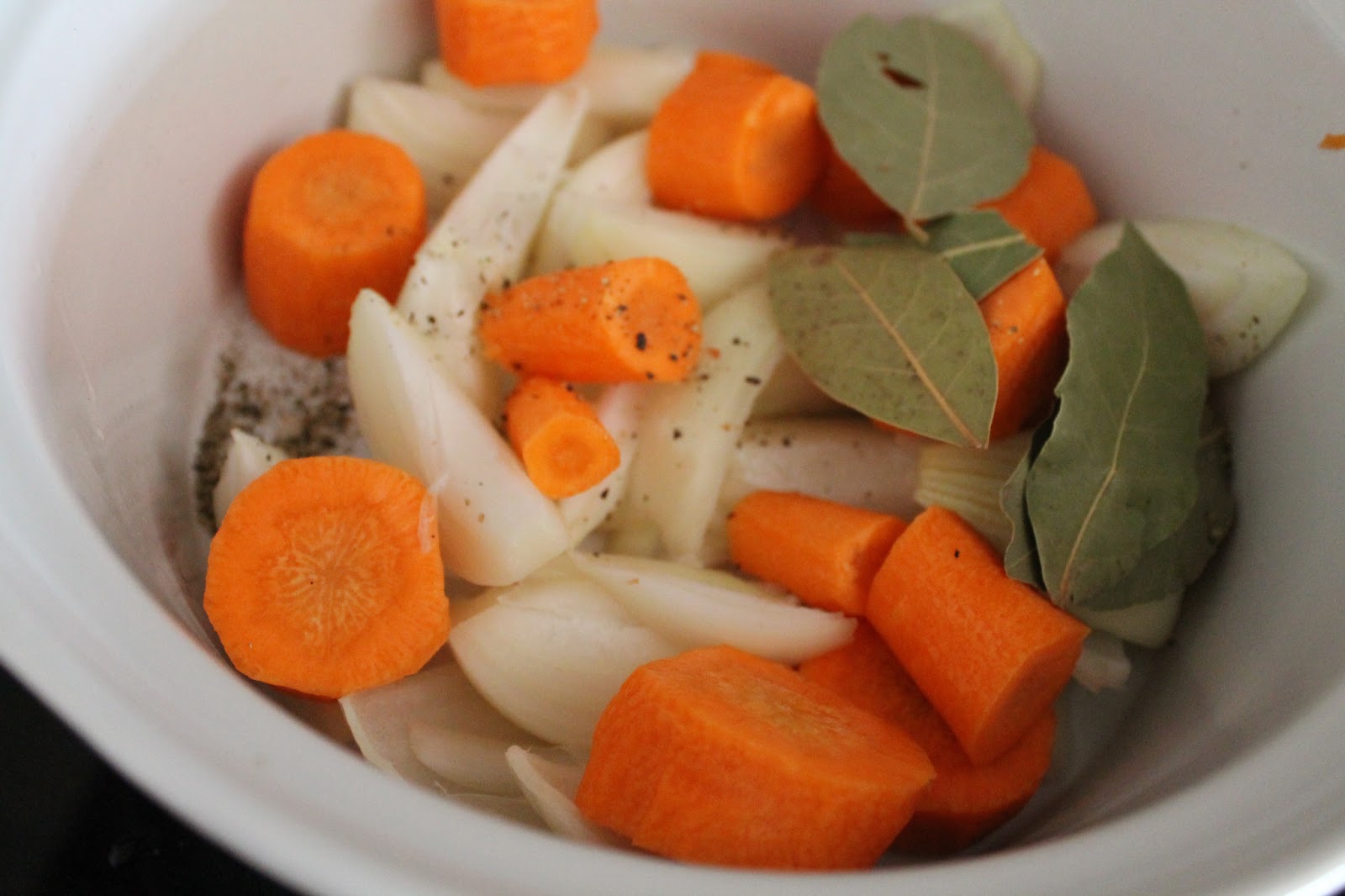
First, I chopped up the onions and carrots and put them in a large, over-proof casserole dish, topping the chopped vegetables with the bay leaves and pepper.  In Jersey, it's traditional to use a stone crock pot, hence the English name of this dish.


Chop the carrot and onion, add bay leaves and pepper

Add the pork belly pieces, including fat

Next, I chopped up the pork belly and added this to the casserole dish.  I must admit, I'm not a great fan of fat and pork belly is very fatty but, after 5 hours in the oven, the meat and fat were equally succulent and I think I actually enjoyed eating fat, for the first time in my life!

Finally, I added the beans and enough water to cover all of the ingredients.  I guess a purist would use dry beans and boil them before adding them to the casserole dish, but I opted for the easier option of tinned beans and the end result was tasty.

Add the white Haricot beans and mixed beans

Cover all ingredients with water, then put in the oven for five hours

It's a slow-cooking dish, so I left it for five hours in the oven at 150 degrees (Gas mark 2), which is quite a low heat.  I stirred the dish once an hour, to make sure nothing was sticking to the pot and that there was enough water. 

Check the pot about once an hour, to make sure it doesn't dry out

The end result was a yummy Pais au Fou served with Royal Jersey potatoes.  With all the fat and beans, it's also a good idea to serve something green on the side - I quite randomly choose rocket!

Royal Jersey potatoes
Jersey Bean crock - Pais au Fou


La Mèrvelle de Jèrri


Not content with the challenge of Jersey Bean Crock, I also decided to try my hand at making Jersey Wonders or Mèrvelles, a traditional pastry, which is quite similar to English doughnuts or French beignets

Learning how to cook something new is one thing, any idiot can do it, even me!  Learning how to bake something new is a totally different story and I found it quite challenging, although I was really happy with the end result. 

Ingredients for Jersery Wonders or Mèrvelles
I relied a lot on a recipe on the BBC's website and I also watched a video on YouTube, which helped me visualise the process for making wonders, especially how to twist the dough and give my wonders a traditional shape. 

The ingredients

500g self-raising flour
115g (4 ounces) of butter
230g (8 ounces) of caster sugar
6 eggs

How I made Jersey Wonders

I sieved the flour and caster sugar into a mixing bowl, then rubbed in the butter, which I'd cut up into small blocks.

Cut the butter into small 'blocks'

Next, I whisked the eggs in a separate bowl and slowly added the egg mixture to the bowl, mixing the whole lot together until I had a sticky, eggy paste. 

Mix the flour and sugar and work into the blocks of butter until you have a crumbly mix

Whisk the six eggs
Add the eggs to the flour/sugar/butter mix

According the recipe, you should use your hands to make small 'golf balls' from the mixture, which you put on an oven tray and cover with a damp tea-towel for two hour.

Use your hands to make several dozen 'golf balls'
Cover the balls with a damp cloth and leave for two hours

My 'balls' were slightly larger than golf balls, but it didn't really matter, as I was able to divide them in two later, to get smaller pastry shapes, more suitable to making wonders.


The next bit was probably the hardest and I used a lot of extra flour, on my hands and on the rolling pin, to roll out the balls and create an oblong shape.  On the video, I noticed that she cut three slits into the flat oblong and twisted the pastry through the middle one, so I did the same.

Use extra flower to flatten out the balls
Make an oblong shape and cut three slits in the pastry

Twist one end of the pastry through the middle slit and create a doughy shape like this
The result is a strange looking pastry mixture, that reminded me of a fleur-de-lys or a dainty woman's shoe!  I was really beginning to doubt whether or not this delicate mess would become anything edible but, luckily, in the final stage it all came together quite nicely.


The final stage involved heating up some vegetable oil in a pan and dropping the Mèrvelles into the hot oil, 5 or 6 at a time, until they became bloated and rose to the surface.  I was a bit confused by the recipe, when it said to cook the Mèrvelles on each side, when they turned golden brown. 

In my mind, I had an image of a flipping them over, on a frying pan, but I soon understood that I would have to turn the Mèrvelles over in the oil, so they would cook on each side.

Add Mèrvelles to the hot oil

When the go brown on one side, turn them over


I'm quite proud of my Jersey Wonders and enjoyed having them for breakfast with a nice cup of coffee!

Jersey Wonders or Mèrvelles


Image credits:

All photos were taken by me, please feel free to reuse, under the Creative Commons license:

Attribution (especially to this blog post)
Share alike
Non-commercial 
 

Sunday, 7 July 2013

Jersey - Don't mention the War!

One of the first things that really jumped out at me about Jersey and the Channel Islands, when I started researching for this blog, is the fact that the Channel Islands were the only part of the British Isles to be occupied by the Nazis during World War Two.  For Jersey and the other islands, the Nazi Occupation was a national trauma which has shaped the history of modern Jersey and left a legacy of museums, books and movies, which document and record the Occupation for future generations. 

What really happened?

Once a war has finished, it's sometimes difficult to know exactly what went on.  History is written by the victors and I'm pretty sure that people change their perception of what happened, how they felt etc. in relation to the ultimate outcome of the war itself.  In his book, Living with the Enemy: What really happened (1995), Roy McLaughlin makes a good attempt at unravelling the realities of the Nazi Occupation of the Channel Islands and looks at the perspective of the war from both the local point of view and that of the German soldiers stationed in the Channel Islands during that period.

Different reactions

It was interesting, for me, to see the different reactions of the four main Channel Islands, to the Nazi Occupation.  The entire population of Alderney was evacuated to England (except for two farmers who returned under Nazi rule) and the island became a de facto prison camp for slave workers from Eastern Europe and Spain.  By contrast, the inhabitants of Sark stayed put, under the formidable leadership of Dame Sibyl Hathaway, who seemed to treat the German occupiers as new house staff!  Guernsey also started down the road of evacuation, sending children back to England and Scotland, whereas most inhabitants of Jersey stayed on the island and tried to 'keep calm and carry on'. 

It's quite shocking to see photos of the Nazi flag flying in 1940's Jersey and I'm sure that the propaganda value of the Occupation was exploited to the full by the Nazi government. 

Abandonment v collaboration

British government poster from 1939
Needless to say, the Nazi Occupation of the Channel Islands was a very low point in UK-Jersey relations.  One on hand, the islanders felt 'abandoned' by their fellow Britons - on the other hand, many people in the UK wondered how the islanders could continue living under Nazi rule and questioned whether or not the islanders were 'collaborating' with the enemy.  In a bid to save the islands from destruction, they were demilitarised in June 1940, although the demilitarisation wasn't announced until after the first German bombing raids, which killed a total of 38 people on Jersey and Guernsey. 

It's clear that the British approach to the Channel Islands' Occupation was disorganised and inconsistent.  The War Office didn't consider the islands to be strategic to the defense of Britain and the lack of a coherent approach by the War Office and Home Office led to confusion and disarray.  Acting against official government policy, Churchill tried to rally a response to Occupation by sending spies to Guernsey, but this undermined the islanders position and worsened an already difficult relationship between the states of Guernsey and the occupiers. 

Jersey was eased into the Occupation years by the diplomacy of Alexander Coutanche, who established a fairly workable relationship with the occupiers.  Many British people failed to understand how there could be no resistance movement in Jersey and the other Channel Islands, as there was on mainland France and this was viewed with great suspicion, however, the islanders pointed out that there was nowhere for a resistance movement to hide or retreat to, on an island that is a mere 46 miles squared.

So how bad was the Occupation?

The Nazis had a relatively benevolent approach to the Channel Islands, particularly at the beginning of the Occupation, as they tried to win the hearts and minds of their new British subjects.  The main hardships of Occupation seem to have been more general ones, such as food shortages, which also affected people in mainland Britain and for logistical reasons, the Nazis confiscated the islanders' bicycles!  McLoughlin points to the following three main factors that represented the hardships that Occupation brought to the islands:

Nazi control tower on Jersey by mrwalker
1.  Banning the radio.  At the beginning, islanders were allowed to use their radios and even listen to BBC news but, as the war went on, the Nazis banned the use of radios - a crime punishable by transportation to Germany.  Somehow many islanders managed to hide radios and continue listening to updates from the BBC - it seems most people weren't caught doing this, unless a neighbour informed on them.

2. The arrival of foreign prisoners.  Whilst the islands weren't considered to be strategically important to the British, Hitler was determined to turn them into the most fortified place in the Atlantic!  The Nazis built grand-scale defences on Jersey and the other islands and imported labour, mostly slaves from Eastern Europe and Republican prisoners from Spain, to construct their Atlantic Wall fortifications. 

Whilst the islanders were mostly left in peace, to carry on with their normal lives, the slave-labourers were treated really badly and their treatment was witnessed by the islanders, who were as distressed as any normal human would be at the suffering of others.  Many islanders risked their lives and the lives of their families, by sheltering escaped Russian, Ukrainian and Spanish prisoners who'd fled the horrors of the labour camps.

3. The deportation of non-native inhabitants.  In reprisal for the British internment of German citizens in Iran, the Nazis announced, in 1942, that all non-native (ie. from the British mainland) inhabitants of the Channel Islands would be deported to Germany.  Perhaps more than anything else, this brought home the realities of the war to the islanders who, until that point, had had a fairly peaceful relationship with the Occupiers. 

Liberation and the legacy of the war

Liberation Square, St Helier by amandabhslater
The Channel Islanders felt abandoned again when, in June 1944, during the D-Day landings, the British and other Allied forces liberated Normandy, but didn't arrive in Jersey to liberate the Channel Islands from Nazi rule.  In fact, the Nazis remained in Jersey and the other islands until May 1945, when Germany was finally defeated and the Occupiers agreed to leave.  The winter of 1944/45 was a bitterly cold one and the islanders suffered many deprivations which might have been avoided had they been liberated earlier.  Again, the liberation of the Channel Islands didn't seem to be high on the list of priorities for the British government.

The end of war saw the return of those inhabitants who'd been evacuated in 1940.  McLoughlin describes the uneasy relationship between the returnees and those who had stayed behind.  Another legacy of the war was the number of children of German parentage that had been born to island women and this 'sexual colonisation' of Jersey reminded me of a similar topic I researched for my blog post about the war in Eritrea

The number and influence of informers in Jersey during the war is a controversial and divisive topic that hasn't been fully researched or investigated and remains, to a certain extent, an island taboo.

The Russians in Jersey

I like the way McLoughlin devotes a chapter at the end of his book to look at the Occupation from the eyes of the Occupiers and it's interesting to read how ordinary German soldiers were happy to be posted to the Channel Islands, as it was almost like a holiday from the front line and a refuge from British bombardment, common in Germany and elsewhere.   It would be quite interesting to also know what life on Jersey was like for the many Russians, Ukrainians and Poles who spent the war there.  It must have been truly bizarre to find themselves transported to this western outpost of Nazi Europe, many miles from their Eastern European homelands. 

Image credits:

The 1939 British government poster Keep Calm and Carry on is in the public domain. 

The image of the Nazi control tower was taken by flickr member mrwalker - you can see more of his photos on his Flickr account

The image of the sculpture on Liberation Square in St Helier is by flickr member amandabhslater - Amanda lives in St Helier and you can see more of her images on her photostream

Thanks to Mr Walker and Amanda for sharing these images with us using the Creative Commons License. 

Saturday, 29 June 2013

Jersey - Tax us if you can!

Taxation has been in the UK news a lot in recent weeks - whether in relation to the proposed clampdown on 'tax havens' or the fact that Starbucks has just paid corporation tax in the UK (to the tune of £5 million) for the first time in almost four years.  Whilst people in Jersey would hotly dispute the idea that their island is a 'tax haven', it's commonly perceived as such by taxpayers in the UK.  Jersey has long had its own system of taxation and islanders will maintain that their laws on taxation are every bit as robust, even more so, than in the UK, where many loopholes facilitate cases of tax avoidance. 

Tax evasion or avoidance?

There's a very simple difference between tax evasion and tax avoidance - evasion is illegal, ie. when you don't pay your taxes or you're involved in illegal activities such as smuggling.  Tax avoidance on the other hand is legal - any individual or company with a good accountant can figure out ways of keeping their tax bill at a minimum amount, which might include registering elements of your business in one of the world's 73 'tax havens' or simply setting up an offshore account, where you can transfer your money to a place where it won't be heavily taxed.


Why do we pay taxes in the first place?

Jersey pound note by David Holt London
Well, it's very simple - taxation is the collection of communal funds that provide the infrastructure that a society needs.  Every worker in society produces something - whether it's a more traditional scenario of a farmer growing vegetables which he will then sell in the market, or a modern scenario of a call-centre worker providing customer service via telephone or email, infrastructure (roads, telecommunications) is vital to connect the producer of goods with his/her market.  Not to mention the provision of health care, education, social welfare, defense etc. that anyone who lives in a 'civilised' society should expect to have access to.

The link between civilisation and taxation is an important one and, in the current economic climate, individual nations, such as the UK (but also the US, Germany etc) are feeling less tolerant towards individuals or companies that engage in tax non-compliance and avoid making a full contribution to the country where they live/work/use the infrastructure and resources.  After all, why should someone enjoy the benefits of a civilised society, when they don't pay for it?

Tax as a global issue

In the olden days, before globalisation, the relationship between a tax-payer and his government was a lot clearer.  Most goods were physically produced locally, therefore it was more obvious to which authority the tax-payer should pay his/her taxes.  Nowadays, with many goods being 'services' more than physical things - it's sometimes not so clear as to where the goods are produced and where they are sold.

There is no international taxation system, therefore each country (or tax-independent jurisdictions, like Jersey) is free to decide its own rates of taxation.  This is completely legal and, unless tax-independent jurisdictions deliberately use 'harmful tax competition', they aren't doing anything wrong.

Jersey - VAT and banking

Jersey coin by tigerweet
Jersey has never adopted Value Added Tax (VAT) on goods, a taxation which is common elsewhere in Europe.  This means that the price of luxury goods, in particular, is much lower than elsewhere in Europe and, therefore, those who can afford it, will buy their luxury goods in Jersey, where there is no VAT, rather than in England and France, where VAT adds around 20% to the original price.

With a population of around 97,000, Jersey has 32,000 registered companies and 46 banks - at any given time, it's estimated that there are £189 billion pounds deposited in the island's banks (around £2 million for each of Jersey's inhabitants) - even with the estimated 250 millionaires who live in Jersey, something just doesn't quite add up!  


It's clear that, with the independence of tax systems in places like Jersey and the relative ease of moving people, goods and services internationally in the 21st century, countries with higher taxes are going to lose out on vital revenue that equips the society where these goods and services might be making a profit for the individual or company who is moving their financial assets elsewhere.  In the case of Starbucks - it's easy to compare the number of coffee sales to the amount of the company's taxation - but what about less tangible products, such as the branding, advertisement or even the raw materials used to produce their goods?

International tax Watchdogs

Sailing at Mont Orgeuil by Alex Fearn
The main international watchdogs on taxation are: UNESCO, the EU, individual governments and civil society organisations.  One of these civil society organisations, the Tax Justice network has published an interesting paper called Tax us if you can which is well worth a read, in terms of the background of international tax avoidance and how this has a wider impact on the Developing World. 

UNESCO has pushed for the signing of bilateral Tax Information Exchange Agreements (TIEAs) between countries in the Developed world and those countries most often considered to be tax havens.  These agreements provide a framework for collaboration so countries can find out whether or not their citizens are avoiding paying tax by putting their money in offshore accounts.  I read an interesting article about a recent case between Norway and Jersey, where the Royal Court of Jersey has rejected an appeal on behalf of Berge Gerdt Larse, a Norwegian businessman, regarding an information request the Norwegian government has made under the TIEA signed with Jersey in 2008.  It's thought that this case could set an important precedent for the implementation of other TIEAs around the world.

International co-operation on taxation

Being branded as a tax haven could, ultimately, be bad for business and places like Jersey have been co-operating with the international community, vis-a-vis regularising the situation of international investments in the island.  The case of Starbucks in the UK shows that there is increasing pressure for companies to be 'ethical' when it comes to paying their taxes - ultimately they could lose a lot of business, if customers perceive an unacceptable level of tax injustice.  The Larse/Norwegian case shows increased transparency for wealthy individuals also and, perhaps, signals the beginning of the end of 'banking secrecy' that epitomises many of the world's banking havens.

By contrast, Switzerland, which prides itself on 'discretion' has yet to sign any TIEAs and the Swiss parliament's lower house has recently rejected proposed amendments to the country's secrecy laws, which could see Swiss banks being prosecuted by the US for aiding tax evasion.  The US is one of only two countries in the world (the other is Eritrea) which obliges its citizens to pay taxes, regardless of where they actually live. 

Image credits:

All images have been shared by flickr members, David Holt London, tigerweet and Alex Fearn - thanks to David, Sarah and Alex for sharing these images with us using the Creative Commons license. 

Saturday, 22 June 2013

Jersey - Pâl'-ou l'Jèrriais?

Something I didn't know about Jersey and, indeed, the other Channel Islands, is that they have their own languages, which are considered to be dialects of Norman French and, therefore, not closely related to English.  In Jersey, the Norman language is known as Jèrriais and this was regularly spoken in Jersey until the 1950's, when the last monolingual speakers died and English finally took over.  It's now estimated that less than 2,000 people speak Jèrriais as a native language - although it still has an important ceremonial role in Jersey's political and legal systems.

The World's 'big' languages

Unfortunately, the experience of Jersey is pretty typical in a constantly globalising world.  The reality of the early 21st century is that more than 50% of the world's population speaks one of the top 24 languages (ie. those with more than 50 million speakers).  We've met some of these already when I blogged about Chinese linguistics in December last year: Mandarin, Wu and Yue (Cantonese) have around 987 million speakers between them.  Then there are the big languages of South Asia: Hindi, Bengali, Lanhda (which I'd never heard of), Telugu, Marathi, Tamil and Urdu.  The other big East Asian languages include: Japanese, Javanese, Vietnamese, Korean, and Malay.  The big languages of the Middle East are: Arabic, Persian and Turkish.  Finally, the big European languages are: Spanish, English, Portuguese, Russian, German and French.

Sign in English and Jèrriais by Man Vyi
Interestingly, not a single language originating in sub-Saharan Africa, Australia/Pacific or the Americas has made it onto this list and I think this says a lot about the role language has to play in colonisation.  The biggest language from sub-Saharan Africa is probably Hausa, which has 40 million native speakers - you can read more about African linguistics in my blog post from 2010.  The biggest American language is Quechua, which has about 7 million native speakers in Peru and Bolivia.  Most Australian languages are endangered or extinct and you'll probably find more Russian or Mandarin speakers in Australia, than speakers of native Australian languages!

Countries with the greatest number of 'endangered' languages

For most other languages, survival into the 21st century and beyond will be something of a challenge.  UNESCO has published an interesting online map of endangered languages including Jèrriais, which you can visit by clicking on the following link.  I looked at the 'hotspots' for endangered languages around the world and it's surely no coincidence that the countries where languages are most in danger of extinction are also those where the 'big' languages listed above are spoken - according to UNESCO's map, the ten countries with most endangered languages are:

India (197)
The United States (191)
Brazil (190)
Indonesia (146)
China (144)
Many sign posts are written in Jèrriais, photo from Man vyi
Mexico (143)
Russian Federation (131)
Australia (108)
Papua New Guinea (98)
Columbia (68)

Exactly how endangered?

UNESCO employs a useful system of categorisation, to describe exactly how endangered a language is considered to be.  They define the following five main categories:


Vulnerable - most children speak the language, but it may be restricted to certain domains (e.g., home)
Definitely endangered - children no longer learn the language as mother tongue in the home
Severely endangered - the language is spoken by grandparents and older generations; while the parent generation may understand it, they do not speak it to children or among themselves
Critically endangered - the youngest speakers are grandparents and older, and they speak the language partially and infrequently
Extinct - there are no native speakers left

Under this categorisation, Jèrriais is considered to be severely endangered, as is the language of Guernsey, DgernesiaisAuregnais, the language of Alderney, is already considered to be extinct.

So what can we do about it?

Coming from Ireland, I feel quite passionate about language revitalisation.  There have been some successful attempts to revitalise languages, probably the most famous example being Modern Hebrew as well as the Celtic languages, which are receiving a lot of government-level support.

Unfortunately, despite all of the hard work people having been doing to revive the Irish language, it seems to be constantly in decline and is considered by UNESCO to be definitely endangered, whereas neighbouring Welsh is merely vulnerable and the revitalisation of Welsh in recent years has been fairly successful. 

Losing a language means losing part of the cultural richness of the human experience and it's a real shame to see the world's big languages take over, even if one of them, English, is my mother tongue.  My partner's mother tongue is Russian, but his people speak Kalmyk, which is definitely endangered, just like Irish, so we are very much part of this shift in language use.  I can't help but wonder how many of these languages will be left in 100 years time?

On a more positive note, I'm going to leave you with a link for the Endangered Languages project - it's great to know that there are people out there who are willing to advocate for linguistic diversity in the 21st century.

I'll also leave you with a video of Jersey poet Michael Vaûtchi, reading a poem in his native Jèrriais


Image credits:

Both images have been released into the public domain by Man vyi, who has shared lots of images of Jersey on Wikimedia Commons - thanks Man vyi for sharing these images with us. 

Monday, 17 June 2013

Jersey - what's in a name?

There is quite a contrast between Jamaica, the last place I blogged about beginning with the letter 'J', and Jersey, the place I have chosen to blog about next.  Jamaica is a parliamentary democracy with almost 3 million people - GDP per capita is around $9,000.  Jersey is a crown dependency with vestiges of feudal rule - it has a population of around 98,000 people, the GDP per capita is $57,000 (more than 6 times that of Jamaica).

One the other hand, they both have Elizabeth II as the Head of State (she's known as the 'Duke of Normandy' in Jersey and 'the Queen of Jamaica' in Jamaica), they both have a complicated history with the UK and they both have English-speaking populations.  Like Jamaica, Jersey is divided into parishes, many of which are named after saints - eg. St Ouen, St John, St Clement in Jersey and St Andrew, St Elizabeth, St Catherine in Jamaica. 

Jersey - part of the UK?

Elizabeth Castle, St Helier by paulafunnell
It might surprise many people in Britain to learn that Jersey isn't actually part of the UK.  It's a crown dependency which means that, although Elizabeth II is the Head of State and the UK has constitutional responsibilities for Jersey, it's a self-governing island and retains many rights and privileges that go back to the time of the Norman conquest of England. This also means that Jersey is not part of the European Union, although it has a special relationship with the EU. 

Likewise, it might surprise people to know that the other Channel islands are not part of the UK, nor is the Isle of Man, which is located in the Irish Sea.  Just this week, the UK Prime Minister had a special meeting with representatives of the crown dependencies, as well as British Overseas territories, such as Bermuda and the Cayman Islands, the so-called 'tax havens', to discuss a clamp-down on tax regulation in these British territories that aren't part of the UK.

Channel Islands or Îles Anglo-Normandes?

In France, the Channel Islands are called les Îles Anglo-Normandes or the 'Anglo-Norman islands', which is, perhaps, an even more accurate description of what they are, than the term 'Channel Islands' - the first thing I've learned during my research is that these islands aren't actually in the English Channel at all, but are in the Gulf of St Malo!

Okay, the Gulf of St Malo is, arguably, part of the English Channel (which, by the way, has no real meaning to the French, who call this body of water La Manche or 'the sleeve'), but the term Channel Islands is quite a political one, as it makes it sound as though they are just off the coast of Kent when, in fact, they are many miles south of England, off the coast of France.

Channel Islands around the world

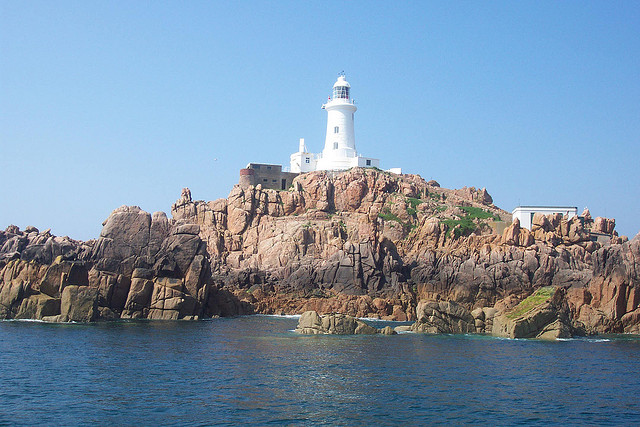
Corbiere lighthouse in Jersey by paulafunnell
Interestingly, Slavic languages have followed the French example, eg. Russian (Нормандские острова - Normandskie ostrova) and Polish (Wyspy Normandzkie) .  Most Germanic languages use the term, Channel islands - German (Kanalinseln) and Norwegian (Kanaløyane) - Latin languages often, quite diplomatically, offer two alternatives, eg. Spanish (islas del Canal or islas Anglonormandas).

In Welsh, they're, quite patriotically, known as Ynysoedd y Sianel and in Breton they are, equally patriotically, called Inizi Angl-ha-Norman.  In Irish they are known, bizarrely, as Oileáin Mhuir nIocht which means 'Islands in the (Isle of ) Wight Sea'!  The rest of the world seems to conform with the English name - eg. Thai (หมู่เกาะแชนเนล - H̄mū̀ keāa chæ nnel) and Bahasa Indonesia (Kepulauan Channel).

The meaning of Jersey

Adding to the Anglo-Norman mix is a good deal of Scandinavian!  The Channel Islands were frequently raided by Vikings, back in the day, and the three main islands Jersey, Guernsey and Alderney all have the -ey ending, which is similar to the -øy ending, meaning 'island' in modern Norwegian.  The Romans called Jersey Caesarea and I can't help but wonder whether or not the modern name of this island is a combination of Latin Caesarea and Scandinavian -ey. 

Channel Islands from Wikimedia Commons
Home from home?

Like many people who live in Britain or Ireland, I've had a very vague awareness of Jersey and the Channel Islands.  In my mind, it has been a picture not unlike the Isle of Wight or Dorset in the 1950's.  The first thing I've learned is that it's a lot more complicated than that.  The Channel Islands are only miles from the French coast and the influence of French culture means that the islands (whatever you want to call them) are a very unique blend of English, Norman, French and Viking.  Some people still speak the Norman language Jerriais on Jersey and, despite their obvious Britishness, the Channel Islands retain a strong local identity, which I'm already intrigued by.

Over the next few weeks, I intend to learn about the food, music, history and culture of Jersey - why not join me on this virtual journey and we can learn about Jersey together!


Image credits:

The map of the Channel Islands is taken from Wikimedia Commons and you can see the file information there.  

The images of Jersey are from Flickr member paulafunnell - Paula has created a whole set of photos taken in Jersey, which you can see in her photostream.  Thanks to Paula for sharing these images with us using the Creative Commons license.