Sunday, 8 February 2015

Quebec - Playlist

I've listened to lots of great music during the time I've been researching and blogging about Quebec, so here is my Quebecois playlist.

Reflektor (2013) by Arcade Fire

I've become quite a big fan of Arcade Fire, although I'd never really heard their music before I started researching for this blog.  I discovered them just before I went to Canada, in fact, so as I was listening to this song on repeat, as I was whizzing through Montreal, past the factories and over the Jacques Cartier bridge to Longueuil.  Arcade Fire are from Montreal and are very much part of Quebec's 'Anglo' culture, although some of the lyrics of Reflektor are also in French.  I love songs that work on different levels and, for that reason, Reflektor really does it for me!  I hope you like the song and the rather disturbing video!

On ne change pas (1999) by Celine Dion

I've never been a massive fan of Celine Dion. Whilst it's undeniable that she is one of the most popular singers the world has ever known, I've found her music a little cheesy and too 'pop-machine generated'. Having said that, she does have a fantastic voice and I quite like some of her French-language songs. I've come to particularly like this song, ever since I heard it on the soundtrack of Xavier Dolan's Mommy. The characters in the movie acknowledge that Dion's music is a bit cheesy, but they love her all the same, as she's such a symbol of Quebec. 

The song itself seems to make the assertion that we never change, even if we become more sophisticated and 'on met just les costumes d'autres sur soi' (we wear the costumes/habits of others). Dion symbolises modern Quebec in many ways, as she's a Francophone in an English-dominated world. Although many of her biggest hits were in English, two of her albums - D'eux and S'il suffisait d'aimer (where this song comes from) - rank as the best selling French-language albums of all time. Actually the songs on both album were written by the Parisian musician, Jean-Jacques Goldman, an influential song-writer in his own right.

Le But (2012) by Loco Locass

I really love this song by the Quebecois hip-hop group Loco Locass. My research into Quebec has led me to the conclusion that Quebecois people are a little bit of obsessed with ice-hockey (also Canadians, in general, perhaps?) I was surprised to learn that ice-hockey originated in Montreal, as I'd always thought of it more as a Slavic or Scandinavian import, more at home in places like Alberta or Manitoba. The Montreal ice-hockey team, Les Canadiens (aka Les Habs), are one of the biggest teams in the National Hockey league and a source of pride, honour and sometimes frustration for the people of Quebec. 

I've come across references to ice-hockey again and again in the books I've read and movies I've watched relating to Quebec. This song seems to encapsulate French-Canadian pride, their love of ice-hockey and the history of Quebec. Not to mention the fact that it's extremely catchy - I find myself humming 'Allez, Allez, Montreal' all day long after listening to this. 

Au bord de la Fontaine (2003) by Le Vent du Nord

This is the first time I've been able to go and see one of the bands I'm blogging about live in concert, as part of my research. Out of all the Quebecois music I've listened to, Le Vent du Nord is the only band that I'd actually heard of before and I've been a fan of their music since their 2009 album Le Part de Feu. So when I found out they were touring the north of England in January, I couldn't resist and travelled up to Bury, just north of Manchester, to see them play.

There's nothing like live music to really help you understand the sounds involved and I loved the way Le Vent du Nord uses the hurdy-gurdy, accordions and mouth organs, but I also really love their voices - I'm a big fan of call and response singing and no-one does this better than Le Vent du Nord.

Les étoiles filantes (2004) by Les Cowboys Fringants 

This is a really catchy little tune that I couldn't help bobbing my head along to. The lyrics are in the Montreal dialect joual, so I couldn't quite understand the words until I saw them written down and translated into English. 

Les Cowboys Fringants are considered to be 'neo-folk', which is like folk re-interpreted for the modern age. They're fond of accordions and political lyrics, one of my favourite combinations and their music fits well into a long tradition of French chanson or secular, lyric-driven songs. 

I particularly loved this song from their 2004 album, La Grand-Messe. It's about growing old and all the things you lose in adult life, which would be a bit depressing if they didn't balance that with lyrics along the lines of 'just do your best'. Les étoiles filantes means 'Shooting stars' and is a good metaphor for the transitory nature of human existence. 

I've put some of the lyrics below so you can sing along with the YouTube video. 

La trentaine, la bedaine
Les morveux, l'hypothèque
Les bonheurs et les peines 
Les bon coups et les échecs

Travailler, faire d'son mieux
En arracher, s'en sortir 
Et ésperer être heureux
Un peu avant de mourir 

The thirties, the belly
The kids, the mortgage
The pleasures and the sorrows
The strokes of luck and the failures

Working, doing your best
And struggling and getting out
And hoping to be happy
A little before dying

Avalanche (1971) by Leonard Cohen

Leonard Cohen is a massive musical force and I know a few people who are a bit obsessed with him. He's a poet, as well as a songwriter and his lyrics are very poetic. I've never been a big fan of his music, although I do appreciate the uniqueness of his voice and lyrics. I've always loved Suzanne from his 1967 album, Songs of Leonard Cohen - there's something incredibly poignant and melancholic about that song but, at the same time, I really can't stand one of his other songs, Hallelujah and the popularity of Hallelujah really baffles me.

In the interests of learning more about the world, I made an effort to listen to Leonard Cohen songs that I'd never heard before and I particularly liked Avalanche from his third album, Songs of Love and Hate (1971).  Like many of his songs, Avalanche started off as a poem and the lyrics are ever-so-slightly disturbing, all hunchbacks and golden mountains, like a fairytale-turned-nightmare.  Most of all, I love the music and the way Cohen plays the classical guitar, a feature more prominent in his earlier music.  

Dites-lui (2013) by Ale Dee

In many ways, it's just a silly pop song, but I quite liked this track from Ale Dee's 2013 album, 2013. A.D.  I like the way he throws in a few English phrases in the middle of the French rap and I'm sure this song is really popular with young people in Quebec. It's urban and gritty, another side to Quebecois life and a new generation influenced by musical trends from south of the border.

Navvaatara (2010) by Elisapie Isaac

Like other people, I came across Elisapie Issac's music by watching the movie Cafe de Flore. Elisapie was born in Nunavik, Quebec's far-north region and she sings in French, English and Inuktitut, the language of the Inuit people.  Navvaatara means 'I've found it' and I love the gentleness of this song. I want to learn more about Elisapie Isaac and Inuit culture - perhaps if I end up blogging about Nunavik or Nunavut?

Of course, there were many other artists that I listened to as part of my research - Felix LeClerc, Luc Plamondon, Edith Butler, Lhasa de Sela, La Bottine Souriante - to name but a few!  I've restricted myself to just eight tracks for this play list, but feel free to continue your own research and discover even more Quebecois artists.

I'd be interested in hearing your playlist suggestions (with links, if possible) in the comments below this blog post.

Saturday, 31 January 2015

Quebec - On the Silver Screen

I've been really spoilt for choice this time, as some fantastic movies have come out of Quebec in recent years. I've been a big fan of Xavier Dolan since I saw Laurence Anyways and I can't believe he's only 25 years old, yet he's produced such brilliant films! I also really enjoyed discovering some of Quebec's most talented directors, so I've made a list of movies I would recommend.

Incendies (2010) dir. Denis Villeneuve

Watching Denis Villeneuve's Incendies was a good bridge between Quebec and the last place I blogged about, Palestine. Although the movie has its anchor in Quebec and centres around the story of Quebecois twins, Jeanne and Simon, the action mostly takes place in the Middle East, in Lebanon, where the twins travel to find out about their mother's past and the mysterious identities of their father and brother.

It's an incredibly powerful film and was put forward as Canada's entry for Best Foreign Language film during the 83rd Academy Awards. It's not a movie I'll forget in a hurry and I thought it was beautifully made, well structured and thought-provoking.

Monsieur Lazhar (2011) Philippe Falardeau

Like Villeneuve's Incendies, Falardeau's award-winning movie, Monsieur Lazhar was also put forward as the Canadian entry for Best Foreign Language film, this time for the 84th Academy Awards. The film also links to the Arab world, this time Algeria, as we find out that Monsieur Lazhar is a refugee in Canada, escaping death threats made against his wife, a well-known Algerian writer. Monsieur Lazhar takes up a post in a Canadian primary school where the teacher has committed suicide in the classroom, her body having been found by one of the pupils.

It's a very sad movie and deals with the impact of death and the inability of the adult world to explain death to children without the help of a psychologist. It also deals with the adults' fear of intimacy with the children - the teachers aren't allowed to touch the children or comfort them in any way and there is a definite conflict between the norms of a North American society versus the natural tactile culture of the French-Canadians. I thought this was an incredibly moving film and would highly recommend it.

Mommy (2014) dir. Xavier Dolan

I was lucky enough to see Xavier Dolan's latest movie whilst I was in Montreal, in the really cool Cinema du Parc. Mommy completely blew me away and has to be one of the best movies I've seen in recent years. The quality of the direction is superb and I'm absolutely in love with Anne Dorval, who plays the mother of a violent young man whose behaviour is out of control. I also loved the performances of Suzanne Clement and Antoine Olivier Pilon.

Having spent a few days in Montreal, I could relate to the setting of the movie, as well as the interesting mixture of joual (the French-Canadian dialect of Montreal) and the use of English, which seems to insert itself into every second sentence, often as swearwords! I can't recommend this movie enough. It doesn't seem to be in the cinemas in the UK just yet, so I'm patiently waiting for this movie's release on this side of the Atlantic!

As well as watching Mommy, I also watched the following movies by Xavier Dolan, all of which I loved:

I Killed my Mother (2009)

Heartbeats (2010)

Laurence Anyways (2012)

Tom at the Farm (2013)

Café de Flore (2011) dir. Jean-Marc Vallée

Interweaving two apparently different stories, Café de Flore brings together the lives of six main characters across several generations and links Quebec with its spiritual motherland, France. The contrast between modern-day Montreal and post-war Paris highlights the affluence of the modern age and the poverty of earlier generations - also the affluence of a North American society in contrast to the poverty of a European one.

Vanessa Paradis plays the main role in the French side of the story and the Quebecois actor, Kevin Parent, who is from Gaspé, counter-balances in the modern tale. It's a quirky story, a little bit weird and with a good deal of esotericism. Well worth watching and I loved the soundtrack!

Bon cop, Bad cop (2006) dir Eric Canuel

I don't normally watch 'cop' movies, but I really enjoyed Canuel's 2006 comedy, Bon Cop, Bad Cop. When a dead body is found on the Quebec/Ontario body, two police officers, one from the Sûreté de Quebec and the other from the Ontario police are forced to become partners. At first, they hate it, of course, but by the end of the movie they work as a team and appreciate each other's differences. There's quite a lot of stereotyping, the cautious, staid and 'uncool' officer from Toronto and the erratic, slightly crazy but handsome officer from Montreal.

It's all delivered in a really humorous way and pokes fun at the stereotypes, rather than taking them seriously. It's also a real joy for anyone who is bilingual in English and French, as the dialogue switches rapidly back and forth between the two languages. There is a lot of play on words and use of joual to add a few in-jokes. What was the plot and which crimes were they trying to solve? I can't remember, but it was a fun couple of hours and I laughed a lot!

Barney's Version (2010) dir. Richard J Lewis

Mordechai Richler passed away in 2001 and, I guess that this film version of his 1997 novel Barney's Version is a fitting tribute to one of Montreal's most famous writers. As I've so recently read the book, it was hard for me to look at the film as a stand-alone creation and I couldn't help comparing the details of the film version with the novel. In many ways, I think the film was better at getting the story across than the novel and, when I did manage to 'switch off' and just enjoy the movie, I could get a sense of how poignant the story is, if you concentrate on the theme of 'lost love' and how sad the ending is, when Barney finally meets his demise.

I think I was so impatient with Barney's character in the novel that I'd lost all sympathy for him by the end of the book - the movie didn't affect me in the same way. It had a great cast as well, big names like Paul Giametti, Rosamund Pike, Dustin Hoffman, Minnie Driver. Hoffman's son also starred in the movie and I didn't even know he had a son, or that his son is an actor!

One thing I didn't understand about the movie was the place changes - they swapped Paris for Rome and Toronto for New York. There's such a strong historical connection between Quebec and France and the fact that part of the novel takes place in Paris is significant, so I couldn't accept the change of location, as I think it interfered with the original plot.

Jesus of Montreal (1989) dir Denys Arcand

This movie took me by surprise and I was also completely blown away by it. I'm not at all religious, but I thought that Arcand portrayed a very sympathetic interpretation of the Passion of the Christ, which got beyond the need to be a Christian but, rather, explored the powerful message of peace, love and tolerance that Christ's life represents. The acting is superb and a fantastic performance by Lothaire Bluteau, the theatre director who also plays Christ in the passion play.

The movie represents Quebec at the height of it's materialist age in the 1980's. A time when many people no longer believe in God and more material values have taken over. Bluteau plays a theatre director who is asked to stage a performance of the passion of the Christ and does so with such intensity, that the public are genuinely moved and the real power of Christ's message to the world shines through. However, the reinterpretation of Christ's life is deemed blasphemous by the church and they decide to pull the performance. Although the movie is about a play, the movie itself mirrors the passion of the Christ and raises the interesting question of what Christ would think of a modern-day Montreal, obsessed with money, celebrity and exploitation.

C.R.A.Z.Y. (2005) dir. Jean-Marc Vallée

I absolutely loved this movie and can't believe that I hadn't seen it before. It's a great family drama about five brothers (Christian, Raymond, Antoine, Zachary and Yvan) and their relationship with their Patsy Cline-obsessed father, Gervais Beaulieu. The story centres around the fourth son Zac and the difficulty he has accepting his sexuality and being accepted by his father. Zac is doted on by his mother, who believes he has a special gift, as he should have been her seventh child (due to three miscarriages) and because he was born on Christmas Day and, therefore, shares a birthday with Jesus.

The soundtrack for the movie is excellent and we follow Zac's story as he grows up in the era of glam rock and then punk. Apparently the music rights for his movie cost CND$600,000, which was a sizeable chunk of the overall budget.

The movie I didn't see

Unfortunately I didn't manage to get my hands on Arcand's 1986 comedy-drama, The Decline of the American Empire.  By all accounts, it's a must-see for anyone who's interested in Quebecois cinema. Ah, well - perhaps I'll come across this movie another time.  


Sunday, 25 January 2015

Quebec - My Country is Winter

It's hard to blog about Quebec at this time of the year and not notice how cold the temperature there is right now. I always have quite a few cities around the world displayed on the weather apps on my phone. (What, weather obsessed? No, not me!) With a low today of -19 Celsius (-2.2 Fahrenheit) Montreal is the second-coldest place on my list and only Ulan Bator in Mongolia has a lower temperature (-21 C/-5.8 F)

With an average 141 days of snow per year, Schefferville, on the border with Newfoundland and Labrador, is the snowiest place in Quebec and Quebec itself is one of the snowiest places in the world, its main rivals being Kamchatka and northern Japan. 

Quebec City hosts a winter carnival every year, this year's carnival is starting next week, on the 30th of January 2015. As well as events, workshops and bemused tourists, the carnival also has a mascot, Le Bonhomme - a kind of gigantic snowman - and was first held in 1894. It attracts around a million visitors a year and is one of the world's biggest winter festivals. 

Rue Pontiac in Montreal by Jonathan Malboeuf
Winter plays a very important role in Quebecois culture and, traditionally, it was a time when people would retreat to their log cabins and live off fruits they'd preserved after one of the world's shortest harvests. In a modern age, where year-long productivity is the norm, it's hard to imagine a whole society going into hibernation in this way and, indeed, one of the things that shocked me most about Quebec was the fact that people only get around 10 days paid holiday every year!

In his book, Sacré Blues: An unsentimental journey through Quebec (2000) Taras Grescoe talks about this period of retreat and how it quite possibly led to the creation of great art - people in Quebec love their actors, poets and musicians. He also claims that people in modern-day Quebec have declared war on winter. Montreal has one of the world's most aggressive snow-removal policies and it costs the city around $54 million dollars a year to keep the streets snow-free. 

Un appel etrange by Jonathan Malboeuf
Grescoe provides even more evidence than Quebec is at war with winter, for example, he highlights the fact that modern movies about Quebec tend to be set in summer and winter is no longer celebrated. Thinking of the movies I've watched as part of my research, this is definitely true and I can think of very few winter scenes and, even when winter scenes are included, they represent a low-point, psychologically, in the narrative. 

Grescoe also points out that around 10% of the Quebec's population heads south during the winter months, mostly to resorts in Florida like Hallandale and Hollywood Beach. Winter costs a lot of money; people have to buy medicine and winter clothes, cars deteriorate quicker in Quebec than in other parts of Canada and roads need constant repair after the winter season.  

But winter encourages a sense of community life over individualism and, surely, this is a very Quebecois characteristic, at odds with other North American cultures, which seem to put the needs of the individual above all else? 

In one of his most famous and popular songs, the singer Gilles Vigneault proclaims:

Mon pays c'est ne pas un pays, c'est l'hiver
(My country is not a country, it's winter)

And it makes one wonder what ever happened to the love of winter in Quebec? 

Given the evidence of global warming and the fact that we modern generations have been experiencing much milder winters than our predecessors experienced (even in places like Canada!), winter is fast becoming an 'endangered season'. 

I know it's easy to say for me to say this, sitting in the pleasant and relatively balmy winter of southern England, but I kind of wish we could all appreciate winter a bit more. Okay, it causes inconveniences, meetings need to be cancelled, business grinds to a halt, but why not throw another log on the fire, start reading a good book and just enjoy the break from constant activity?

Image credits:

For this blog post, I wanted to highlight the photography of Flickr member. Mr Urbain, aka Jonathan Malboeuf. You can see more of Jonathan's pictures on his photo stream. Thanks Jonathan for sharing these with us, using the Creative Commons license.  

Sunday, 18 January 2015

Quebec - How I made Poutine

It's surprising in many ways that poutine has become the dish that's most associated with Quebec. Indeed, when I was looking at the different options of things I could make to represent Quebec, I kept coming across poutine again and again.

Despite its historical connections to France, food in Quebec seems to be fairly 'down-to-earth' and, in many ways, poutine encapsulates the different traditions of Quebec. It's also versatile enough to lend itself to other culinary traditions and these days you can get all kinds of poutines with Greek, Italian and TexMex flavours. I actually tried a real poutine when I was in Quebec, at Rimouski bus station - my poutine was Italian-style with a Bolognaise sauce.
My first experience of poutine at Rimouski bus station


With dubious origins as a 1950's late-night snack to accompany beer, poutine is now gaining a reputation as good hangover food and, if this Guardian article is to believed, Quebecois poutine is poised to take over the world!

Posh chips and gravy?  Perhaps.  All I know is that it's one of the least healthiest dishes I've made for this blog and I can only describe it as a real carb attack.  Tasty though, in a guilty pleasure kind of way. Not to mention, easy-to-make.

The ingredients

I looked at lots of different recipes when researching for this blog post, then made up my own recipe based on what I could remember and what I could get my hands on. The hardest ingredient to find was cheese curds and, unfortunately, I couldn't get my hands on any, but substituted with paneer, an Indian cheese which has a similar consistancy.  Anyway, here are the ingredients I used to make my poutine.

Ingredients for Quebecois poutine
5/6 baking potatoes
Unsalted butter
Paneer
1 onion
1 garlic clove
Worcestershire sauce
Cider vinegar
1 cup beef stock
1 cup vegetable stock
1/2 cup flour
Pork lardons

How I made Poutine

Preparation of poutine started with the potatoes, which I peeled, then sliced into chips and immersed in a bowl full of water. I then put these in the fridge for a couple of hours before coming back to finish the preparations for this dish.

I usually prepare all of the ingredients before starting to cook

The next step I took was to fry the pork lardons. To be honest, I could have done this at the end, but I thought I would be too busy with the chips and gravy, so it would be good to have one less thing to worry about.

The main challenge with poutine is timing it, so the all of the ingredients, except the cheese, are hot when they arrive on the plate.

Most traditional poutine recipes are vegetarian, but I decided to add some meat, as I wanted to have something in there that wasn't purely carbs! In a way, lardons are quite French, so I guess I was gallicising this otherwise very North American dish.

Fry the pork lardons

My next step was to prepare the gravy, which I did by first frying the onion and garlic, then adding Worcestershire sauce and Cider vinegar. I went a bit mad on the old vinegar which I wouldn't recommend as it influences the taste of the gravy. Once the onions had softened a bit, I added the beef and vegetable stock and let whole thing come to the boil.

Fry the onion and garlic in Worcestershire sauce and cider vinegar


Once the mixture had cooked for a bit (about fifteen minutes), I took them off the heat and strained the liquid into a bowl, discarding the onions. I'm not a great believer in discarding food, but I wanted to stick to the original idea of poutine. If I were making it again, however, I'd probably keep the onions and garlic in the gravy.

Strain the mixture, discarding the onions and garlic

Using the same pot, I added the butter, letting it melt before stirring in the flour. This made a kind of batter, known as a roux. Before the roux fried too much, I started stirring in the rest of the gravy mixture and whisk it, until the roux dissolved completely, thickening the gravy/sauce.

Melt the butter

Add flour to the melted butter

Mix the flour and butter to make a roux

Stir in the onion/stock mixture and whisk to make a yummy grave which looks like butterscotch

Next I deep-fat fried the potato chips, by heating half a pot of vegetable oil and putting the chips into the oil in batches. I've always wondered how to get crispy chips and now I know - you need to deep-fat fry them, drain the oil off on paper, let them cool and then fry them a second time. It's the first time I've done this and the second frying made my chips really crispy!

I was a bit disorganised in general and had no kitchen paper to drain the chips, so I resorted to good old newspaper, which is actually great at soaking up the oil - I'd recommend it, better than paper towels!

'White' chips after first deep-fat fry

Greasy spoon on newspaper

Brown chips after second deep-fat fry


Once the chips had browned, I transferred them to a plate, adding the pork lardons (cold by now, but that didn't really matter). I then took the squares of paneer out of the fridge and sprinkled these on top, before pouring over the gravy. The key to a good poutine, I guess is thin gravy, so it seeps down through the cheese and chips and also chilled cheese, so it doesn't melt immediately, but retains a rubbery consistency when the gravy is poured over the top.

Chips

Chips + lardons

Chips + lardons + cheese

Chips + lardons + cheese + gravy = poutine

The gravy was yummy - I was a bit worried about the colour, but more than one recipe stated that it should look like butterscotch, so I guess my gravy was fine. It certainly tasted good - a warm and filling dish on a cold winter's day!

Quebecois poutine

Image credits:

All images were taken by me on my trusty Canon EOS 1100D.  Feel free to re-use these images with the Creative commons license:

- Attribution (especially to this blog post)
- Non-commercial
- Share alike

Saturday, 10 January 2015

Quebec - Putting the God in Gaspé

It surprised me to learn that Canada is a predominantly Catholic country.  According to the 2001 census, approximately 44% of Canada's population is Catholic, whereas only 30% of the population is Protestant.  As with Germany, when I was researching religion in Nordrhein-Westfalen for my blog post earlier this year, I've grown up assuming that Canada was a predominantly Protestant country, because of its role in the British Empire and strong place Protestantism holds in the country's political sphere.

As with the research I did into religion in Germany, the figures are skewed somewhat by those whose parents (or grandparents) would have professed the protestant faith, but who now have no religious belief. The situation in Canada confirms my belief that the development of Protestantism over previous centuries has, in many ways, led to 21st-century secularism.

Religion in Quebec

Cathedral Christ-Roi in Gaspe
Much less surprising, due to its French and Irish heritage, is the fact that Quebec is predominantly Catholic, in fact, according to the 2001 census, Quebec is 83% Catholic and only 5% Protestant, having the lowest percentage of Protestants in any province or territory of Canada. With around 24% of Canada's population, Quebec certainly influences the statistics in favour of Catholicism and around 46% of Canada's Catholics live in Quebec.

Canadian Protestants

If you take Quebec out of the equation, then the overall stats for Canada would look slightly different, with Canada-minus-Quebec being 37% Protestant and 31% Catholic.  Of course, the ratio of Catholic to Protestants varies from one Canadian province/territory to the next. The other predominantly Catholic provinces/territories are New Brunswick (which also has a large French Catholic population), Northwest Territories and Prince Edward Island (although only marginally so).

Ontario is split 50/50 with around 35% of people professing each faith - the provinces/territories with the highest number of Protestants are Nunavut and Newfoundland/Labrador. Nova Scotia, Manitoba, Saskatchewan, Alberta, British Columbia and Yukon all have predominantly Protestant populations.

The Jews of Montreal

Moe Wilensky's in Mile End, Montreal by Patrick Donovan
As I've been researching about Quebec and, particularly as I've been reading Mordecai Richler's novel Barney's Version, I've become very aware of Montreal's prominent Jewish population and the place Montreal has had in the history of Jewish emigration to North America.

Montreal has several predominantly Jewish suburbs, like Cote-St-Luc and Hampstead. Richler would argue that the oppressive nationalism of French-Canadians in Quebec in the 1990's has convinced many Jewish people to leave the province and move, either to the United States, Israel or neighbouring Ontario.

The 2001 stats would seem to bear this out, as it showed that 58% of Canada's Jews live in Ontario, compared to the 27% of Canadian Jews who call Quebec home. Interestingly, British Columbia has the highest percentage of Jewish people, with 5.5% of people in British Columbia professing the Jewish faith.  British Columbia seems to be the most religiously diverse part of Canada, as it also has the nation's highest percentages of Buddhists, Sikhs and people professing no religious beliefs (around 36% of British Columbians fall into this latter category).

Religious diversity in Canada

Detail of Montreal's Basilique Notre-Dame
I was surprised to learn that Alberta has the highest percentage of Muslims (16.7%) in Canada, although it's hard to compare Alberta's population with Ontario's, which is four times bigger and this doesn't change the fact that 60% of Canada's Muslims live in Ontario.  Ontario is also home to 55% of Canada's Orthodox Christians and 73% of Canadian Hindus.

Newfoundland/Labrador and Nunavut seem to be the places with the least religious diversity and Newfoundland/Labrador has the most religious/Christian population with 97% of people professing either Protestant or Catholic faith.

The home of Raëlism

One of the most unusual 'religions' I've come across whilst I've been researching Quebec is Raëlism, a quasi-religious belief in UFOs and extraterrestrials that was founded in 1974 by a Frenchman called Claude Vorilhon, aka RaëlRaël now lives in Quebec, although his movement has around 90,000 followers in 90 countries world-wide. Raëlians use the swastika as a symbol of peace and believe in sexual liberation, cloning, intelligent design and the idea that aliens (the Alohim) will one day return to Earth, which they created.  They're due to arrive in Jerusalem in 2025!

Quebec has one of the highest concentrations of Raëlians in the world and it was interesting to read about Taras Grascoe's encounter with the Raëlian movement, which he recounts in his book, Sacre Blues: An Unsentimental Journey through Quebec.

Image credits:

The image of Moe Wilensky's in Mile End, Montreal was taken by Flickr member Patrick Donovan, who is from Quebec City.  You can see more of Patrick's photos on his flickr account. Thanks Patrick for sharing this image using the Creative Commons license.

The images of the cathedrals in Gaspe and Montreal were taken by me - feel free to re-use these images with the Creative Commons license: Attribution, Share-alike, non-commercial.  

Sunday, 4 January 2015

Quebec - The Empress of Ireland

I first read about the sinking of the RMS Empress of Ireland when I was travelling through Rimouski last October. The RMS Empress of Ireland sank in the early hours of the 29th of May 1914 and last year saw the centenary of this maritime disaster on the St Lawrence River. I was surprised to learn about it, as it's not something I'd ever heard of before, although it was Canada's most serious peace-time shipping accident.

Of course, we're all familiar with the RMS Titanic which sank two years before the Empress of Ireland.  Celine Dion, perhaps Quebec's most famous daughter, famously sang the title song for the 1997 movie starring Leonardo Di Caprio and Kate Winslett

As I've researched more about these maritime disasters, I've begun to wonder what was it that made the sinking of the Titanic so famous, whereas the sinking of the Empress of Ireland has been more or less forgotten? I've come up with a few possible reasons:

Primacy

Although both disasters saw the loss of large numbers of lives (over 1,500 for the Titanic and over 1,000 for the Empress of Ireland), the sinking of the Titanic happened first and, in 1912 it was the biggest maritime disaster in living memory. There were quite a few maritime disasters in the early 20th century (e.g. the loss of the Camorta in the Bay of Bengal in 1902 claimed more than 700 lives and the loss of the General Slocum in New York, claimed more than 1,000 lives in 1904), however, the sheer number of people who died in the Titanic sinking shocked the general public and meant that the event really stuck in people's minds.

Timing

Whilst both ships sunk during peace-time, the sinking of the Empress of Ireland happened only a few months before the outbreak of World War 1. Although the sinking of this ship was a great tragedy, the loss of life soon paled into insignificance when compared to the many millions who died in Europe and elsewhere during the First World War.  Whilst the sinking of the Titanic had several years to influence public opinion, the sinking of the Empress of Ireland was obscured by the outbreak of war.

The unsinkable maiden

Even before the Titanic set sail, her builders and promoters had pronounced her unsinkable.  All the more tragic then, when the Titanic sank on her maiden voyage.  The Empress of Ireland, by contrast, had been plying the North Atlantic since 1906 and had made the trip between Liverpool and Quebec quite a few times before she sank.

Dramatic retelling

Although much of the 1997 movie Titanic may be fabricated or exaggerated, we all enjoyed the re-imagining of the passengers' experience aboard this ship.  More than 700 people survived the sinking of the Titanic and the three hours that it took the ship to sink left some leeway for dramatic retelling of the disaster.  The Empress of Ireland also had survivors, but the ship sank in just 14 minutes which, I guess would be more difficult to build a drama/story around.

Location


Rimouski on the St Lawrence River
As sea-travel was the most important way of getting around in the early 20th century (and indeed the centuries before that), I'd imagine that maritime disasters really captured the public imagination at that time.  Having said that, the location of the disaster would have played an important role in terms of how interested people in Europe and North America were in disasters of this kind.

For example, a Japanese ship, the Kiche Maru sank during a typhoon in the Pacific, just four months after the Titanic disaster, with a loss of more than 1,000 lives, but it was too remote for most Europeans and Americans to relate to. Similarly, The Empress of Ireland sank in a slightly obscure corner of Canada, rather than the more dramatic location of the icebergs in the North Atlantic and this may have influenced the public imagination and re-telling of these stories.

Numbers

It's interesting to note some similarities in terms of the numbers involved in both disasters. Bizarrely, in both tragedies 68% of passengers lost their lives and 32% of passengers survived.  This is a weird coincidence and I wonder if anyone has ever done a study into average survival rates in shipping disasters?

Less surprising is the fact that, in both cases, the survival rate was much higher amongst first-class passengers (41% on the Empress and 62% on the Titanic) than amongst third-class passengers (18.5% on the Empress and 25% on the Titanic).

Out of the 138 children aboard the Empress of Ireland, only 4 survived.  By comparison, 56 children survived the sinking of the Titanic out of a total number of 109.  All of the children who died in the Titanic disaster were third-class passengers, except one.

The Empress of Ireland story

I'm sure there must be some interesting stories from the Empress of Ireland disaster which have yet to be dramatised.  The St Lawrence River is wide at the point where the Empress sank and you can't really see the far shore, as the river is already opening out to become the sea.

To this date, there is a lot of controversy around the cause of the disaster and I watched a documentary called Last Voyage of the Empress of Ireland (available on YouTube) which questions the original verdict that the Empress of Ireland sank because she was rammed by another boat. The documentary calls into question the actions taken by the Empress' captain, Henry Kendall, and hints that there was an element of big business v small business during the original enquiry into the sinking of this ship.

Disasters today

In case you think large-scale maritime disasters are a thing of a past, it's worth noting more recent events like the Le Joola ferry disaster off the coast of Gambia in 2002 (1,864 lives lost) or the Doña Paz ferry disaster in the Philippines in 1987, the biggest peacetime maritime disaster ever, with the loss of 4,386 lives!

In the past few weeks, we've had our fair share of travel disasters, with the loss of AirAsia flight QZ8501 in Indonesia and the Norman Atlantic ferry fire off the coast of southern Italy. Air and maritime disasters seem to be a constant theme in the 21st century, where our seas and skies are full of boats and planes. Given the large number of ferries and planes that are travelling every day compared to the relatively low number of accidents that happen, I can't help but hope that these bigger disasters will continue to be few and far between.

Image credits:

The image of RMS Empress of Ireland is from the Library and Archives Canada and is in the public domain.

The image of Rimouski was taken by me, feel free to re-use this with the Creative Commons license: Attribution, Share alike, non-commercial.  

Friday, 26 December 2014

Quebec - Je me souviens

Quebec's motto is Je me souviens or I remember and this has prompted me to do some research into memory and how our memories work, not a topic that's specific to Quebec, of course, but something which is of universal interest to the human experience.

It's not entirely clear how Quebec's motto came about, however, it seems to have been first written in stone in 1883 by the architect, Eugène-Étienne Taché, who designed the provincial parliament building in Quebec city.  It's funny how writing the motto in stone has literally kept it in human memory, so it persists as Quebec's motto until modern times.

Remember what, exactly?

Coat of Arms of Quebec
There are several possibilities for the source of this motto - it could have been adapted from the Latin phrase Ne obliviscaris (Do not forget) which is on the arms of the British Marquess de Lorne (a.k.a. the 9th Duke of Argyll) who was the fourth Governor General of Canada, including the period when the parliament was being built.  Or, as others point out, it could mean I remember the founders of Quebec (Jacques Cartier, Samuel de Champlain etc) who were also honoured with statues on the parliament building.

Whichever way you look at it, Quebec's motto seems to encapsulate an idealogical struggle between the British rulers of Canada and their French subjects in Quebec - whereas the British are saying Don't forget (who is in charge around here), the French-Canadians are responding, I remember (who the founders of Canada actually were).

Personally, I think Taché's motto was a quiet act of rebellion on behalf of French-Canadians, superficially paying respect to the British Governor-General, but with a hidden message that would inspire fellow Canadiens.

What I don't remember

I've always thought of myself as having a bad memory - I think it's because I'm easily distracted and don't fully process things when they're happening, so I have bad 'recall' of events afterwards.  It amazes me when I look over the past blog posts and how many things I've understood and 'known' at one point, but no longer really remember.  Perhaps this blog should be called Learning (and then forgetting) about the World! 

Of course, it's impossible to remember everything and what I'm left with, after all of my learning and research, is a deeper understanding of the place I'm blogging about and a general impression that stays with me, even if I don't remember the detail of everything I've learnt! The joy of the Internet and the digital revolution, in a way, is that we no longer really need to remember things - information is constantly just a few clicks away, but I wonder how this will impact on future generations' ability to remember things?

Why do we need to remember things?

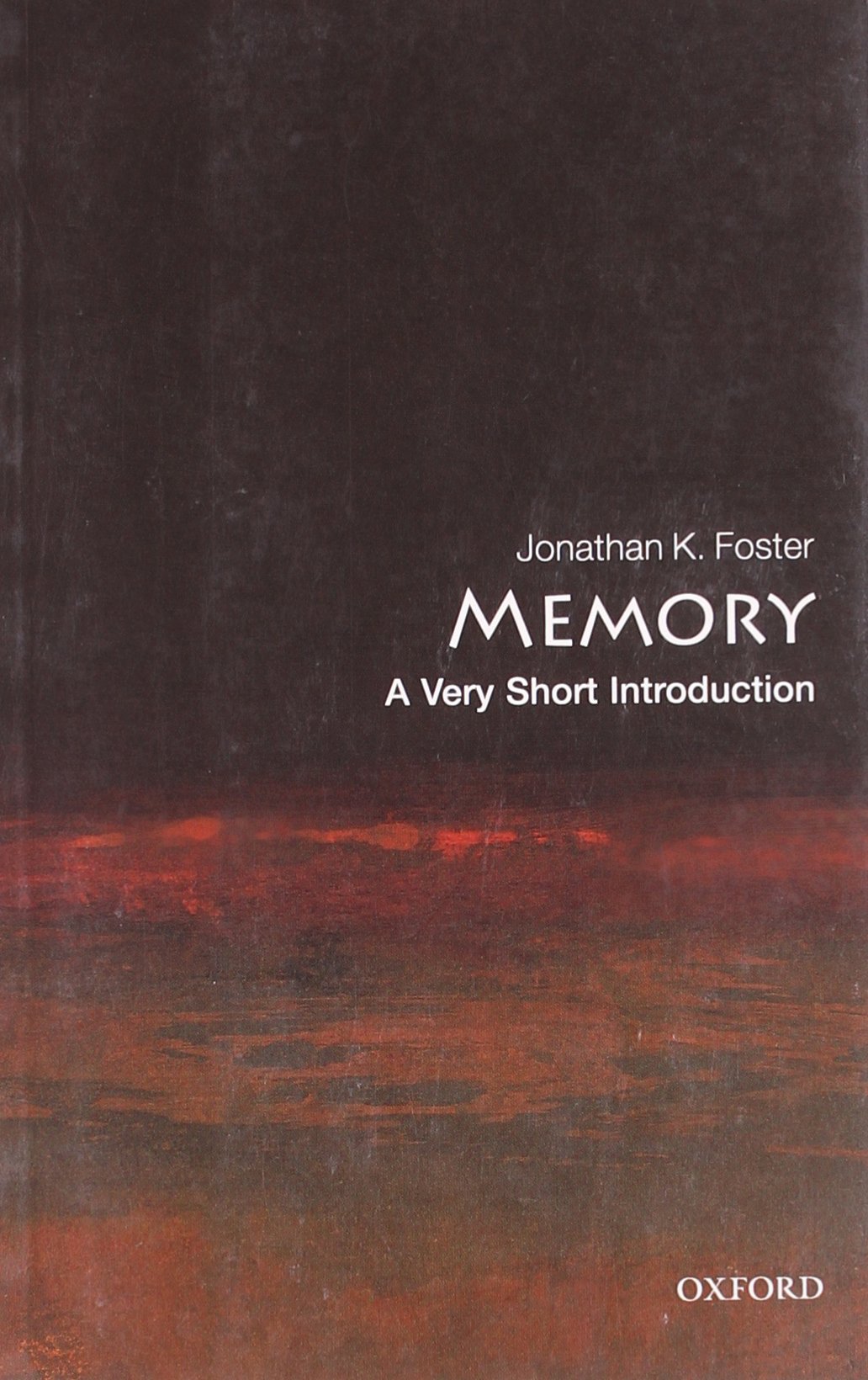
To help with my research, I read Memory: A very short introduction by Jonathan K Foster, part of the Oxford University Press's VSI series.  It's an interesting book which outlines our understanding of memory, how we memorise things, the difference between short- and long-term memory and major developments in human understanding of memory, such as Ebbinghaus' Learning curve, Bartlett's The War of the Ghosts story and Schacter's Seven sins of memory.

I was really impressed by the evidence of how unreliable memory is. A lot of the time, our memories are either completely made up or influenced by how we were feeling when the memory was being created.  Of course, there is a strong connection between memory and learning and, to answer the question above, the reason we need to remember things is because memory is key to our survival.

Without memory, we wouldn't be able to use the tools that have made us so successful as a species - not just physical tools, such as hammers and knives, but also tools like language, the ability to write and to think rationally, learning how to drive or operate machinery or technology - these are all dependent on our ability to consign thoughts and processes to memory.

How reliable are our memories?

What is a little bit worrying, however, is that we trust our memories as much as we do. If you ever talk to your parents, siblings or friends about events that happened a long time ago, you'll often find that you each have your own version of events.  Precisely because we can't remember the detail of things that we experience, our minds tend to summarise and leave us with an impression that becomes our total understanding of the past.

It's quite scary that, given what we know about the unreliability of memories, eyewitness accounts of crimes still play a large part in the evidence given in trials. I'm not sure what the solution is, but I do wonder whether or not eyewitness testimony is really that valid?

Change blindness

Another interesting phenomenon mentioned in the VSI book is the fact that most of us are blind to minor changes taking place in our immediate environment. As we're busy processing the world around us, our brains filter out information that doesn't seem to be that relevant.

There is a well-tested experiment on change blindness that shows how you get Person A to ask Person B for directions on the street, but when you interrupt the conversation and replace the Person A with Person C, Person B will continue giving the directions without noticing that the person they're talking to is someone else.

Really interesting and I'm pretty sure I would fall for this one!

Another perspective on Je me souviens

The Quebecois motto Je me souviens has become a mantra for nationalists in Quebec, however Eric R Scott, a documentary film director based in Montreal has turned the motto on its head, by using it as the title for his documentary on anti-semitism in Quebec in the 1930's.  You can watch the whole documentary on YouTube and it's a topic that has caused a lot of controversy and inspired debate in modern Quebec (but also in Canada and other parts of the world).

I guess Je me souviens could be used as a rallying cry for any minority or subjugated population that has been written out of the history books. It is important to remember the past and learn from the mistakes of previous generations, particularly around issues such as the Holocaust.  I suspect, however, that reaching public consensus on how the past is remembered, is something that will continue to cause controversy and inspire debate for many years to come!