I'm not sure where I find the time to do all of this reading, but I've managed to delve into quite a few books in relation to Palestine. My reading list is usually what slows me down so much, but I can't help it, as there are so many interesting books out there, I just want to read all of them.
I managed to limit myself to just six books (and two recipe books!) about Palestine. I tried to find a balance between subject areas, reading both fiction and non-fiction, political and personal.
My Palestinian reading list looks like this:
1. The Palestinian-Israeli Conflict: A Very Short Introduction - Martin Bunton (2013)
 |
| My Palestinian reading list |
Regular readers will know how much I
love Oxford University Press's
A Very Short Introduction (VSI) series. This book was no exception and I found it incredibly informative, yet concise. I think full-time academics and students sometimes struggle with the
VSI books, but they're perfect for someone like me, who is full-time employment and wants to grasp a subject area, without delving into too much detail.
I based my very first blog post on Palestine on what I learned from reading this book, so you can see my review there. I would only add to this by saying that by reading the VSI book first, it really help me with the context for the other books I read after that. Although the history of the Palestinian-Israeli conflict is complex, there are some key facts and dates that you should know about, if you want to understand the context of this conflict and that's what the VSI helped me to do.
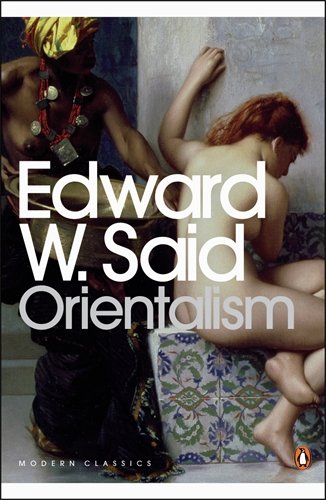
2. Orientalism - Edward Said (1978)
I based my second blog post on Palestine on the thoughts and ideas that I had after reading part of Edward Said's seminal study
Orientalism. It's one of those books that any self-respecting intellectual should claim to have read but, I'll have to be honest and say that, as I already had enough material for a blog post from the first few pages of this book, I didn't read the whole thing. Whereas the
VSI series is concise and easily digestable, Said's book is massively detailed and would require a lot more time and study that I was able to devote to it.
I enjoyed what I read immensely, but I have a feeling I would still be reading this book today, if I hadn't made a decision to put it down and move on to the next book. What excited me about Said's book, is that it provoked so many thoughts and ideas in my head and I haven't given up on the book completely, I might just need to digest it a bit at a time!
Something I'd like to explore more as a result of reading (part of) Orientalism is the dichotomy of generalism versus specialism when it comes to education. Everything has become so specialist, that I find myself not wanting to pursue further studies (in my case, a Master's degree). My interests are so broad/generalist, that I feel that I learn much more from researching for this blog, that I could in a more formal learning environment, where I would be asked to concentrate on one very minute subject area. I can't help wondering what happened to the universal of a university education?
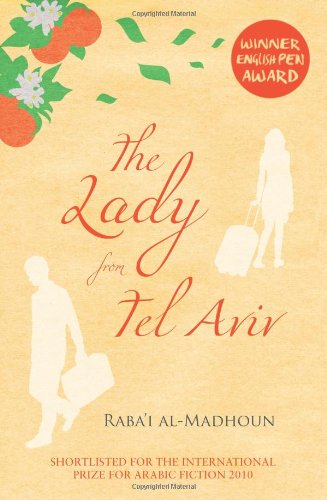
3. The Lady from Tel-Aviv - Raba'i Al-Madhoun (2009)
Despite its prominence in the news headlines, I didn't come across a lot of cultural material about Gaza, as I was researching for this blog.
The Lady from Tel-Aviv gave me a chance to see Palestinian life through the lens of people living in this small strip of land on the Mediterranean coast.
Al-Madhoun's novel was shortlisted for the International Prize for Arabic Fiction in 2010 and translated into English in 2013. This prize is managed by the people who do the Man Booker prize and has been running since 2008. It's meant to promote Arabic-language fiction although, perhaps ironically, being shortlisted for the prize means the work has a better chance of being translated into English, making it accessible to a wider audience.
I really enjoyed Al-Madhoun's novel, which is about a Palestinian journalist living in England who returns to Gaza after an exile of 37 years. To get to Gaza, he has to fly to Ben Gurion International airport and finds himself on a plane full of Israelis, 'the enemy'. A woman sits down beside him, the lady from Tel-Aviv and they fall into conversation about their lives, initially skirting around issues, as we all do with strangers, eventually hitting some very personal topics, as they both confront the reality of life in modern-day Israel/Palestine.
The main character in the novel quotes the famous Palestinian poet, Mahmoud Darwish and I found these words very powerful and emotionally compelling:
Get out. Leave our lands. Evacuate our territories and quit our sea. Get out of our wheat, our salt, our wounds. Leave the vocabulary of our memory. Then - and only then - can you take care of your extremists, while we take care of ours.
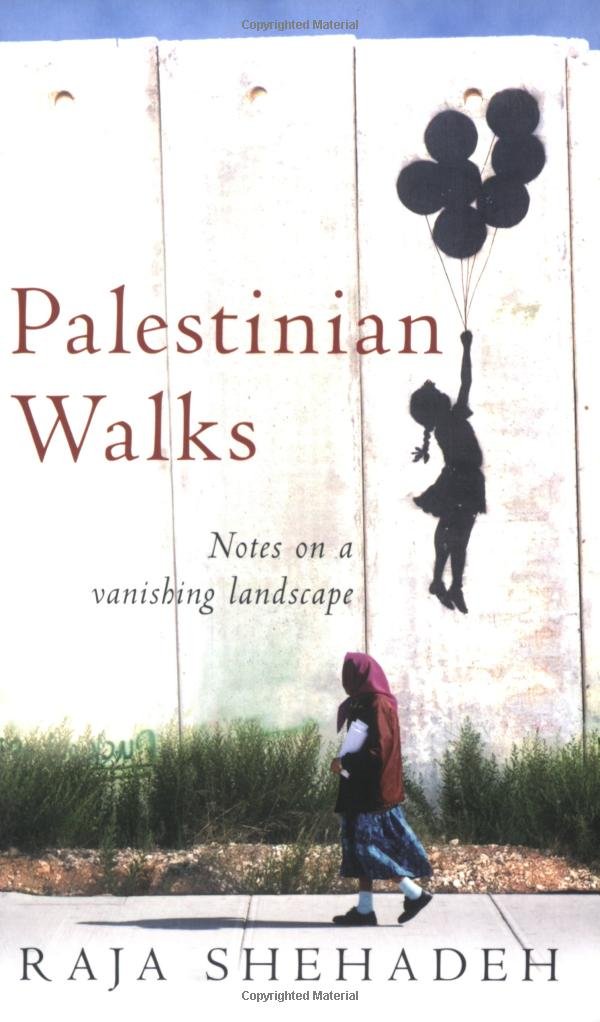
4. Palestinian Walks - Raja Shehadeh (2007)
Perhaps the most interesting book I came across during my research into Palestine was Shehadeh's Palestinian Walks. Spanning a period of around 40 years, lawyer Shehadeh documents the changes made to the landscape of the West Bank during the period of Israeli occupation, with new settlements going up all the time and more roads, walls and concrete, fragmenting Palestinian communities and limiting their access to the countryside and each other.
As you can see from my other blog
, I'm a keen walker, so I could really relate to Shehadeh's book, as I know how important it is to be able to get out of the city and go for a walk. His passion for his homeland comes through very strongly and I liked the fact that he wasn't that politically aligned and approached the situation in the West Bank without excuses, hyperbole or a party line. His sorrow is the sorrow of a walker, an urban dweller, but a lover of nature, like myself!
As well as learning a lot about the Israeli settlements in the West Bank, I also learned quite a bit about Ramallah and it's made me really interested in visiting this city. Once considered to be an outlying suburb of Jerusalem, with a strong Christian tradition, Ramallah has been thrust to the forefront of Palestinian identity and is the de facto capital of the Palestinian authority.
As Shehadeh himself says, Ramallah was fortunate because it hadn't been mentioned in the Bible. Unlike Jerusalem, Jericho, Bethlehem or other West Bank towns/cities, Ramallah can stand on its own two feet with a modern identity that isn't overshadowed by its past. It makes me think of Derry, where I lived for a year, and how Derry has made its own mythology in recent years and become a place of resistance and counter-culture. It's interesting how new cultures evolve in places like Derry and Ramallah.
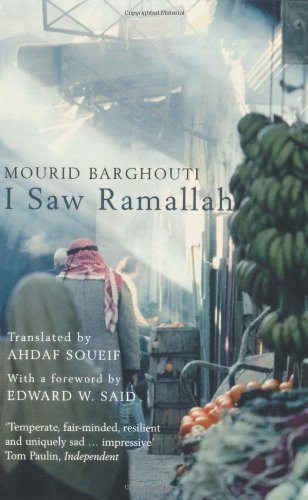
5. I Saw Ramallah - Mourid Barghouti (2004)
I found it a little bit harder, if I'm being honest, to get into Barghouti's book I Saw Ramallah. Barghouti is a famous Palestinian poet and, despite reading his work in translation, I can tell that his way with words is beautiful, tender and evocative. When he describes crossing the bridge from Jordan into the West Bank, after 30 years of living abroad, the level of detail in the description and the way everything is portrayed could only really be done by a poetic mind.
But I'm not convinced that poets are the best writers of novels or other books. Or perhaps I just didn't have the patience, as this was the last book I read and I could feel the pressures of time pushing me on!
Something I found really interesting about Barghouti's story is that he highlights the difficulties of trying to remain non-politically-aligned as a Palestinian artist. He also talks about the inability of Palestinians to look at their own society and culture with a critical eye. I can relate to this, as it was a similar situation in Ireland when I was growing up. The enemy was so clear and the odds so defined, that any criticism of the resistance/Irish nationalism wasn't palatable.
Barghouti illustrates this by referring to the famous line from William Shakespeare's Hamlet, 'Something is rotten in the state of Denmark'. If Barghouti as a poet proclaims that something is rotten in the state of Palestine, then he will be pulled in front of TV cameras and asked to justify his claim. It seems that, when a culture is fighting for its very survival, there's little room for criticism or dissidence, although I'd imagine the Palestinian authorities have been quietly tolerant of the opinions of Palestine's non-political academics and poets!
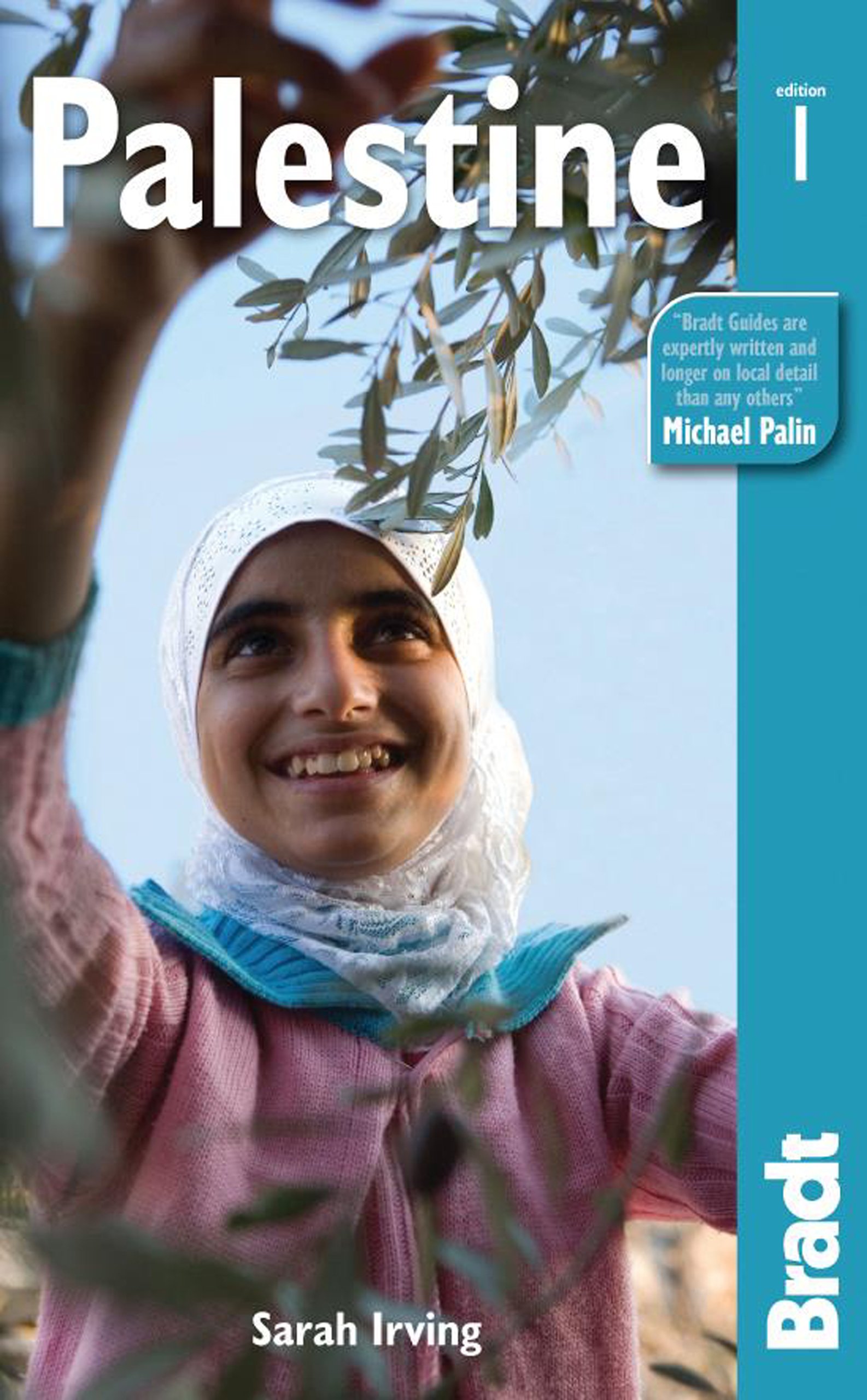
6. Palestine: the Bradt Travel Guide - Sarah Irving (2011)
There haven't been many guidebooks on the market that specifically deal with Palestine. It's quite brave and, perhaps, nobel of Bradt guides to cover Palestine and I found this book to be a very useful resource, both in terms of my research for this blog, but also on a practical level, if I ever get an opportunity to go and visit Palestine myself.
This was my first time reading a Bradt guide actually and I found it very informative and packed with details and useful information. Travel to Palestine is complicated in the sense that the main way to get there is through Israel. There used to be an airport in the West Bank at Qalandia, but this is no longer in use so foreigners, like myself, would most likely be travelling through Ben Gurion International.
I'd imagine the Israelis aren't that keen on foreigners visiting places like Ramallah and Jenin, however, other parts of the West Bank are quite touristy - of course, Jerusalem, which sounds like a fascinating place, but also ancient cities like Bethlehem and Jericho.
One place I'd love to visit is the monastery of St George of Koziba and Wadi Qelt. You can still walk from the monastery to Jericho and Shehadeh described this route in his book Palestinian Walks.
7. The Middle Eastern Kitchen - Ghillie Basan (2001)
I used this recipe book when I was learning how to cook Musakhan. The book covers a wide range of Middle Eastern dishes, from Turkey to Lebanon to Saudi Arabia and I'm sure I'll be using it frequently in future. I love recipe books with pictures and fairly simple recipes, which is why this book appealed to me.
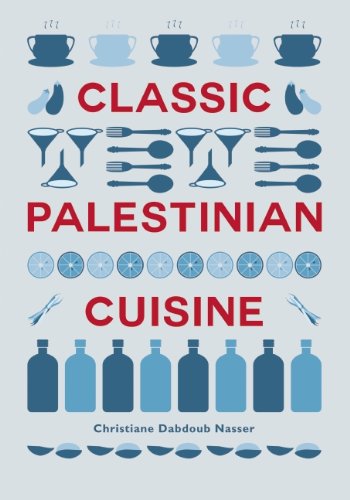
8. Classic Palestinian Cuisine - Christiane Dabdoub Nasser (2001)
For more detailed Palestinian recipes, I'd recommend this book by Christiane Dabdoub Nasser. I loved the fact that Nasser personalised the recipes by telling stories which bring the recipes to life. His story about Musakhan is all about how it can induce pregnant women to go into labour. Not sure if that means it's a good thing or a bad thing to serve your pregnant friends/partner!
The books I didn't read:
As usual I came across references to books that I didn't have time to read or that weren't directly related to Palestine, but I'd like to add them to my reading list, in any case, as they sound interesting:
Gaza: Beneath the Bombs - Sarah Irving (2010)
The Thief and the Dogs - Naguib Mahfouz (1961), although this is Egyptian, not Palestinian
Les Noces barbares - Yann Queffelec (1984) - French novel mentioned by Al-Madhoun
Men in the Sun - Ghassan Kanafani (1962)
Notes on a journey from Cornhill to Grand Cairo - W.M. Thackeray (1846)
The Innocents Abroad - Mark Twain (1869)
Selected Poems - Robinson Jeffers (1965), poet from California who wrote about the environment
The Long Revolution - Raymond Williams (1961), a cultural study
Image credits:
The photo of the books I read was taken by me.
Images of the book covers are linked via URL from their product pages on www.amazon.co.uk