Showing posts with label books. Show all posts

Sunday, 14 June 2015

Réunion - The Final Word

Proposed flag for Réunion
I've found Réunion a fascinating place to blog about - as I've been researching for this blog and learning more about the interesting mix of cultures that Réunion has inherited, I've been mentally planning a trip to the island, at some unspecified time in the future!

As it happens, I have visited a few of the places I've blogged about, having become really interested in these places as a result of my 'armchair learning' experience.  The places I've visited so far as a result of this blog are: Hong Kong, Iceland, Jersey, Quebec and Barbados and I'm hoping to visit Korea and Mongolia later this year!

Of course, there are quite a few places I've blogged about that I may never get the chance to visit (I'm thinking of places like Kiribati, Liberia and Yemen), but a visit to Réunion is a distinct possibility and, as with any of the places I've blogged about, I'd love to visit sooner, rather than later, before Réunion changes too much!

The Themes

During my time blogging about Réunion, I've learned about the history of the island and how Réunion is part of France, although it lies thousands of miles south of Paris, in the Indian Ocean. I've learned about the role that Réunion has played in the cultivation of vanilla, a notoriously expensive plant that originates in Mexico and is incredibly difficult to grow.  I also learned how to make Canard a la Vanille, a typical Réunionnais dish and this was my first time to physically handle vanilla and cook with it.

Books

I read the following books, as part of my research:

Some of the books I read as part of my research on Réunion
Insight Guides: Mauritius, Réunion and Seychelles (2009) - the second edition that Insight guides have published about the Mascarene islands - very informative, as Insight guides usually are.

Vanilla: Travels in Search of the Ice Cream Orchid (2004) by Tim Ecott - which has chapters on Réunion, but also covers Mexico, Tahiti and Madagascar.

La Grand-Mere Kalle (2006) by local writer Yves Manglou - which brings to life the mythology of Réunion.  You can read my blog post about this book for more information.

Island Born of Fire (2006) by R.B. Trombley - a scientific book about the geological make-up of the island - a little bit over my head and difficult to read, but interesting all the same.

The Age of Kali (1998) - a collection of travel essays by William Dalrymple - I'd never read Dalrymple before, but I definitely want to read more! His essays are mostly about India and Pakistan, but he does include a couple of interesting essays on Sri Lanka and an essay on Réunion called The Sorcerer's Grave.

Movies

I could only find one movie which was set on Réunion, Francois Truffaud's La sirène du Mississippi (1969), which I also blogged about.

Music

I also had a wonderful time listening to the music of Réunion and I created a play list, which includes songs by artists such as Firmin Viry, Granmoun Lélé and Faham.

Other themes

As usual, I came across other themes that were interesting, but I didn't have time to research into further - if you want to continue your own learning about Réunion, I would suggest the following 'other' topics:

Edward's Dodo by Roelant Savery (1626)
The Euro and how Réunion was the first place to adopt this new currency
The pirate La Buse and his hidden treasure, which people believe is still buried somewhere on the island
Les enfants de la Creuse - Réunion's own stolen generation of children who were removed from their parents and brought up in France
Volcanoes
The Dodo and how it became extinct
The French code noir which sought to prevent the intermarrying of races
Réunion during World War 2
The Kerveguen sugar empire

The Final Word on Métissage

One thing that came through strongly during my research on Réunion was the importance of métissage in the identity of this far-flung French outpost. Métissage is the French word for mixing and it's a good way of describing the development of culture on Réunion, which has mixed elements of Africa, Asia and Europe to produce a new culture, totally unique to the island.

Expeditus, photo by Jean Poussin
An interesting manifestation of métissage is the cult of St Expédit, the island's unofficial patron saint. According to William Dalrymple, in his book The Age of Kali, the cult of  St Expédit on Réunion started in 1931, when a mysterious package, supposedly containing relics of a Christian saint, arrived on the island from the Vatican and bore a stamp saying spedito, which is the Italian word for expedited or  'sent quickly'.

The cult of St Expédit took such a hold on the island that the Catholic Church was forced to create a 'back story' for the saint and aligned St Expédit with the Roman soldier, Expeditus who became an early Christian martyr in 4th century Armenia.  Whether it's true or not, Dalrymple's theory is an interesting one and I do love a good mystery!

In modern times, shrines to St Expédit on Réunion are usually painted blood red and people pray to the saint for all kinds of things - the cult of St Expédit lends itself to Réunion's métissage culture, mixing African ancestor worship, Hindu reincarnation's of Vishnu and Tamil interpretations of Christianity.  Statues of St Expédit are sometimes mysteriously beheaded and there is something distinctly un-Christian about the magical powers and ability to answer prayers, that St Expédit has been credited with.

The cult of Expeditus is also really popular in Chile, for some reason and I find the whole thing fascinating but also slightly bizarre!

Image credits:

Although I've been using a coat of arms to represent Réunion during my blog posts, I have since discovered a proposed flag for the island, so I wanted to represent this in my final blog post.

The image of Edward's Dodo, the 1626 painting by the Flemish painter, Roland Savery is in the public domain.

The photo of the Expeditus statue has been uploaded to Wikimedia Commons by Jean Poussin and you can see more information on this image here.  

Saturday, 29 November 2014

Palestine - Reading List


I'm not sure where I find the time to do all of this reading, but I've managed to delve into quite a few books in relation to Palestine.  My reading list is usually what slows me down so much, but I can't help it, as there are so many interesting books out there, I just want to read all of them.

I managed to limit myself to just six books (and two recipe books!) about Palestine.  I tried to find a balance between subject areas, reading both fiction and non-fiction, political and personal.  

My Palestinian reading list looks like this:

1. The Palestinian-Israeli Conflict: A Very Short Introduction - Martin Bunton (2013) 

My Palestinian reading list
Regular readers will know how much I love Oxford University Press's A Very Short Introduction (VSI) series.  This book was no exception and I found it incredibly informative, yet concise.  I think full-time academics and students sometimes struggle with the VSI books, but they're perfect for someone like me, who is full-time employment and wants to grasp a subject area, without delving into too much detail.

I based my very first blog post on Palestine on what I learned from reading this book, so you can see my review there.  I would only add to this by saying that by reading the VSI book first, it really help me with the context for the other books I read after that.  Although the history of the Palestinian-Israeli conflict is complex, there are some key facts and dates that you should know about, if you want to understand the context of this conflict and that's what the VSI helped me to do.  

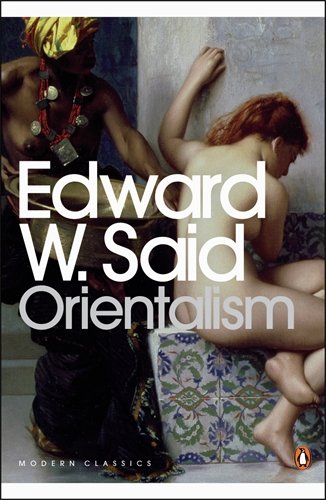
2. Orientalism - Edward Said (1978)

I based my second blog post on Palestine on the thoughts and ideas that I had after reading part of Edward Said's seminal study Orientalism.  It's one of those books that any self-respecting intellectual should claim to have read but, I'll have to be honest and say that, as I already had enough material for a blog post from the first few pages of this book, I didn't read the whole thing.  Whereas the VSI series is concise and easily digestable, Said's book is massively detailed and would require a lot more time and study that I was able to devote to it.  

I enjoyed what I read immensely, but I have a feeling I would still be reading this book today, if I hadn't made a decision to put it down and move on to the next book.  What excited me about Said's book, is that it provoked so many thoughts and ideas in my head and I haven't given up on the book completely, I might just need to digest it a bit at a time!

Something I'd like to explore more as a result of reading (part of) Orientalism is the dichotomy of generalism versus specialism when it comes to education.  Everything has become so specialist, that I find myself not wanting to pursue further studies (in my case, a Master's degree).  My interests are so broad/generalist, that I feel that I learn much more from researching for this blog, that I could in a more formal learning environment, where I would be asked to concentrate on one very minute subject area.  I can't help wondering what happened to the universal of a university education?

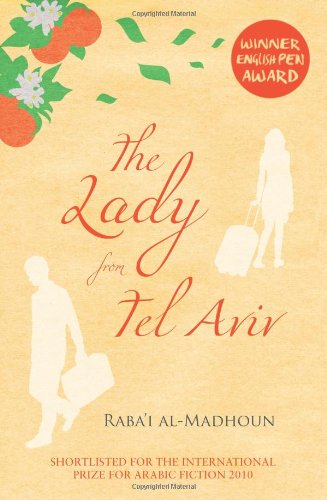
3. The Lady from Tel-Aviv - Raba'i Al-Madhoun (2009)

Despite its prominence in the news headlines, I didn't come across a lot of cultural material about Gaza, as I was researching for this blog.  The Lady from Tel-Aviv gave me a chance to see Palestinian life through the lens of people living in this small strip of land on the Mediterranean coast.  

Al-Madhoun's novel was shortlisted for the International Prize for Arabic Fiction in 2010 and translated into English in 2013.  This prize is managed by the people who do the Man Booker prize and has been running since 2008.  It's meant to promote Arabic-language fiction although, perhaps ironically, being shortlisted for the prize means the work has a better chance of being translated into English, making it accessible to a wider audience.

I really enjoyed Al-Madhoun's novel, which is about a Palestinian journalist living in England who returns to Gaza after an exile of 37 years.  To get to Gaza, he has to fly to Ben Gurion International airport and finds himself on a plane full of Israelis, 'the enemy'.  A woman sits down beside him, the lady from Tel-Aviv and they fall into conversation about their lives, initially skirting around issues, as we all do with strangers, eventually hitting some very personal topics, as they both confront the reality of life in modern-day Israel/Palestine.  

The main character in the novel quotes the famous Palestinian poet, Mahmoud Darwish and I found these words very powerful and emotionally compelling:

Get out. Leave our lands. Evacuate our territories and quit our sea. Get out of our wheat, our salt, our wounds. Leave the vocabulary of our memory. Then - and only then - can you take care of your extremists, while we take care of ours. 

4. Palestinian Walks - Raja Shehadeh (2007)

Perhaps the most interesting book I came across during my research into Palestine was Shehadeh's Palestinian Walks.  Spanning a period of around 40 years, lawyer Shehadeh documents the changes made to the landscape of the West Bank during the period of Israeli occupation, with new settlements going up all the time and more roads, walls and concrete, fragmenting Palestinian communities and limiting their access to the countryside and each other.  
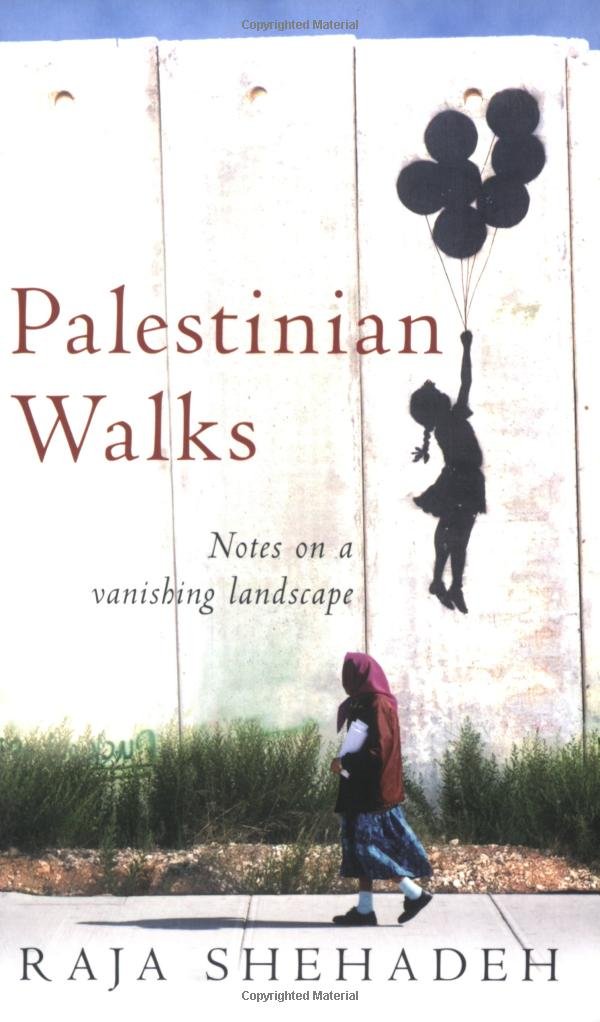
As you can see from my other blog, I'm a keen walker, so I could really relate to Shehadeh's book, as I know how important it is to be able to get out of the city and go for a walk.  His passion for his homeland comes through very strongly and I liked the fact that he wasn't that politically aligned and approached the situation in the West Bank without excuses, hyperbole or a party line.  His sorrow is the sorrow of a walker, an urban dweller, but a lover of nature, like myself!

As well as learning a lot about the Israeli settlements in the West Bank, I also learned quite a bit about Ramallah and it's made me really interested in visiting this city.  Once considered to be an outlying suburb of Jerusalem, with a strong Christian tradition, Ramallah has been thrust to the forefront of Palestinian identity and is the de facto capital of the Palestinian authority.  

As Shehadeh himself says, Ramallah was fortunate because it hadn't been mentioned in the Bible. Unlike Jerusalem, Jericho, Bethlehem or other West Bank towns/cities, Ramallah can stand on its own two feet with a modern identity that isn't overshadowed by its past.  It makes me think of Derry, where I lived for a year, and how Derry has made its own mythology in recent years and become a place of resistance and counter-culture.  It's interesting how new cultures evolve in places like Derry and Ramallah.  

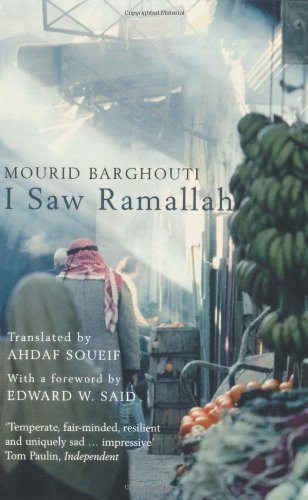
5. I Saw Ramallah - Mourid Barghouti (2004)

I found it a little bit harder, if I'm being honest, to get into Barghouti's book I Saw Ramallah. Barghouti is a famous Palestinian poet and, despite reading his work in translation, I can tell that his way with words is beautiful, tender and evocative.  When he describes crossing the bridge from Jordan into the West Bank, after 30 years of living abroad, the level of detail in the description and the way everything is portrayed could only really be done by a poetic mind.

But I'm not convinced that poets are the best writers of novels or other books.  Or perhaps I just didn't have the patience, as this was the last book I read and I could feel the pressures of time pushing me on!

Something I found really interesting about Barghouti's story is that he highlights the difficulties of trying to remain non-politically-aligned as a Palestinian artist.  He also talks about the inability of Palestinians to look at their own society and culture with a critical eye.  I can relate to this, as it was a similar situation in Ireland when I was growing up.  The enemy was so clear and the odds so defined, that any criticism of the resistance/Irish nationalism wasn't palatable.

Barghouti illustrates this by referring to the famous line from William Shakespeare's Hamlet, 'Something is rotten in the state of Denmark'. If Barghouti as a poet proclaims that something is rotten in the state of Palestine, then he will be pulled in front of TV cameras and asked to justify his claim.  It seems that, when a culture is fighting for its very survival, there's little room for criticism or dissidence, although I'd imagine the Palestinian authorities have been quietly tolerant of the opinions of Palestine's non-political academics and poets!

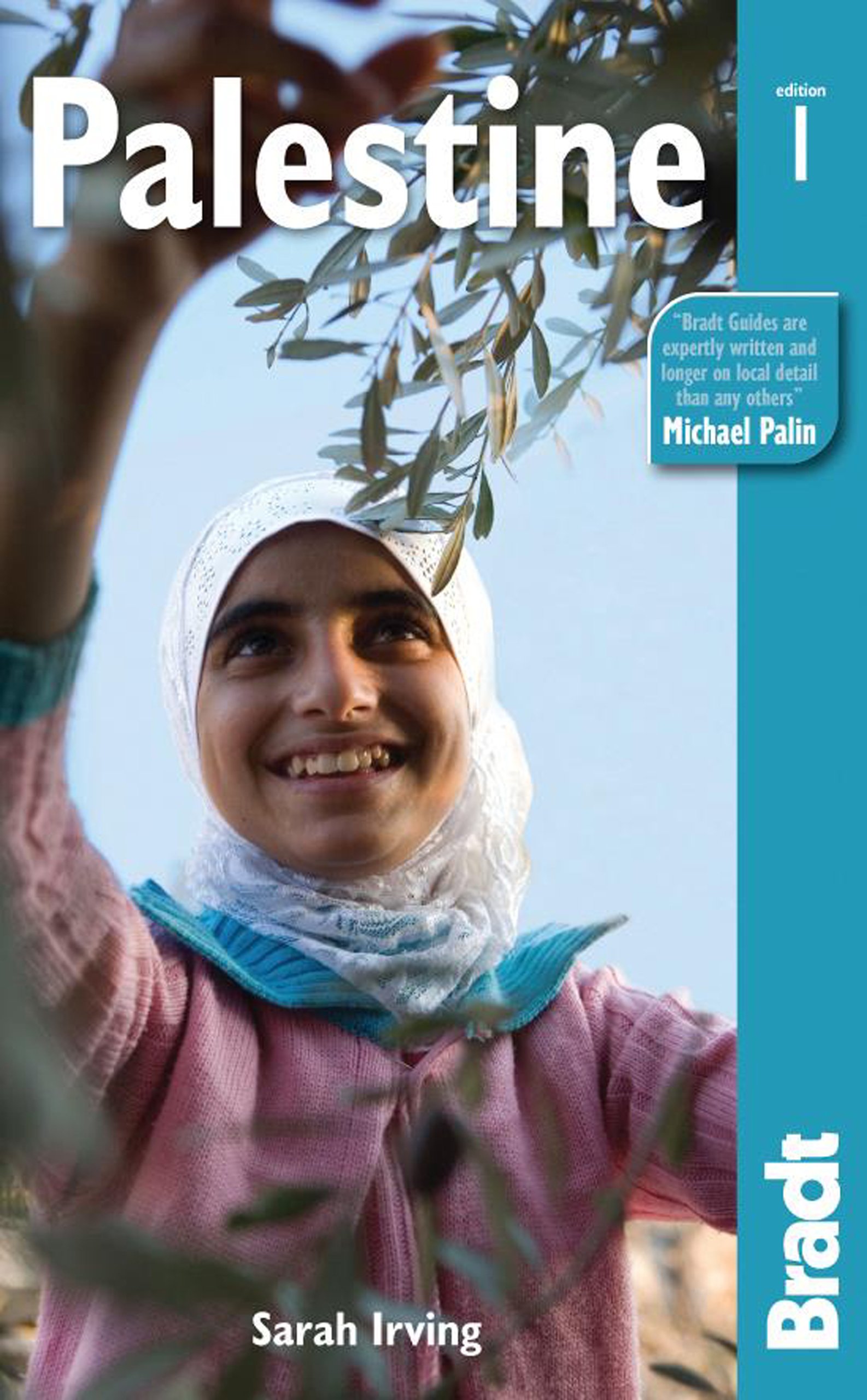
6. Palestine: the Bradt Travel Guide - Sarah Irving (2011)

There haven't been many guidebooks on the market that specifically deal with Palestine.  It's quite brave and, perhaps, nobel of Bradt guides to cover Palestine and I found this book to be a very useful resource, both in terms of my research for this blog, but also on a practical level, if I ever get an opportunity to go and visit Palestine myself.  

This was my first time reading a Bradt guide actually and I found it very informative and packed with details and useful information.  Travel to Palestine is complicated in the sense that the main way to get there is through Israel.  There used to be an airport in the West Bank at Qalandia, but this is no longer in use so foreigners, like myself, would most likely be travelling through Ben Gurion International.  

I'd imagine the Israelis aren't that keen on foreigners visiting places like Ramallah and Jenin, however, other parts of the West Bank are quite touristy - of course, Jerusalem, which sounds like a fascinating place, but also ancient cities like Bethlehem and Jericho.  

One place I'd love to visit is the monastery of St George of Koziba and Wadi Qelt.  You can still walk from the monastery to Jericho and Shehadeh described this route in his book Palestinian Walks.

7. The Middle Eastern Kitchen - Ghillie Basan (2001)

I used this recipe book when I was learning how to cook Musakhan.  The book covers a wide range of Middle Eastern dishes, from Turkey to Lebanon to Saudi Arabia and I'm sure I'll be using it frequently in future.  I love recipe books with pictures and fairly simple recipes, which is why this book appealed to me.  

8. Classic Palestinian Cuisine - Christiane Dabdoub Nasser (2001)

For more detailed Palestinian recipes, I'd recommend this book by Christiane Dabdoub Nasser.  I loved the fact that Nasser personalised the recipes by telling stories which bring the recipes to life.  His story about Musakhan is all about how it can induce pregnant women to go into labour.  Not sure if that means it's a good thing or a bad thing to serve your pregnant friends/partner!

The books I didn't read:

As usual I came across references to books that I didn't have time to read or that weren't directly related to Palestine, but I'd like to add them to my reading list, in any case, as they sound interesting:

Gaza: Beneath the Bombs - Sarah Irving (2010)

The Thief and the Dogs - Naguib Mahfouz (1961), although this is Egyptian, not Palestinian

Les Noces barbares - Yann Queffelec (1984) - French novel mentioned by Al-Madhoun

Men in the Sun - Ghassan Kanafani (1962)

Notes on a journey from Cornhill to Grand Cairo - W.M. Thackeray (1846)

The Innocents Abroad - Mark Twain (1869)

Selected Poems - Robinson Jeffers (1965), poet from California who wrote about the environment

The Long Revolution - Raymond Williams (1961), a cultural study

Image credits:

The photo of the books I read was taken by me.

Images of the book covers are linked via URL from their product pages on www.amazon.co.uk 


Monday, 15 September 2014

Happy Blogiversary! Learning about the World for five years now!

It's five years to the day since I published my first blog post on Learning about the World.  As a tribute to the 5th anniversary of this blog, I've coined a new word - blogiversary!

I've learned a lot over the past five years and documenting my learning experience has been incredibly rewarding, not to mention necessary, as otherwise I don't think I would be able to remember everything that I've learned.

To date, I've blogged about 35 countries/places around the world, including four new places since my last blogiversary: Liberia, Maharashtra, Nordrhein-Westfalen and Oaxaca.    Highlights of the past year have included discovering the works of Graham Greene, watching almost 30 hours of Bollywood musicals, falling in love with Beethoven's Ninth Symphony and learning to cook a Mexican mole.

Some stats


Worldwide visits to Learning about the World
My blog has had 46,204 page views until just now and more than 10,000 of these have been in the last year.  Actually, August 2014 saw the most page views ever in a single month at 1,784 so Learning about the World is more popular than ever!

Having said that, unique visitor numbers since last September (3,670) are down slightly compared to the previous year, but the number of returning visitors has increased from 18% to 22%.  The average 'session duration' has also increased by 28.72%, which means that visitors are spending more time reading the blog than they used to - always a positive sign!

The top twenty countries in terms of visitors since last year are:

1. United States
2. United Kingdom
3. India
4. Australia
5. Canada
6. Italy
7. Germany
8. Ireland
9. Brazil
10. France
11. Saudi Arabia
12. Cambodia
13. Belgium
14. Barbados
15. Netherlands
16. New Zealand
17. United Arab Emirates
18. Spain
19. Malaysia
20. Indonesia

Whilst the United States still tops the list, the number of US readers has dropped by about 30% since last year, which is interesting and I wonder if it's related to the fact that I haven't blogged about the US during that period? The fact that there are 30% less readers from the US, yet overall visits are only marginally lower this year suggests that the blog has had more international readers than ever before.

India has pushed Australia out of the third place and I've seen a 20% increase in the number of Indian readers, which might, likewise, be due to the fact that I blogged about Maharashtra.

I've lost some countries from the top 20, such as Russia, Sweden and Fiji, but I've gained others, notably Cambodia, Malaysia and Indonesia!  The biggest increase for one country/place has been Jersey, where my number of readers has quadrupled!

The blog has had visitors from 157 countries in total (11 new countries since last year) and the newest country to appear on my readership list was Andorra in August 2014.

Popular posts

You can see a list of the ten most popular posts of all time below:


And it's interesting to compare this with the ten most popular posts when I blogged about this last year:


Sum total of my learning

Since last September, in my pursuit of learning I have:

Read 22 books
Watched 21 movies
Learned how to cook 4 new dishes
Listened to countless hours of classical music, Bollywood music, Mariachi and Son

I'm looking forward to another year of learning, reading, cooking, movie-watching and blogging - don't forget to join me!

Next up . . . P . . .

Wednesday, 4 June 2014

Nordrhein-Westfalen - Books and Movies

The Books

I've read five books, as part of my research for Nordrhein-Westfalen.  Here's the list with links to blog posts, where relevant:

Germany: Insight Guides (2005) ed. Tony Halliday and others.  This book provided me with a good overview of German history and culture.  It's got me really interested in visiting the Rhine valley again, perhaps a cycling or walking trip will be on the cards in the near future!

Reading list for Nordrhein-Westfalen
All Quiet on the Western Front (1929) by Erich Maria Remarque.  I wrote a blog post about this fantastic novel back in April.  I read the 1996 Vintage edition with an afterword by Brian Murdoch, who is Emeritus Professor of German at the University of Sterling and an expert on Remarque.

The Lost Honour of Katharina Blum (1974) by Heinrich Böll. I also wrote a blog post about Böll's novel.  I read the Minerva edition of 1993.

Protestantism: A Very Short Introduction (2011) by Mark A Noll part of the Oxford University Press Very Short Introduction series.  Regular readers will know how much I love these books and I found Noll's Protestantism invaluable when I was researching my blog post on Protestantism in Germany.

Beethoven: The Music and the Life (2003) by Lewis Lockwood.  I must admit, I didn't read the entire book - it was very much a last minute addition to my reading list and I just didn't have time to read the whole thing, although I found the bits I read enjoyable.  Lewis is a musicologist from New York city, who is an expert on Beethoven.  This book was a finalist for the 2003 Pulitzer prize for Biography.  He alternates each chapter, to combine biography and musicology and I found this approach really engaging, although I can't tell my arpeggio from my adagio!  I used the early chapters of this book to inform my blog post on Beethoven.

The Movies

Nastassja Kinski in Paris, Texas (1984)
I didn't really know anything about Wim Wenders before I started blogging about Nordrhein-Westfalen and I'd never seen any of his movies, although some of the names (e.g. Paris, Texas) would have been familiar to me.

He's quite an iconic film director, originally from Düsseldorf, his movies portray an emptiness and silence that, in many ways, symbolise the broken soul of post-war Germany.  Wenders also has a lot to say about American culture and some of his most famous movies are set in the United States.

I couldn't get my hands on all of the Wim Wenders' movies I wanted to see, but I managed to watch the following:

Alice in the Cities (1974)
Paris, Texas (1984)
Wings of Desire (1987)
Don't come knocking (2005)

Opening sequence from Paris, Texas (1984)
His movies are quite slow-moving and should definitely be appreciated for their artistic qualities rather than story-telling.  I particularly loved Alice in the Cities, one of his earliest movies - shot in black and white, it's mostly set in the Rhine valley and the industrial cities of the Ruhr.

In Paris, Texas I can see the influence of Wenders on a whole generation of US movies - those bleak landscapes and slightly surreal shots.  I've just recently finished watching the popular US series Breaking Bad and I can see hints of Wenders in the deserts of New Mexico.  The boundaries between TV and cinema are increasingly blurred these days and I like the fact that TV programmes are embracing style as well as substance.

Here are some of the themes that Wenders' movies tend to deal with:

Typically stark Wenders shot from Wings of Desire
- Individuals who are outside the norms of society (the character of Stanton in Paris, Texas or the angels in Wings of Desire)
- Road trips
- Alienation from a world which is incredibly materialistic
- Timelessness
- Children being abandoned by their mothers
- Adults who disappear
- Shots of faces within faces
- the trauma of progress (ubiquitous television in United States, changing landscape of the Ruhr valley)
- melancholic and repetitive music

As well as learning about Wim Wenders, I also watched both movie versions of All Quiet on the Western Front, the fantastic 1930 film and the less engaging version from 1979.

I had a really nice Easter weekend with my sister in Leeds, when we devoted several hours to my research and watched Amadeus (1984, dir. Miloš Forman), the slightly crazy movie about Mozart and Immortal Beloved (1994, dir. Bernard Rose) starring Gary Oldman.  I loved both movies and they helped me contextualise the development of music in the Classical period and the influence that Mozart may have had on the work of Beethoven.  I'd recommend either of these movies to anyone who wants to learn more about these composers.

I'm going to leave you with a trailer from Immortal Beloved so you can get a sense of what the movie is about:


Image credits:

The image of the books was taken by me.

The images of the stills from Wim Wenders' movies are from photos taken by me. These images are being used to illustrate this blog post and promote these movies. By publishing these images, I'm not condoning or encouraging reproduction of these images on the Internet or anywhere else. These images are not meant to bring the actors into disrepute or suggest their endorsement of this blog post, but are meant to highlight the performances of these actors in these movies. 

Saturday, 22 February 2014

Maharashtra - Reading List

I read quite a few books in relation to Maharashtra.  Here's a summary of what I read, with links to my blog posts, where relevant:

India: Insight Guides (2009 - 8th edition), ed. Tom Le Bas.  I find this series of guidebooks really informative and, as I didn't read more generally about India, when I was blogging about Rajasthan, I thought I would do that this time round, to give me a wider understanding of where Maharashtra sits in the bigger 'Indian' picture.  I feel inspired to visit India again and the Insight Guides has given me some ideas for potential future trips!

Bollywood: Gods, Glamour and Gossip (2013) by Kush Varia - part of Columbia University Press's 'Short Cuts' series for film studies students.  I've already mentioned this book, when I blogged about Bollywood movies, two weeks ago. 

Books I read as part of my research into Maharashtra
Yayati: A Classic Tale of Lust (1959) by VS Khandekar - a re-telling of an ancient Hindu tale, this is one of the most famous books written in Marathi language.  I posted my review of this book back in January. 

Such a Long Journey (1991) by Rohinton Mistry - a more modern take on life in Maharashtra, I really loved this novel and also reviewed it. 

An Indian Summer (1974) by the British journalist, James Cameron.  I thought this book was mildly interesting - a bit dated, I guess and some of the attitudes Cameron expresses don't sit well in our modern, politically-correct world.  The book covers different parts of India, not just Maharashtra and is probably only interesting if you want to have an insight into how India was perceived by a Western journalist in the early post-colonial days. 

An Indian Housewife's Recipe Book (1985) by Laxmi Khurana - I really love this book.  Simple recipes that anyone could make, I used three of her recipes for my blog post on Indian cooking

And, of course, I came across the titles of books I would still like to read, if I ever get the chance, including:

Anything by Rohinton Mistry - his writing is so great, I can't wait to read another novel by him and, in fact, I have a copy of A Fine Balance (1995) on my bookshelf, awaiting its turn to be read!

Bhagavad Gita - 19th century manuscript
One good thing about reading James Cameron's book is that he pointed me in the direction of a couple of other books I'd be interested in reading.  Although these don't relate specifically to Maharashtra, I'd quite like to read VS Naipaul's An Area of Darkness (1964) and Nirad C. Chaudri's A Passage to England (1959).  Of course, although I've read it before, it would be great to re-read EM Forster's A Passage to India (1924).

I guess everyone should read the Bhagavad Gita at some point, so I'll put that on my 'to read' list. 

My foray into Bollywood movies has got me interested in reading Vikas Swarup's novel, Q&A (2005), which the movie Slumdog Millionnaire was based on, as well as Amrita Pritam's Pinjar (1950), the famous Punjabi novel, which was also made into a movie.

If you've read any of these books, I'd be interested in hearing what you thought about them, just post a comment below.

Image credits:

The photo of the books I read was taken by me.

The image of the19th century manuscript of the Bhagavad Gita is from Wikipedia