For Oaxaca, I wanted to try something more ambitious so, after some research, I settled on one of Mexico's most complicated dishes, Mole Negro. I'd only ever heard of mole (pronounced mo-ley) in US movies and TV series, usually mentioned by a homesick Mexican character! My main challenge was to conceptualise 'mole' - I had no idea (and I'm still not 100% sure) what a mole should look like, or taste like . . what's its texture should be.
I'll mention at this point that I don't think I was entirely successful at conceptualising/making a mole so, if you're looking for a perfect guide to mole-making, you should probably look away now! The difference between what I'm doing in this blog and what others do in more 'foodie' blogs is that I'm learning about the culture of the place I'm blogging about, rather than expecting perfect results. The learning experience is the result, if that makes sense?
Mexican ingredients
 |
| Dried Mexican chillies |
My first stop was the Casa Mexico in Bethnal Green but, unfortunately, this shop was closed, even though it should have been open, according to information I found online. I can't really recommend this shop because of this, although others have given it good reviews.
Not to worry - wasted journey to Bethnal Green, but I was able to hop down to Borough Market at London Bridge, which is a great place to pick up all kinds of speciality foods. For my Mexican ingredients I went to the Cool Chile Company and I'd highly recommend this for London readers who are searching for Mexican ingredients.
Profiting from the Columbian Exchange
 |
| Four kinds of chilli |
The chillies were dried and I managed to get my hands on four different types: Guajillo, Mulato, Chipotle and Pasilla. Most of my experience with chillies to date has involved fresh chillies and it was quite an interesting experience to cook with these dried Mexican chillies, as I got a new sense of the texture of chillies - the fact that they can have nutty, smoky or fruity tastes, rather than simply being hot and spicy. The texture of the dried chillies was a little bit like worn leather, but they also reminded me, bizarrely, of my youth, when my grandfather would give me dulse, a kind of dried seaweed which is popular with older people in Ireland.
It's hard to believe there was ever a time when we didn't consume chocolate (believed to come from the Nahuatl (Aztec) word xocolatl - xococ = bitter and atl = water). I'm a big fan of chocolate, although it's only as an adult that I've tasted 'real' chocolate, the bitter Latin American kind that is best served as a drink or sauce. I love cooking with chocolate and I was happy to find delicious Mexican chocolate at the Cool Chile Company. I think my mole tasted more of chocolate than anything else - perhaps I went a bit overboard!
 |
| Real Mexican chocolate |
This was also my first time to prepare tomatillos and I'm still fascinated by this fruit which, although it looks a bit like a tomato, it has a different taste and is surrounded by paper-thin leaves, which you need to remove before cooking. I like cooking new things, so I was excited about my first experience of tomatillos and I look forward to preparing them again some time in the future.
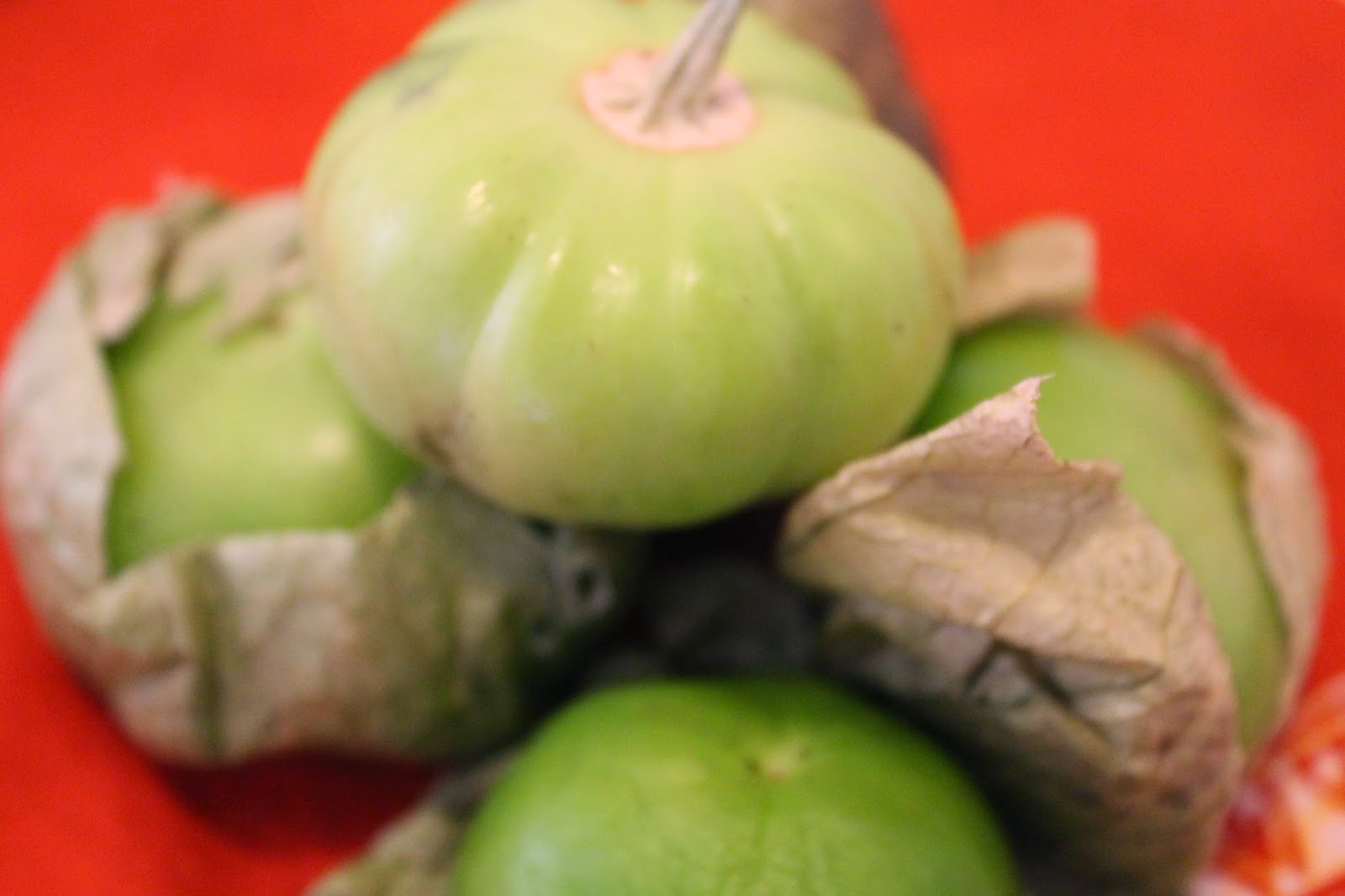 |
| Tomatillos |
The recipe
I looked at a lot of mole recipes when I was researching this dish - each one seemed to be more complicated than the last and I was surprised to learn that it would take at least five hours to prepare this dish! I eventually settled on a recipe from La Cocina de Nathan, which seemed marginally less complicated than the others and I enjoyed Nathan's amusing approach to cooking. I didn't blacken the tortillas, as he suggested and I also adapted this recipe to suit my own needs.
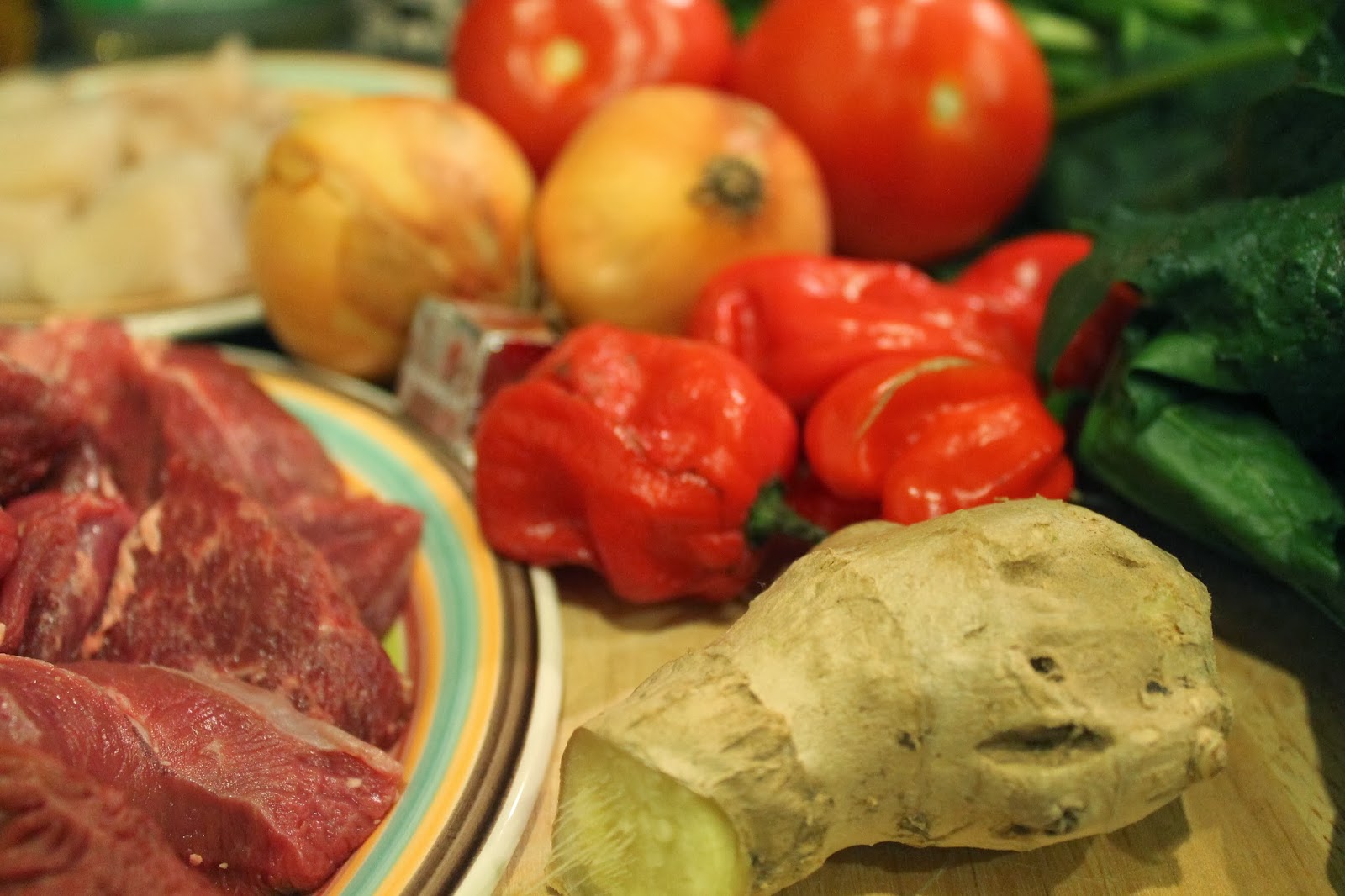
Here are the ingredients that I used (I've included the Zapotec words, where I could find them):
For the stock:
 |
| Ingredients for Mole Negro |
2 chicken legs - pierna de pollo/buyu
1 bell pepper - pimiento morron
2 onions - cebollas
garlic - ajo
4 tomatoes - tomates/bichooxhe
cumin - comino
3 bay leaves - hojas de laurel
chicken stock - caldo de pollo
Chillies - Chiles/Guiiña
Mulatto chillies - chiles mulatos
Pasilla chillies - chiles pasillas - pasilla means 'little raisin' and this chilli has a fruity flavour
Guajillo chillies - chiles guajillos
Chipotle chillies - chiles chipotles - chipotle means 'smoked chilli' in Nahuatl language
Other ingredients
5 tomatillos - tomatillos
1 plantain - plátano/biduaa
2 slices of bread - pan
sesame seeds - semillas de sésamo
handful of peanuts - cacahuetes
handful of raisins - pasas de uva
1 cinnamon stick - rama de canela
black peppercorns - granos de pimienta negra
3 cloves - clavos de olor
chocolate - chocolate/dxuladi (the Zapotec word was also borrowed from Nahuatl language)
corn tortillas - tortillas de maiz/gueta
Making the mole
It wasn't that difficult to actually make the mole - just complicated and time-consuming, there is a lot to remember.
Basically you start by boiling the chicken in water and adding all of the vegetables and other ingredients to make a chicken stock. I boiled the chicken and vegetables for around 1.5 hours, after which I put the chicken aside and added some of the stock to my mole. I think this is probably where I went a little bit wrong - as I was trying not to add too much stock, my mole ended up being more of a paste than a liquid. If I was making this dish again, I would add all of the stock to the other mole ingredients.
For the other mole ingredients, it's just a matter of frying everything - plantain, tomatillos, half the tomatos, one of the onions, spices, nuts, seeds, raisins and chillies. Once all of the ingredients had been fried (and this took a bit of time), I put the fried chillies and raisins into a pot, covered them with stock and boiled them for about twenty minutes.
After that, I blitzed all of the ingredients (except the chicken and chocolate) in my food processor, adding some stock (but not enough) to create a kind of mole paste. I then put the paste in a saucepan and added the chocolate, bringing this to the boil before simmering for about half an hour.
Finally, I heated the corn tortillas, put the chicken on top and added my mole paste. This should really have been a proper sauce, but I didn't make it liquidy enough and should have put all of the stock and other ingredients into the food processor in batches.
Nevertheless, it was a fairly tasty meal and I ended up with lots of mole paste which I've been eating on toast ever since - yum yum!
Image credits:
Pasilla chillies - chiles pasillas - pasilla means 'little raisin' and this chilli has a fruity flavour
Guajillo chillies - chiles guajillos
Chipotle chillies - chiles chipotles - chipotle means 'smoked chilli' in Nahuatl language
Other ingredients
 |
| Best to prepare the ingredients before cooking |
1 plantain - plátano/biduaa
2 slices of bread - pan
sesame seeds - semillas de sésamo
handful of peanuts - cacahuetes
handful of raisins - pasas de uva
1 cinnamon stick - rama de canela
black peppercorns - granos de pimienta negra
3 cloves - clavos de olor
chocolate - chocolate/dxuladi (the Zapotec word was also borrowed from Nahuatl language)
corn tortillas - tortillas de maiz/gueta
Making the mole
It wasn't that difficult to actually make the mole - just complicated and time-consuming, there is a lot to remember.
Basically you start by boiling the chicken in water and adding all of the vegetables and other ingredients to make a chicken stock. I boiled the chicken and vegetables for around 1.5 hours, after which I put the chicken aside and added some of the stock to my mole. I think this is probably where I went a little bit wrong - as I was trying not to add too much stock, my mole ended up being more of a paste than a liquid. If I was making this dish again, I would add all of the stock to the other mole ingredients.
 |
| Boil the chicken |
 |
| And the vegetables |
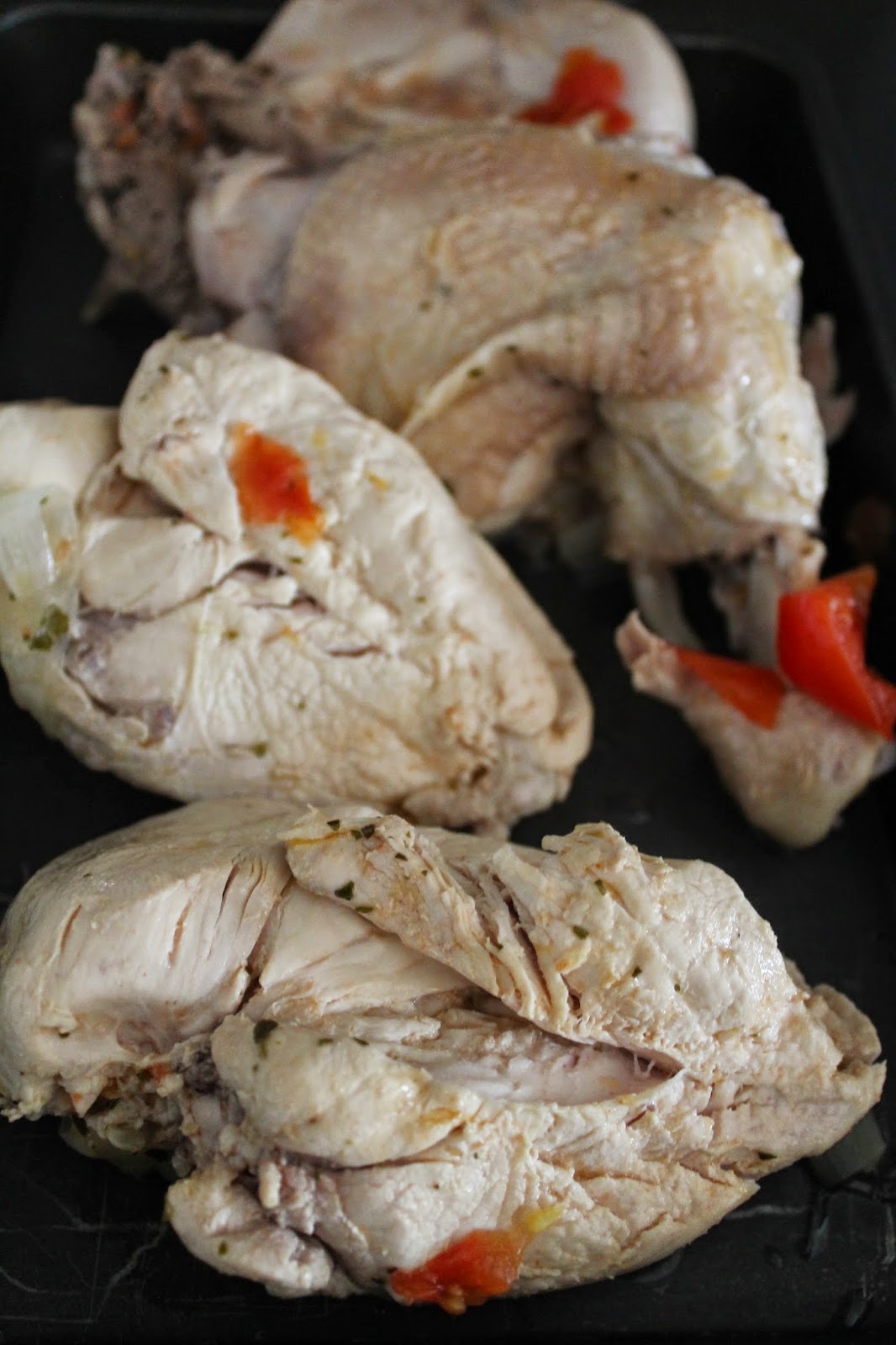 |
| Put the cooked chicken to one side |
For the other mole ingredients, it's just a matter of frying everything - plantain, tomatillos, half the tomatos, one of the onions, spices, nuts, seeds, raisins and chillies. Once all of the ingredients had been fried (and this took a bit of time), I put the fried chillies and raisins into a pot, covered them with stock and boiled them for about twenty minutes.
 |
| Plantain |
 |
| Peanuts, peppercorn and cinnamon |
 |
| Fried chillies releasing their oils and flavours |
 |
| Fried bread, of the French variety |
 |
| Fried tomatillos, onion and tomatoes |
 |
| Sesame seeds |
 |
| Peanuts, raisins and cinnamon |
After that, I blitzed all of the ingredients (except the chicken and chocolate) in my food processor, adding some stock (but not enough) to create a kind of mole paste. I then put the paste in a saucepan and added the chocolate, bringing this to the boil before simmering for about half an hour.
 |
| Chillies and spices in chicken stock |
 |
| Blitzing the ingredients in my food processor |
 |
| Heat the mole paste in a frying pan |
 |
| Add chocolate |
 |
| Mole Negro with chicken and corn tortillas |
Nevertheless, it was a fairly tasty meal and I ended up with lots of mole paste which I've been eating on toast ever since - yum yum!
 |
| Chicken with mole sauce |
All images were taken by me on my trusty Canon EOS 1100D. Feel free to re-use these images with the Creative commons license:
- Attribution
- Non-commercial
- Share alike