As Réunion remained without any permanent human habitation until the 17th century, it's perhaps not surprising that the island's mythology relies heavily on the mythologies of neighbouring countries, such as Madagascar.
When searching for a good book to read by a Réunionnais writer, I was lucky to come across La Grand-Mere Kalle by Yves Manglou (2006). Manglou has done a great job at bringing to life the story of Réunion, through the fictional eyes of its first inhabitants and under the spell of the witch Grand-Mere (Grandmother) Kalle.
Whilst the myth is very strongly connected to Madagascar and the first part of Manglou's novel takes place there, I couldn't help but compare the witch Kala and her daughter Grand-Mere Kalle with the Indian incarnation of Kali, a terrifying aspect of the Goddess Parvati. I wonder if the 'myth' of Kali crossed the Indian Ocean to Madagascar, before being transplanted to Réunion?
As far as I'm aware, this book hasn't been translated into English, but I was really happy to have an excuse to read a novel in French, as I don't get enough opportunities to re-connect with this language.
Anyone who's learned another language will know that, no matter how much you learn, there's always more and it was fun grappling with a whole new set of vocabulary that covered the different parts of a ship, trade winds and the names of plants and animals specific to the southern Indian Ocean.
Coming across words like clin-foc and artimon, I would find out the English translations (blink-jib and mizzen) and then have to look the words up again, this time in my English dictionary! As a result of reading this book, I've learned that ships have different names for the right-hand and left-hand side (tribord and bâbord in French, star board and port in English).
I've also learned the words for the different masts on a ship - the complicated French names for beaupré, mât de misaine, grand mât and mât d'artimon and the more prosaic English terminology of bowsprit, fore-mast, main-mast and mizzen-mast!
I noticed that some of the seafaring words in French look suspiciously English in origin and it made me think about the extent of words being borrowed from English and Dutch into French, rather then the more commonly acknowledged borrowing of French words into neighbouring Germanic languages.
Jungle by Fabien Gelle
I also came across a lot of French words for birds and birds feature highly in the tale of Grand-Mere Kalle - the fouquet and papangue, which are birds associated with evil and the paille-en-queue (or straw-tail), the 'good guy' in the story, whose presence brings luck to the human settlements.
Much of the novel is like a 'battle of the birds' and it's interesting to see our feathery friends playing such a strong role in Réunionnais mythology. Birds play a strong role in Irish mythology too, particularly swans and it made me think of Irish stories like the Children of Lir.
Manglou's novel has a strong ecological message and highlights the importance of teaching children about the need to preserve endemic species. When the children in the story are tricked by the witch and destroy the nests of the pailles-en-queue, a natural disaster happens and many people in the nearby village lose their lives.
Grand-Mere Kalle and her mother Kala (who resides in Madagascar) are symbols of the destructive power of nature. Grand-Mere Kalle is born in a volcanic eruption and there is something in this myth that exposes the fear that early settlers had of living in such a geologically unstable environment.
Sunset by Fabien Gelle
I also came across some Réunionnais Creole for the first time and the following sentence gives you a sense of what Creole on Réunion sounds like. When the birds meet their cousins on Mauritius, they say:
Pé na problèm cousin, to nèk dire moi li pou kan to bizness!
No idea what it means, but it sounds good!
I also liked a phrase that was repeated several times in the novel:
Dans la royaume des sorcières, le temps n'existe pas
(In the kingdom of sorcerers, time doesn't exist)
It gave me a feeling of the languorous nature of life in a small island like Réunion, adrift in the timeless ocean and far away from the bustle of human civilisation.
Image credits:
For this blog post, I wanted to highlight a couple of photographs of Reunion Island by Flickr member Fabien Gellé - thanks Fabien for sharing these images using the Creative Commons license.
Due to its strategic location in the western Indian ocean and its history as a centre of contact between European, African and Asian cultures, the island of Réunion has quite a variety of culinary traditions. Whether it's Indian-style carris or Madagascan-style stews like rougail, there's quite a lot to choose from.
I plumped for a dish that combines European and African traditions, with a bit of Chinese duck thrown in for good measure! As I've recently been learning about the history of vanilla and the role Réunion has played in global vanilla cultivation, I really wanted to experiment by cooking with vanilla myself, for the very first time.
I looked at a few different sources online and then made my own recipe, but I was heavily influenced by Celtnet,org's recipe for Clementine and Vanilla Duck. This is a great website, that I've used many times in the past and it's a labour of love which currently needs some funding to keep the website going, if you're interested in supporting a worthy cause!
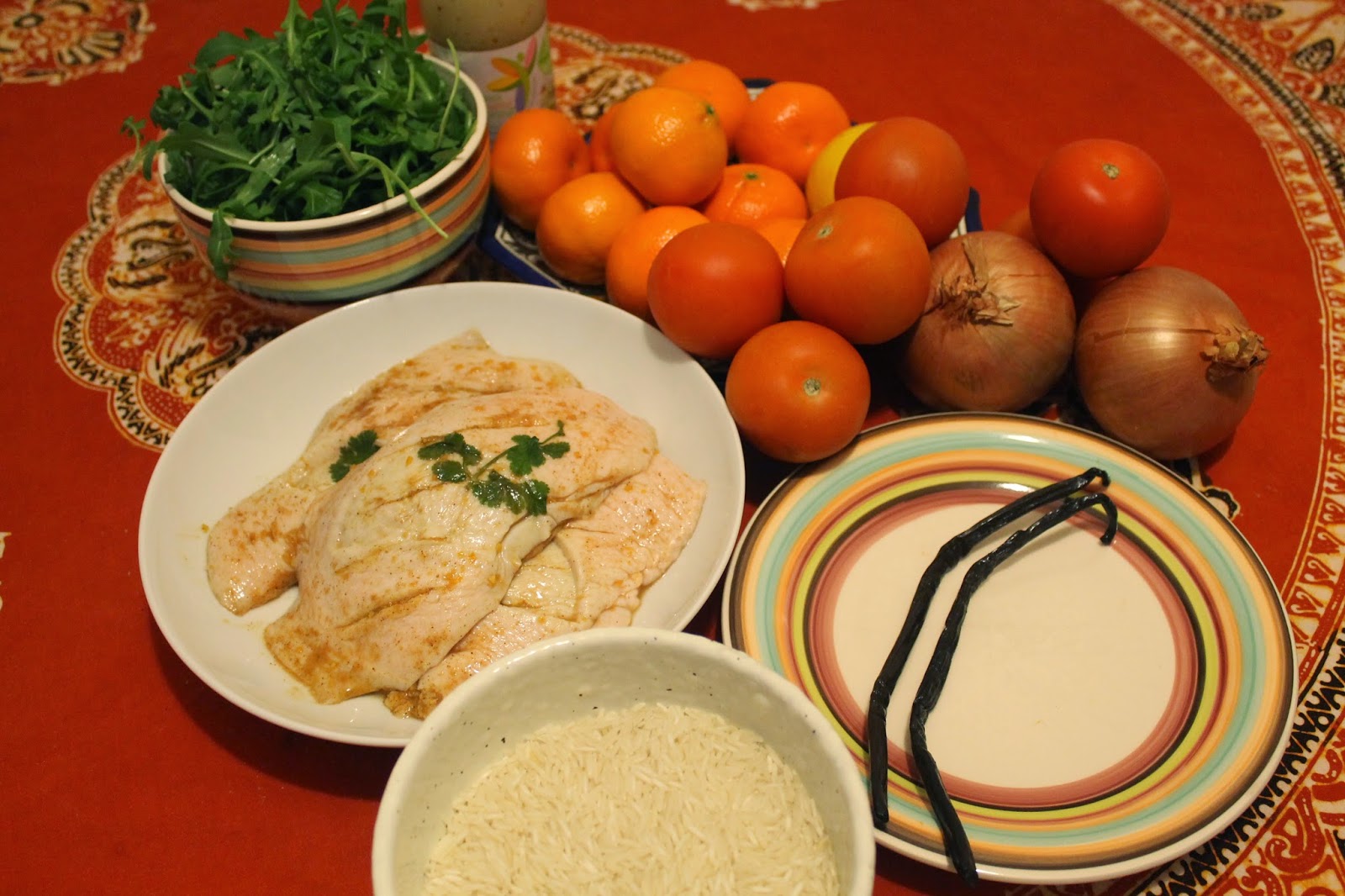
The ingredients
Ingredients for Canard à la Vanille
4 duck breast fillets - 4 filets magret de canard (my fillets were marinated in lemon juice and star anise, which gave them a lovely taste)
2 vanilla pods - 2 gousses de vanille
6 oranges - 6 oranges (smaller oranges like clementines or mandarins work best - I used mandarins)
orange juice - jus d'orange
4 tomatoes - 4 tomates
2 onions - 2 oignons
a cup of rice - une tasse du riz
1 lemon - 1 citron
rocket salad - salade de roquette
French dressing - vinaigrette How I made Canard à la Vanille
I usually start by making my rice, which I added lemon juice and rind to, once it had cooked, to give it nice tangy taste.
Preparing the orange juice
Next, I prepared the main ingredients. I chopped the duck breasts into bite-sized pieces; separated four of the oranges into segments or carpels;juiced the other two oranges;chopped the onions; chopped the tomatoes; halved the vanilla pods, then sliced them lengthwise to expose the vanilla seeds.
Prepare the ingredients for the Vanilla Duck stew
I started by frying the duck breasts until they had cooked through and browned on the outside - I removed the duck pieces and set them to one side.
Cook the duck pieces until they brown
Next I fried the chopped onion, until it had softened and yellowed a bit - I added a dash of water and some orange juice, to collect some of the duck fat at the bottom of the pan, so I could start making a sauce. Next I added the orange pieces and vanilla pods, finally adding the chopped tomatoes and letting the whole mixture stew on a low heat for about 20 minutes, occasionally adding orange juice or water.
Vanilla and orange stew
It was interesting handling the vanilla - the pods were quite 'earthy' and smelt amazing, when I'd split them open. Most people I know have only ever used vanilla to make ice-cream or dessert, so it was a thrill to add it to a stew - it also felt a bit decadent, considering the price of vanilla pods!
Vanilla pods
Once in the ingredients had stewed a bit, I re-added the duck pieces and some more orange juice and let the whole lot stew on a slightly higher heat for another ten minutes.
Vanilla Duck stew
I served with the lemon-rice, rocket salad and French dressing. The end result was miam-miam!
Canard à la Vanille served with lemon-rice and rocket salad
Image credits:
All images were taken by me on my trusty Canon EOS 1100D. Feel free to re-use these images with the Creative commons license:
When I started researching Réunion, I was interested in finding out what the island is famous for and vanilla came up quite quickly as a potential topic, which surprised me, as I had no idea about Réunion's role in the history of vanilla production.
To prepare for this blog post, I managed to get my hands on a copy of Tim Ecott's Vanilla: Travels in Search of the Ice Cream Orchid (2004), a really informative and enjoyable book, which traces the history of vanilla from its natural habitat of Veracruz/Oaxaca, to the first successful cultivation of vanilla overseas in Réunion and its later cultivation in other parts of the world.
As I've blogged about Oaxaca and the Columbian Exchange, I wasn't that surprised to learn that vanilla comes from the 'New World'. I'm developing a default assumption that many of the world's most popular plants/food products come from the Americas (cacao, chillies, rubber, turkey, potatoes, to name but a few!).
What's interesting about vanilla, at least vanilla planifolia, the highly aromatic species of vanilla that we use in food flavouring and perfumes, is that it really wasn't that widespread, even in the Americas and has only been found in its natural state, in a very concentrated area of southern Mexico. The Aztecs called vanilla tlilxochitl or 'black flower' as, by the time vanilla pods arrived in Tenochtitlan (modern-day Mexico city), they had dried out and discoloured, therefore the Aztecs had never seen live vanilla plants.
Of course, there are many types of vanilla and most are not aromatic. Due to the scarcity and labour-intensiveness of vanilla farming, it has become a much sought-after delicacy and could cost anything between $20 and $300 a kilo, depending on the global harvest, the second most expensive ingredient after saffron - not bad for a non-essential food!
Similar to my blog post on cloves, it turns out that vanilla is a type of flower and it's the only orchid which is cultivated as a food source, rather than for decorative purposes. There are many artificial vanilla extracts on the market and the chances are, if you think you've tasted natural vanilla, you probably haven't!
So what drives our obsession with this hard-to-cultivate flower pod? It seems there are three main answers: chocolate, ice-cream and soft drinks. Vanilla has long been added to chocolate and this is how Europeans first encountered its taste. In the late 19th century, people in the United States started becoming a bit obsessed with ice-cream production, which pretty much sealed the future success of vanilla! Also, although they don't release details of their 'secret recipes', I'm pretty sure that companies like Coca-Cola and Pepsi use real vanilla extract in the manufacture of their soft drinks.
Because of its dependency on pollination by a particular species of mountain bee that's only found in southern Mexico, vanilla cultivation didn't transfer to other parts of the world as quickly as other American plants, such as cacao and potatoes. In his book, Ecott tells a really interesting story about Edmond Albius, the slave-boy on Réunion island who discovered the technique for self-pollinating vanilla plants and opened up the rest of the world to vanilla production.
Edmond Albius, circa 1863
Albius' fate was tied up with the racism of that time and, rather than being fêted or honoured for his ingenious discovery, white Europeans couldn't believe that a slave-boy would have the intelligence to make such an important contribution towards the world of science and many refused to recognise that his intervention in the development of vanilla production was anything more than an accident. He died impoverished on Réunion island in 1880, during the decade when Réunion became the first place to overtake Mexico in terms of vanilla production.
Ecott also travels to some of the other great centres of vanilla production such as French Polynesia (Tahiti) and Madagascar. As the price of vanilla is so high, there is a lot of secrecy around the industry and Ecott's book gave me an insight into a world of armed vehicles, heavily-guarded crops and clandestine flights between Antananarivo and Paris!
A bad harvest can inflate the price of next year's vanilla, as happened in 2004, when the price reached $500 dollars per kilo. There has also recently been a hike in worldwide vanilla prices, so the drama around vanilla cultivation seems destined to continue for many years to come.
I found some really useful information on the website of the Food and Agricultural Organisation (FAO) of the United Nations. According to their stats, the top producers of vanilla in the past two years have been Indonesia and Madagascar (both producing over 3,000 tonnes of vanilla), followed by Mexico, Papua New Guinea and China (with just around 500 tonnes each).
As you can see from the stats below, the production of vanilla in Réunion has fallen dramatically in the last twenty years, from 93 tonnes of vanilla in 1993, to just 8 tonnes of vanilla in 2013.
Réunion's main crop these days is sugar cane and, by way of comparison, I learned that Réunion produced almost 2 million tonnes of sugar cane in 2013 - nothing near the 460 million tonnes produced by world leader Brazil, but not bad for a small island in the Indian ocean and obviously they now produce a lot more sugar cane than they do vanilla.
In the same period, vanilla production has doubled in Indonesia and trebled in Madagascar. Something to think about next time you tuck into a tub of vanilla ice-cream!
Vanilla production in Madagascar, according to FAO
Image credits:
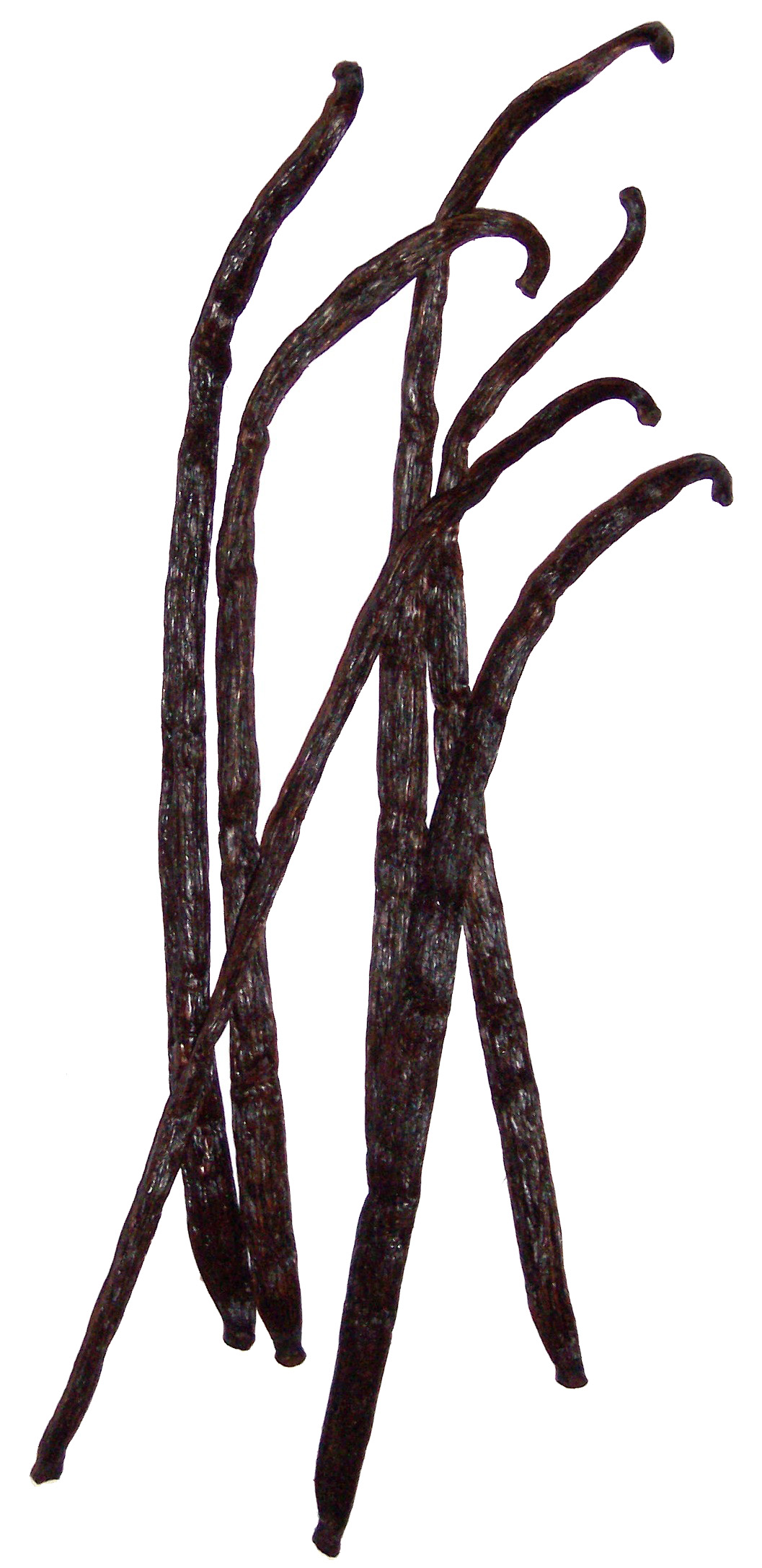
The image of the vanilla pods is from Wikipedia and has been shared using the Creative commons license - see more details about this image on the file information page.
The image of Edmond Albius is in the public domain and the statistic images are from the Food and Agricultural Organisation's stats portal.
For one reason or another, I haven't managed to blog about any French regions until now and it's strangely apt that my learning about France should start in one of France's most far-flung regions, the island of Réunion, which lies about 600 miles east of Madagascar, in the southern part of the Indian Ocean.
Réunion is one of France's many DOMs/TOMs, short for Départements (or territoires) d'outre-mers - i.e. overseas departments or territories. France is currently divided into 27 regions, 22 of which are in 'Metropolitan' France (i.e. Europe) and the other 5 are 'outre-mer' - these include Martinique and Guadeloupe in the Caribbean, French Guiana on the South American mainland and Mayotte and Réunion in the Indian ocean.
It's around 5,800 miles from Paris to St-Denis, the capital of Réunion, yet the people of Réunion island participate fully in the French state, sending deputies to the Assemblée nationale, receiving the same state benefits as people in metropolitan France and using the Euro, which is the official currency in France.
Map of the French DOMs/TOMs
Apart from overseas regions, France also has many overseas territories as far apart as St Pierre et Miquelon off the coast of Canada, to Kerguelen near Antarctica and Tahiti in French Polynesia. I've long been fascinated by the French DOMs/TOMs and I'd love to visit all of them some day, despite the fact that's prohibitively expensive to get to places like Nouvelle Caledonie or Wallis and Futuna!
As I've started learning about Réunion, I've begun to realise that I'm not just learning about France and a French overseas territory, but I'm also learning about other islands of the Indian ocean, known collectively as the Mascarenes.
Unlike most other places I've previously blogged about, Réunion and the other Mascarene islands remained uninhabited until Europeans settled there in the 17th century. Previous to that the islands were known to Arab and (no doubt) Chinese sailors, but they weren't considered to be particularly important, until the drive for European trade with India and the Far East made Réunion and other Indian islands strategic recuperation points for European ships, after their long voyage around the Cape of Good Hope.
Not surprisingly, the Portuguese were first on the scene and the name 'Mascarene' comes from the Portuguese explorer, Pedro Mascarenhas, however, it was the French who eventually colonised the Mascarene islands, Ile Bourbon (Réunion), Ile de France (Mauritius) and Rodrigues.
La Plaine des Palmistes by Jo Kerozen
Due to political wrangling during the French revolution and the Napoleonic wars, Ile Bourbon changed its name to Réunion, to honour the joint campaign of the Marseille revolutionaries and the National guard, then briefly became Ile Bonaparte, before reverting back to Réunion again, when Napoleon was defeated at the Battle of Waterloo.
Seeing the chance of gains in the Indian ocean, the British took control of Ile de France, renaming it Mauritius, after an earlier Dutch colony. They also took control of the much smaller island of Rodrigues, which is still administered from Mauritius. As well as the Mascarene islands, the French had established a settlement on the Seychelles in the 18th century, but Britain also took over these islands after the fall of Napoleon.
By all accounts, Réunion is quite different than the other Mascarene islands and the Seychelles. Whilst Mauritius and the Seychelles have some of the world's best beaches and have, therefore, massive tourist industries, Réunion has lurked quietly in the background, largely unknown to the English-speaking world and a hidden treasure of volcanoes, fantastic hiking trails and an interesting mixture of French, Indian, African and Chinese cultures.
I'm really looking forward to learning more about this little piece of France in the Indian ocean and I hope you'll join me on my learning journey as I read books, watch movies, listen to music and cook the food of Réunion.
Image credits:
All images were taken from the English language Wikipedia page on Réunion
The time has come to say au revoir to Quebec and it's been an amazing learning journey - as well as physically travelling to the place I've been blogging about, I've also had fun on my journey through Quebecois music, literature and cinema. I've seen Le Vent du Nord live in concert in Bury (near Manchester) and the Institut Francais in London is showing a retrospective of Xavier Dolan's movies - although I've now seen all of his movies, I'll looking forward to finishing my Quebecois experience with a few trips to the cinema in February and March.
I learned quite a bit about Canada, as well as Quebec and I learned about memory and Quebec's motto, Je me souviens. I learned about the other Titanic, The Empress of Ireland and about religious beliefs in Canada. I learned how to make the traditional Quebecois dish, La Poutine and I learned about the significance of winter in Quebec and how it's become so unpopular, especially in a busy city like Montreal. Finally, I learned about Quebec in other words, like joual, bougeotte, pure laine and tabernac.
The Canadian flag turned 50 this month
As usual, there were many areas of research I didn't have time to go into, so if you're interested in learning even more about Quebec, I would recommend the following topics:
The North American number plan for dialling codes
The Huron people and the origin of the country name, Canada
British-French relations
The French in North America
Hydroelectric power
Pepsi v Coke and the 'rock and roller cola wars'
US invasions of Canada
Nunavik
The snowy owl and the white lily, Quebec's symbols
Ann Coreo and Lily St Cyr, the exotic dancers of Montreal
The Jews of Montreal
Marc Lepine and the Montreal massacre
Moshe Safdie's Habitat 67 in Montreal
Mattieu de Costa, the freed African slave who was fluent in Mi'kmaq
The architecture of Moshe Safdie
Failed attempts at gaining independence from Canada
Quebecois soap operas
The Americanisation of Quebec
French-Canadian media and newspapers
The Desjardins group of artists
Ice-hockey
The Mohawks of Brooklyn
The Cirque du Soleil
The 1885 smallpox epidemic, which resulted in 3,000 deaths
Final word on the Mohawk nation
Flag of the Iroquois confederacy
I only managed to scratch the surface in terms of my learning about First Nations people who live in Quebec and I'd like to return to the First Nations some day and do more research on native American culture. Around 1% of Quebec's population is native American and I'm quite interested in the First Nations people, who are distinct from the Inuits or Metis peoples. First Nations in Quebec include people from the Algonquian and Iroquoian groups.
Contact with Europeans has rarely worked out in favour of the First Nation peoples and there is a still a lot of tension between First Nation communities and neighbouring 'white' communities. I watched a really interesting documentary on YouTube called Acts of Defiance which documents events around the Oka Crisis, which began in July 1990, and the impact that this conflict had on the Mohawk people of Kahnawake.
Watching the documentary gives you a real understanding of the cultural gap that exists between First Nations people in Quebec and the dominant French/European culture. Mohawk people belong to the Iroquois league or Haudenosaunee, which stretches from the St Lawrence River in Quebec, to southern Ontario and northern New York state. Haudenosaunee has issued its own passports since the 1920's and attempted to send a delegation to the League of Nations, post World War 1.
As well as Mohawk reservations, Quebec has also granted a certain amount of sovereignty to the Cree people in Eeyou Istchee/Baie James and these communities are represented by the Grand Council of the Crees, which has embassies in Montreal and Quebec City.
Although I've called this my final word on the Mohawk nation, what I really mean is that my final word is that I would like to do some more research on the Mohawk nation and the other First Nations of Canada.
Time and again, as I've been researching Québécois culture, I've come across the expression The Quiet Revolution or la révolution tranquille. The Quiet Revolution is the Québécois equivalent of the social revolution that happened in the 1960's in the United States. During the 1960's, Quebec, like many parts of the world experienced a great deal of change in societal attitudes to all kinds of things, including politics, religion, art, sexuality. There was no great 'revolt' in Quebec but rather, quietly, a new generation began to abandon the conservative beliefs of their parents, move to the city and transform Québécois urban life.
The period of the Quiet Revolution also stands in contrast to the period before the 60's, known as Le Grand Noirceur or The Great Darkness, when Maurice Dupleissis was in charge. And it contrasts with the not-so-quiet 1970's, which kicked off with the October crisis, an extreme left-wing attempt to challenge the Québécois establishment.
I found this documentary on YouTube (only in French, sorry!) which describes the beginning of this period really well and has lots of great footage.
Tête carrée
This is a term I've come across several times and is slang for 'English-speaking Canadian'. It means 'square-head' and seems quite offensive and racist to me, as it focuses on an assumed physical characteristic, i.e. that non-French Canadians have more angular/square-shaped heads than the rounder heads of people who are of French/Gallic descent.
When it's used, it's not in a nice way and square-head also suggests 'thick' or 'stupid' based on the fact that someone can't speak French. Not surprisingly, there is a big cultural and linguistic divide in Quebec, particularly in Montreal and this leads to some animosity, as people resort to stereo-types and assumptions.
Joual
Whether it was in the movies of Xavier Dolan, the music of Loco Locass or the literature of Michel Tremblay, I came across the word joual (pronounced zhoo-al) quite a few times during my research into Quebec. Joual is the name of the Montreal dialect of French, mostly looked down upon by those who speak 'standard' French and, in more recent times celebrated as the working-class dialect of Montreal, an authentic North American language, as opposed to standard French, a language that is so closely connected to Europe. North American French is a mish-mash of regional dialects, mostly from the north of France (places like Normandy and Picardy), so it was never really the same as the standard spoken in Paris.
French speakers first came to North America before the French Revolution (1790's) and Québécois French retains some old-fashioned words that hark back to the age of aristocratic France. According to Taras Grescoe in his book Sacré Blues, the Québécois word Dépanneur, which means corner store, sounds more like a pirate's cove in the Caribbean, than a modern shop!
Québécois French also incorporated a lot of English expressions, for example the word enfirouâper which means to seduce or trick someone may come from the English 'to wrap in furs'
Grescoe gives an interesting example to contrast the English-influenced French of Quebec with standard French. When a shop assistant wrote a note on Grescoe's defective CD player, he wrote:
Quand on presse sur 'open', ça fait un bruit weird
When you press 'open', it makes a weird sound
In standard French this should be:
Quand on appuie sur 'ouverture', ça fait un drole du bruit
Other common joual expressions are:
Astheur: now (a cet heure)
Tsé?: you know? (tu sais?)
Coudon: listen here (écoute donc)
I found this documentary on YouTube (again, only in French) which explains the history of joual
La bougeotte
A Québécois tradition that I found it really hard to get my head around is the annual bougeotte, which takes place every year on the 1st of July. As incredible as it sounds, the majority of accommodation rentals in Quebec run on annual leases, which all finish on the last day of June so, unbelievably, on the 1st July, everyone who is moving to a new house or apartment moves on the same day!
It's believed that the tradition might actually be a Scottish one, called 'Flitting day' and this used to the 1st of May until 1974, when the Québécois government decided change la bougeotte to the 1st of July, so it would coincide with Canada day - a time when everyone has a day off.
Allophone
In a place obsessed with language, it's not surprising to come across a term like allophone, which is the word that describes anyone in Quebec whose native language isn't French or English. The next biggest language in Quebec is Italian, followed by Arabic, Spanish and Greek.
As Quebec enters the 21st century with a greater emphasis on diversity, I'd imagine that the number of allophones can only increase as a percentage of the whole population. In 1971, allophones made up 6.6% of Quebec's population, by 2001 this was 10%.
Pure Laine
In his book on Quebec, Taras Grescoe has a lot to say about the myth-making around pure laine or pure wool, a term which is used to describe French Canadians who are directly descended from French immigrants and don't have mixed blood. Apart from its obviously racist overtones, Grescoe argues that there is no such thing as pure laine and that even the most 'French' of Québécois families will have some Native American blood running through their veins, not to mention Irish, Scottish and any number of other European ancestries.
In the early days of settlement in New France, opportunistic immigrants came from all over Europe, mostly men in the beginning, many of whom took native wives or mistresses. It surprised me to learn that an estimated 40% of French Canadians have some Irish ancestry, as this is not something I ever heard about growing up in Ireland. I guess it's got lost in the mists of time!
I found this little video on YouTube which looks at the Irish connection to Quebec and documents a visit made by an Irish group to the Irish memorial in Grosse Ile
Tabarnac
When I was watching Xavier Dolan's movie Mommy, I couldn't help but notice the swearing of the main male character, played by Antoine Olivier Pilon, particularly his repeated use of the word tabarnac (meaning tabarnacle) and how this swear word would scandalise and occasionally infuriate the adults around him. As swear words go, tabarnac seems very innocent and certainly nowhere near as potent as English equivalents like the 'f' word or the 'c' word.
Like English, modern French swear words tend to refer to forbidden parts of the (generally female) body. Swearing is all about sex, which has become the most offensive way of speaking in the modern age. Québécois swear words, on the other hand, come straight from the religious fanaticism of the 18th century, so words like tabarnac, calisse, ciboire and sacrament were shocking religious profanities and, bizarrely, their shock value has persisted into the modern age.
Chasse-galerie
One of the most magical terms I've learned during my research is chasse-galerie, a Québécois myth about a flying canoe that transports people across the vast distances of Quebec so they can visit loved ones. Taking the flying canoe means making a contract with the devil, however, and inevitably ends up with the souls of those in the canoe being damned because the canoe hits a church steeple on its return journey. What I loved about this myth is that it combines French lore brought over by the first European settlers and Native American legends about flying canoes.
I'll leave you with this animation of La Legende du canot d'ecorce, aka La Chasse-galerie by L'office national du film du Canada
I was spoilt for choice when it came to reading materials about Quebec and I still feel as though I only scratched the surface in terms of what I actually managed to read.
Here is my list:
Lonely Planet Canada (12th edition - 2014)
I try to read different kinds of guide books when I'm researching for this blog but I must admit, when I'm looking for practical information (bus times, how to get from A to B), it's hard to beat the Lonely Planet series. Of course, this time I was buying it for the very practical reason that I was travelling to Quebec, so I got the latest version.
The Lonely Planet series is quite good at giving you a simple overview of the history and culture of a place and I also like the fact that they very clearly signpost you towards books, movies and music that will bring your journey (whether real or virtual) to life
Canada - Culture Smart! (2008) Diane Lemieux
My Quebecois reading list
Reading online reviews of the Culture Smart! series, I can see that some people really don't like these books and find them over-simplistic. I really enjoy them however and, as I have limited time for my research, I find these books to be a very easy way of getting an overview of a country. I also find them good to read on the road and I now not only buy this for blog research, but I also use them when I'm actually travelling, for example, on my recent trips to Morocco and Georgia.
The Culture Smart! guide to Canada really help give me a simple overview of the entire country, before I delved into the more specific culture of Quebec. Canada is a place that really interests me and I was surprised to learn about the extent of regional feeling in Canada and how complicated and unusual it is to move from one Canadian province to another. I'd also never really thought about the fact that Canada is so big and I got a glimpse into the challenges that face a united Canada where Paris is just as accessible to Montreal as Vancouver!
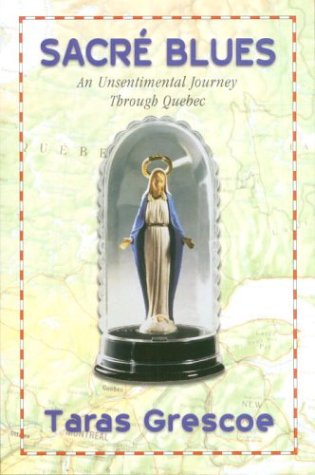
Sacré Blues: An unsentimental Journey through Quebec (2000) Taras Grescoe
This is the book that took up most of my time and although it took me absolutely ages to read this, I'd highly recommend this book for anyone who wants to understand more about Quebec, as it's so packed full of interesting information. I could have written numerous blog posts based on this book and, indeed, it has informed much of my blogging about Quebec, but particularly the blog post I did on winter.
Grescoe is originally from Ontario, so looks at Quebec, as I the reader did, with an outsider's point of view. Whilst I found it hard to see any logic behind the flow of themes in his book, it's an incredibly comprehensive text and he covers everything from the Quebecois obsession with ice-hockey to the Pepsi/Cola wars, the Quiet Revolution and a culture reared on téléromans! There isn't much about Quebec culture that Grescoe doesn't cover and I feel that this amazing book must have been a real labour of love.
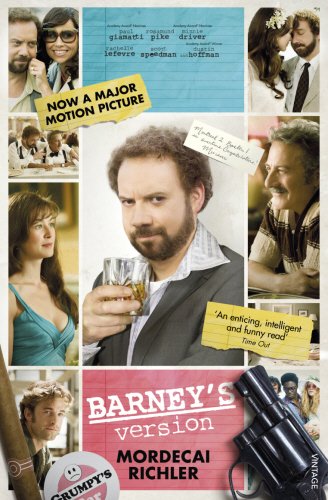
Barney's Version (1997) Mordechai Richler
I struggled through Richler's seminal novel Barney's Version, which also took me ages to read, but not for the right reasons this time. Don't get me wrong, the book was interesting enough and the themes of loss of love and loss of memory were very engaging, but I just couldn't relate to Barney the principle character and his self-obsessed view of the world. It might sound a bit harsh but, in the end, I was more interested in hearing McIver's version or Boogie's version.
It took me a long time to read this book because I was practising something I call 'intense reading'. In the interests of reading fluency, we mostly skip over words or expressions that are unfamiliar to us and accept them in the context of whatever it is we're reading, as they don't usually impede our general understanding of the text.
For example, if I come across the phrase 'He put on his trusty Capezio's' - I have no idea what Capezio really means, but I can assume that it's something you might wear. Instead of skimming over this, as I might normally do, intense reading means doing my research, usually on Wikipedia, where I find out that Capezio was a Sicilian cobbler who emigrated to the United States in 1887 and opened a shoe repair shop near the Metropolitan Opera House, which became a meeting place for dancers and ultimately a fashionable place to buy shoes!
Barney's version was peppered with references and name-dropping - much of it Canadian/North American and therefore unfamiliar to me, so I had a great time doing my research as I was reading this book and really learning about the world!
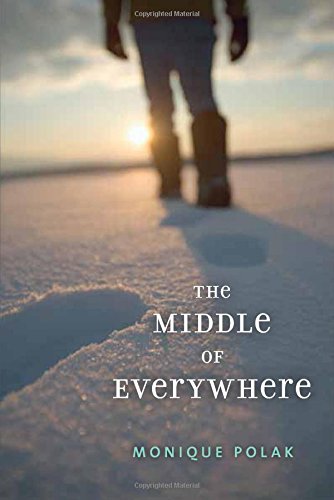
The Middle of Everywhere (2009) Monique Polak
By contrast, I flew through this book in less than a week - perhaps not surprising as it was written for young adults and was very easy to read. I really enjoyed this book which tells the story of Noah Thorpe, a teenage boy from Montreal who travels to Kangiqsualujjuaq (George River) in Nunavik, the northern-most part of Quebec.
It's a lovely story, beautifully written and well-paced, which I'm sure will leave a positive impression of Inuktitut culture on any young person reading the book. There is a real shadow hanging over Quebecois history in relation to the Inuit people and Polak bravely confronts this, particularly in her re-telling of the destruction of Inuit sled dogs between 1950 and 1970, by the Canadian Mounted Police. She somehow manages to apologise for non-native actions whilst maintaining a balance in terms of who was really to blame.
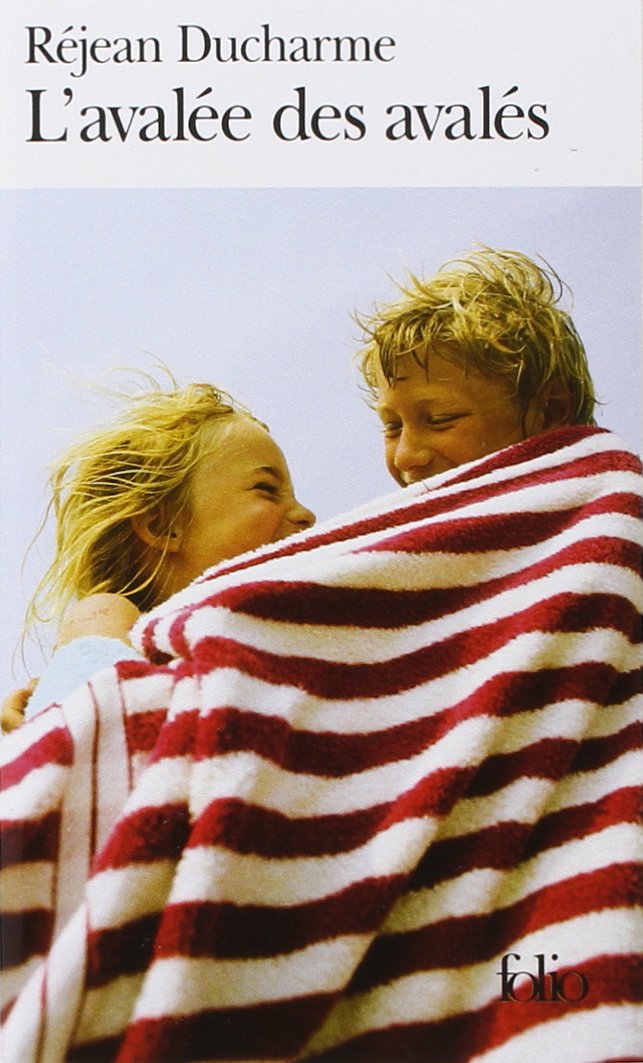
L'Avalée des avalés (1966) Réjean Ducharme
This is a fascinating novel, although I didn't have time to read all of it, plus I was reading in French, so it was taking me ages. To be honest, I don't know how the book would read in translation, as the language is so poetic and even the title L'Avalée des avalés is hard to translate into English and becomes something like, The Swallowing of the Swallowed.
L'Avalée des avalés is a modern Gothic tale, set in an abandoned Abbey, on an island in the middle of the St Laurence River. It tells the story of a young girl, Bérénice Einberg, whose father is Jewish and whose mother is Christian. Enforced religious belief plays a big part in the early chapters of the novel and other themes include sibling love and envy, repression of girls/women and Bérénice's extraordinary 'disconnection' from the world around her.
La vie ne se passe sur la terre, mais dans ma tête. La vie est dans ma tête et ma tête est dans la vie. Je suis englobante et englobée. Je suis l'avalée de l'avalé. Life doesn't happen on the earth, but in my head. Life is in my head and my head is in life. I am encompassing and encompassed. I am the swallowing of the swallowed.
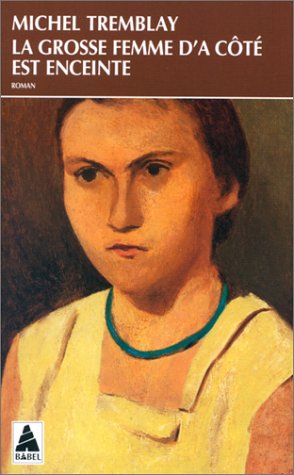
La grosse Femme d'à côté est enceinte/The fat woman from next door is pregnant (1978) Michel Tremblay
I read even less of Michel Tremblay's famous novel, La grosse Femme d'à côté est enceinte. It's partly written in joual, the dialect of Montreal and I found myself floundering with sentences like this one:
Mercedes avait sorti son rouge à lèvres de sa sacoche. Un billet de vingt dollars était tombe sur ses genoux. "Y'a ben de l'ouvrage dans c'que je fais, ces temps-citte, t'sais . . ." Mecedes took her lipstick out of her little bag. A twenty-dollar bill fell on her knees. "It's hard work what I'm doing at the minute you know . . ."
The books I didn't read
As usual, I came across references to lots of books which I didn't have time to read - if I were to continue blogging about Quebec indefinitely, I'd put the following books on my reading list:
Self (1996) by Yann Martel (the author of Life of Pi)
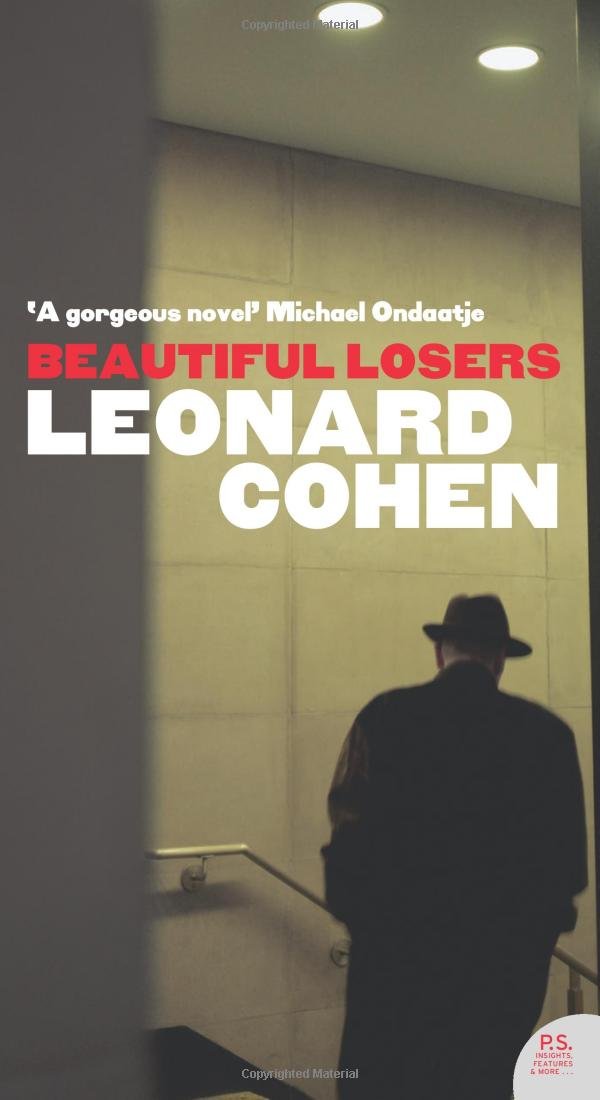
Beautiful Losers (1966) by Leonard Cohen
A Yankee in Canada, with Anti-Slavery and Reform Papers (1866) by Henry David Thoreau
Je mange donc, je maigris - I eat therefore, I stay slim (1987) by Michel Montignac
Bonheur d'Occasion/The Tin Flute (1945) by Gabrielle Roy
L’homme rapaillé/The March to Love (1970) by Gaston Miron
Two Solitudes (1945) by Hugh McLennan
Herzog (1964) by Saul Bellow
L'ingratitude (1992) by Ying Chen
Le sexe des étoiles/The Sex of the Stars (1987) by Monique Proulx
Selling Illusions: The Cult of Multiculturalism in Canada (1994) by Neil Bissoondath
Et Dieu Crea Les Francais (1992) by Louis-Bernard Robitaille
Les Filles du Caleb/Caleb's daughters (1986) by Arlette Cousture
Le Cassé/The Broken (1964) by Jacques Renaud
The Shouting Signpainters (1972) by Malcolm Reid
Contes du pays incertain/Stories from an uncertain country (1962) by Jacques Ferron






.jpeg)
.jpeg)